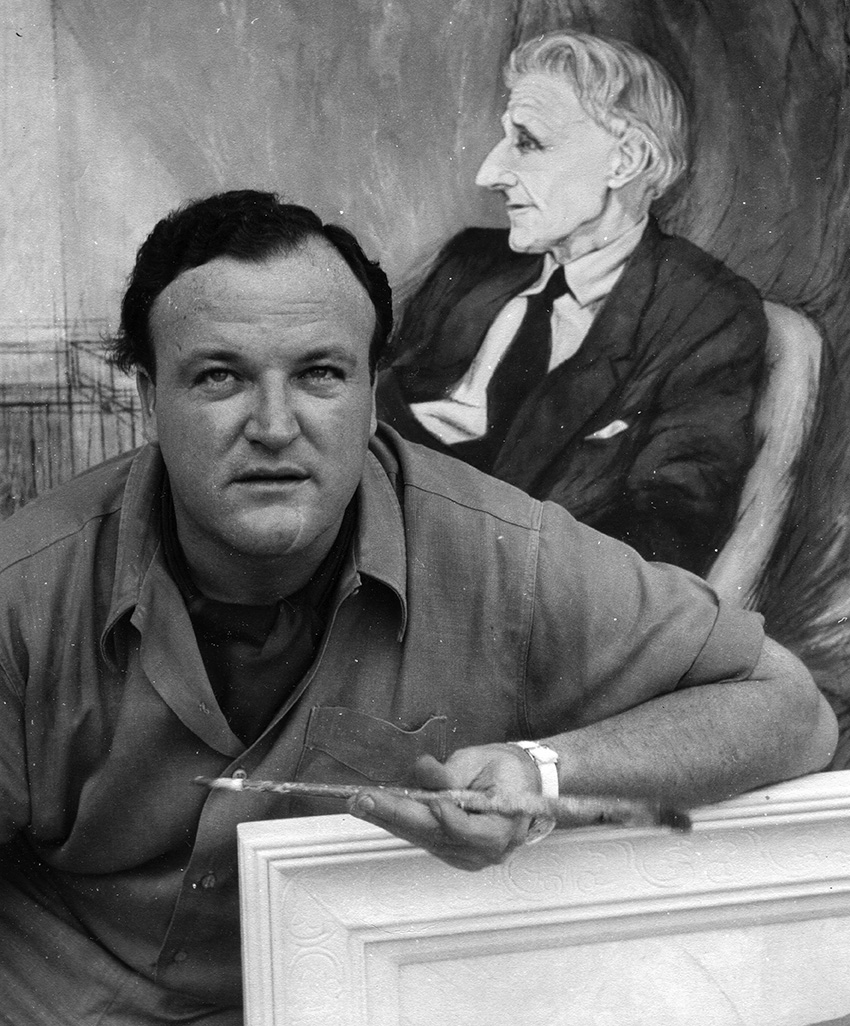
Douglas Bland 道格拉斯·布蘭德
Fionnuala McHugh In 1976, the Hong Kong Museum of Art held an exhibition called The World of Douglas Bland. Nigel Cameron, the South China Morning Post’s respected art critic, gave the show a stellar review. He praised Bland’s “astonishing energy”, “emotional intensity”, profoundly imaginative quality” and “great estuarine areas of lucid paint”. He believed that Bland had finally discovered what he wanted to do with paint in 1971 and he particularly referred to his “great” Reflections series, in which he was “trying to compose forms which contain ideas about places and things reflected in spaces”. Cameron, who could be annihilating in his opinions, described Bland as “the most accomplished western painter to work in the Orient since George Chinnery died in Macau”. By then, Bland himself was dead: he’d never regained consciousness after stomach surgery the previous year, at the age of 52. For almost three decades, he’d been striving to express his artistic response to China – its landscape, its culture, its mystic energies. He’d found inspiration in Chinese seals, calligraphy and, ultimately, oracle …


