All posts tagged: Hong Kong Cultural Centre

Roberto Bolle 羅伯特 · 波雷

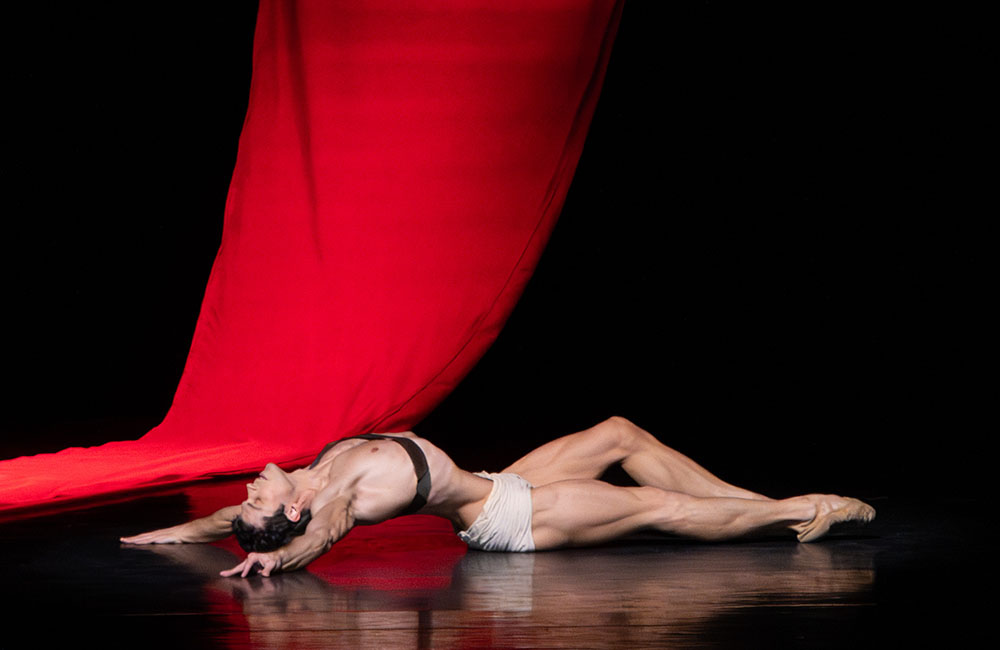
Caravaggio /Hong Kong Arts Festival /March 7 – 9 2026 /Grand Cultural Theatre, Hong Kong Cultural Centre / Roberto Bolle shows no signs of slowing down. The widely celebrated Italian ballet maestro has a packed schedule this year, from performing McGregor / Maillot / Naharin at Milan’s La Scala Theatre to showcasing his contemporary ballet fusion Roberto Bolle and Friends at Verona’s iconic Arena, where he just performed as a part of the Winter Olympics closing ceremony. Next up, he’s coming to Hong Kong, where local audiences will see him essaying the titular role of the Baroque Master in Mauro Bigonzetti’s Caravaggio. Growing up in Italy, Bolle was no stranger to Caravaggio’s art. “He’s always been one of my favourite painters and I was always fascinated and moved by his work,” says the dancer. He adds that he was particularly amazed by the three paintings on display in Rome’s Church of St Louis of the French, The Calling of Saint Matthew (1599-1600), The Inspiration of Saint Matthew (1602) and The Martyrdom of Saint Matthew (1599-1600). …
Bayerische Staatsoper 巴伐利亞國立歌劇院

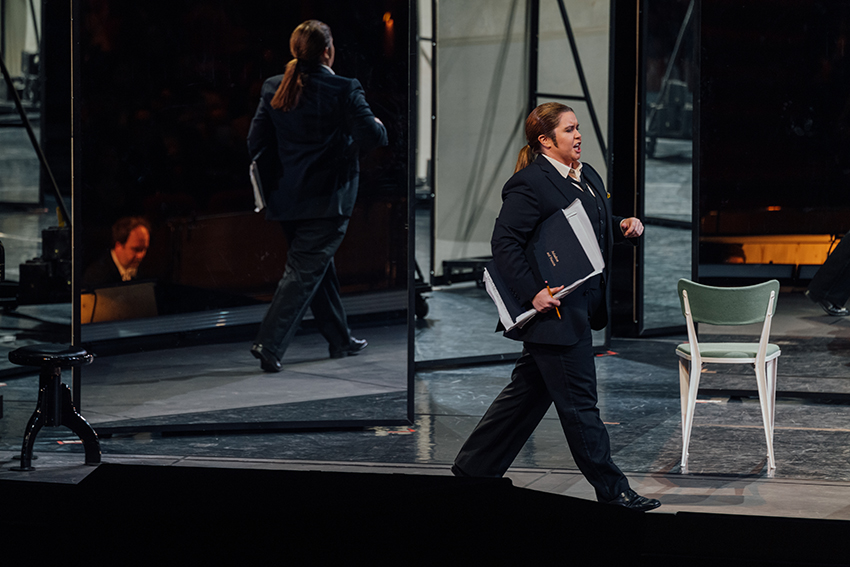
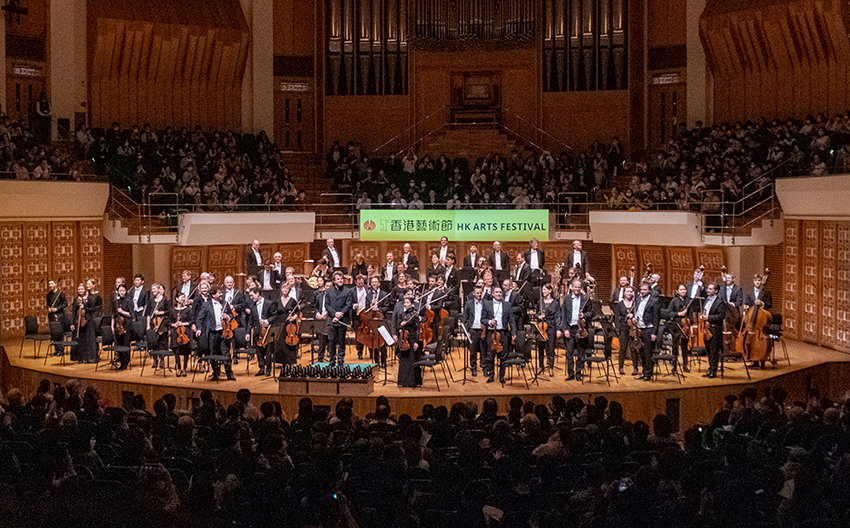
Ariadne auf Naxos /Grand Theatre, Hong Kong Cultural Centre /Hong Kong /Feb 22, 2024 /Ernest Wan / This year’s Hong Kong Arts Festival officially opened with the Bayerische Staatsoper’s Ariadne auf Naxos, Richard Strauss’s opera, in its 1916 version. There was concern that Hongkongers might not warm to the spareness of Robert Carsen’s 2008 production. However, judging from the enthusiastic audience response, such concern seems to have been unnecessary, so engaging was the bustle in the first part of the work and so riveting the steadily sustained momentum in the second. In the opera-within-an-opera of this second part, the desert island of Naxos on which the princess Ariadne has been deserted was an empty stage in utter darkness. As the young god Bacchus emerged and at the end ascended with her to the heavens, light emanated through an ever-widening upstage slit and eventually engulfed the entire stage. Few objects other than dance mirrors were used for the set of even the first part, which shows onstage the frantic backstage preparations for the drama of the …

Bamberg Symphony

Concert Hall, Hong Kong Cultural Centre / Hong Kong / March 18, 2023 / Ernest Wan Formed mainly by German orchestral musicians in Prague who were forced after the Second World War to leave Czechoslovakia and settle in the Bavarian town of Bamberg, the Bamberg Symphony, with its Czech chief conductor Jakub Hrůša, recently appeared at the Hong Kong Arts Festival. It performed a repertoire at which, with its history, audiences expect it to excel: symphonies by Antonín Dvořák and Johannes Brahms, as well as music by the Hungarian György Ligeti, whose 100th anniversary is celebrated this year. The first of the orchestra’s two concerts began with Dvořák’s New World Symphony in E minor (1893), his ninth and last work in the genre. The lower strings’ doleful playing of the soft opening melody and the fierce, incisive fortissimoattacks soon after in the slow introduction were illustrative of the far-reaching emotional landscape to be traversed. While the Largo was scenic and deeply felt as expected, with characterful woodwind solos and delicate sustained string harmonies, even accompanying …

Hong Kong Philharmonic Orchestra

Concert Hall, Hong Kong Cultural Centre / Hong Kong / Jun 11, 2022 / Ernest Wan / In the programme of the Hong Kong Philharmonic Orchestra’s César Franck at 200 concert, it is baffling to see, amid a pair of works by the French composer born two centuries ago in what is today Belgium, the utterly irrelevant Viola Concerto by the Hungarian Béla Bartók. This is especially odd considering that just the previous month the orchestra presented an all-Felix Mendelssohn programme, even though it never mentioned the 175th anniversary of the composer’s death; and that just last year it was engaged by another organisation to play not one but two programmes devoted exclusively to music by Camille Saint-Saëns, marking his death a century before. That said, anyone who manages for a moment to refrain from pondering the context ought to feel grateful that the Bartók concerto gets performed at all. The composer left only sketches when he died in 1945, from which his former student Tibor Serly put together what would for decades remain the …

Sebastian Fagerlund 施巴斯坦‧費格倫特

Höstsonaten / Grand Theatre, Hong Kong Cultural Centre / Hong Kong / Oct 18–19, 2019 / Ernest Wan / Swedish filmmaker Ingmar Bergman’s Höstsonaten (Autumn Sonata, 1978) made its way to the operatic stage two years ago, when a two-act opera of the same title, with a screenplay-turned-libretto by Gunilla Hemming and a score for solo singers, choir and full orchestra by Sebastian Fagerlund – both Finns who regularly work in the Swedish language – was produced in Helsinki. This production was recently presented in Hong Kong by the government’s World Cultures Festival, of which this year’s theme was The Nordics. On this occasion, the music was performed by the Hong Kong Philharmonic Orchestra, the Malmö Opera Chorus and a cast of Scandinavian soloists, under the leadership of Swedish conductor Patrik Ringborg. The story tells of the unhappy reunion between Eva, who lives with her husband Viktor in his vicarage, and her visiting mother Charlotte, a successful touring pianist whom she has not seen for seven years. Charlotte’s egotistical pursuits have resulted in a long-standing neglect of …

São Paulo Symphony Orchestra

Concert Hall / Hong Kong Cultural Centre / Feb 21, 2019 / Ernest Wan / This year’s Hong Kong Arts Festival opened with the local debut of Brazil’s São Paulo Symphony Orchestra and the US’s Marin Alsop, in her final season as its music director. Four works that are completely unrelated to one another made up the concert programme, presumably a showcase for the versatility of both orchestra and conductor. The tactic would have been more successful had the selection of works been better thought out. Prokofiev’s light, cheery neoclassical First Symphony (1917) began the concert and fared best, with various details clearly audible, thanks to the fine orchestral balance and the moderate tempi employed in all four movements. But the third of these, a gavotte, suffered from very mannered ritardandi on the upbeats, which greatly impeded the flow of the dance rhythm, a problem that was to resurface later in the evening. Next was Paganini’s Violin Concerto No. 1 (1810s), with mainland China’s Ning Feng joining in as the soloist. His confidence in his mastery of the dazzling range …