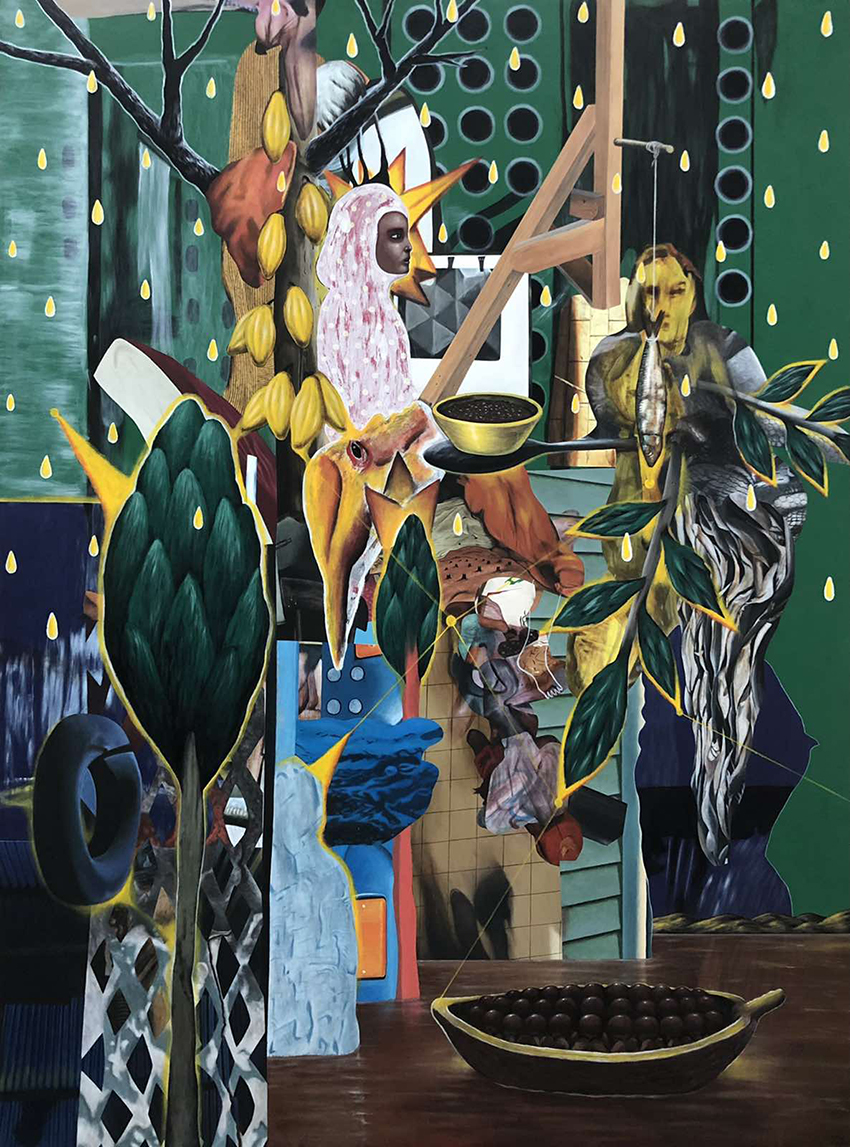
Tang Contemporary Art proudly presents In Stranger Lands: Cocoa’s Journeys To Asia – an exhibition curated by Caroline Ha Thuc, featuring 20 newly commissioned artworks by established artists working across Asia. After Vietnam, this is the second edition of the Asian Cocoa Project, a touring multidisciplinary initiative dedicated to the culture and history of cocoa in Asia.
For many of us, the taste of chocolate evokes childhood memories, sweetness, and the warmth of family. In Asia, chocolates were often brought back from visits to faraway countries and received as gifts with excitement and pleasure.
Today, chocolate is no longer considered an “exotic” luxury item. In addition to Western brands, many Asian countries have developed their own chocolate industries, incorporating flavours and ingredients that resonate with Asian palates. However, what lies behind the chocolate bars that we see daily on supermarket shelves remains, for many, unknown territory.
Is cocoa produced in Asia? Why has chocolate been absent for so long from the Asian culinary landscape, and can local producers meet today’s growing demand? Who are the farmers cultivating cocoa in the region, and what are the challenges they face when asked to scale up production in a sustainable way?
Conceived as a collective and creative research project, this exhibition invites us to delve into these issues, aiming to shed light on the many untold stories of Asian cocoa and chocolate through an array of embodied, emotional, imaginative, and conceptual artistic expressions. From the cocoa tree’s unique characteristics and its colonial history to the ecological challenges surrounding its current production and the many processes involved in turning beans into chocolate, the artistic diversity showcased in this exhibition unveils the extensive breadth, potential, and complexity of what is often perceived merely as a foreign delicacy.
The exhibition is complemented by a series of talks and chocolate workshops. For further details, please visit the gallery’s website.
Participating artists: Ravi Agarwal (India), Timoteus Anggawan Kusno (Indonesia), Antariksa (Indonesia), Agung Firmanto Budiharto (Indonesia), Bui Cong Khanh (Vietnam), Jigger Cruz (Philippines), Maung Day (Myanmar), Cian Dayrit (Philippines), Cyril Delettre (Hong Kong), Veronica Emery (Hong Kong), Jiandyin Collective (Thailand), Jason Lim (Singapore), Pan Lu and Bo Wang (Hong Kong/Netherlands), Kitti Narod (Thailand), Arin Rungjang (Thailand), Erika Tan (Singapore), Rodel Tapaya (Philippines), Ting Chaong-Wen (Taiwan), Robert Zhao Renhui (Singapore), Zheng Mahler (Hong Kong)
This project is supported by the METIS Fund and Maersk.
Friday to Sunday, Oct 18 – 20, 2024 Friday, Oct 18, VIP Preview 2pm – 4pm Friday, Oct 18, General Admission, 4pm – 8pm Saturday, Oct 19, General Admission, 12pm – 8pm Sunday, Oct 20, General Admission, 11am – 7pm
JW Marriott Hong Kong Pacific Place 88 Queensway, Admiralty Hong Kong
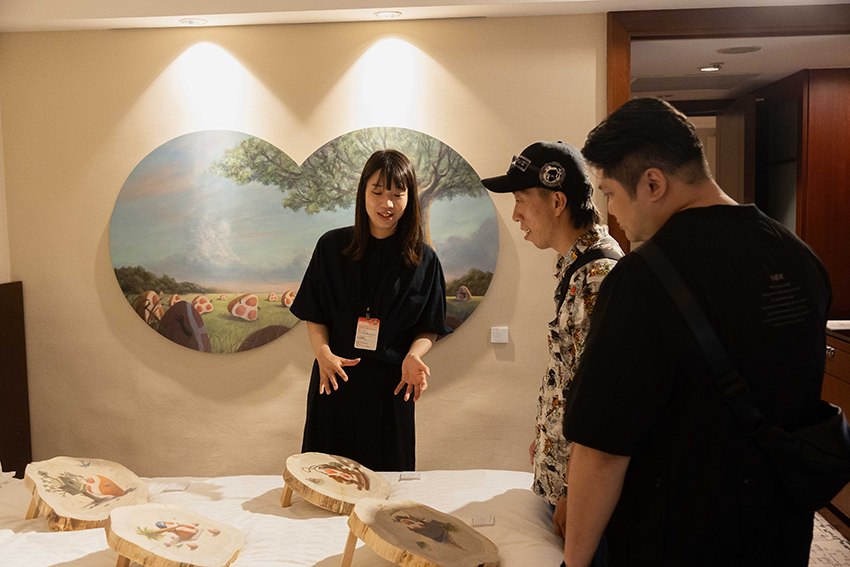
Following the successful events in Taipei and Singapore, WHATZ Art Fair brings this intimate and engaging art experience to Hong Kong this year, in collaboration with Art Curators Hub. The inaugural WHATZ Art Curators Fair will take place at the JW Marriott Hotel from 18-20 October 2024.
The Fair will present a lineup of over 150 emerging, mid-career and award-winning artists from more than 12 countries and regions. Each guest room at the hotel will be transformed into unique art spaces, echoing a visit to a personal space, viewing artworks in a cozy setting. 30 local and international artists will be present to engage with collectors and art enthusiasts, and to share insight on their artistic practice and inspirations of work.
The Organizer is delighted to collaborate with esteemed partners to infuse experiential elements to enrich your art journey, including a collection of Bruneian arts and crafts on display at the Art Lounge hosted by Royal Brunei Airlines to offer guests a glimpse into the rich cultural heritage of Brunei; a fun-filled photoshoot experience crafted by Venture Studios providing guests with a memorable keepsake; scent experience presented by Absence Therapy, and to delight your taste to enjoy a sip of beverage generously sponsored by our Hospitality Partners as you appreciate and collect art.
Last chance to secure your ticket on Klook, closing on 17 October 2024 23:59. Book your ticket here.
Featured image: Courtesy WHATZ International Contemporary Art Fair.
I Am a 70-Year-Old British Sculptor / PHD Group / Sep 14 – Nov 30, 2024 /
Christopher K Ho isn’t a septuagenarian; he’s a couple of decades years younger than that. Ho isn’t British either; he was born in Hong Kong, and his upbringing and education were primarily in the United States. He’s an artist who splits his time between Hong Kong and the US, and an arts administrator who is the executive director of Asia Art Archive.
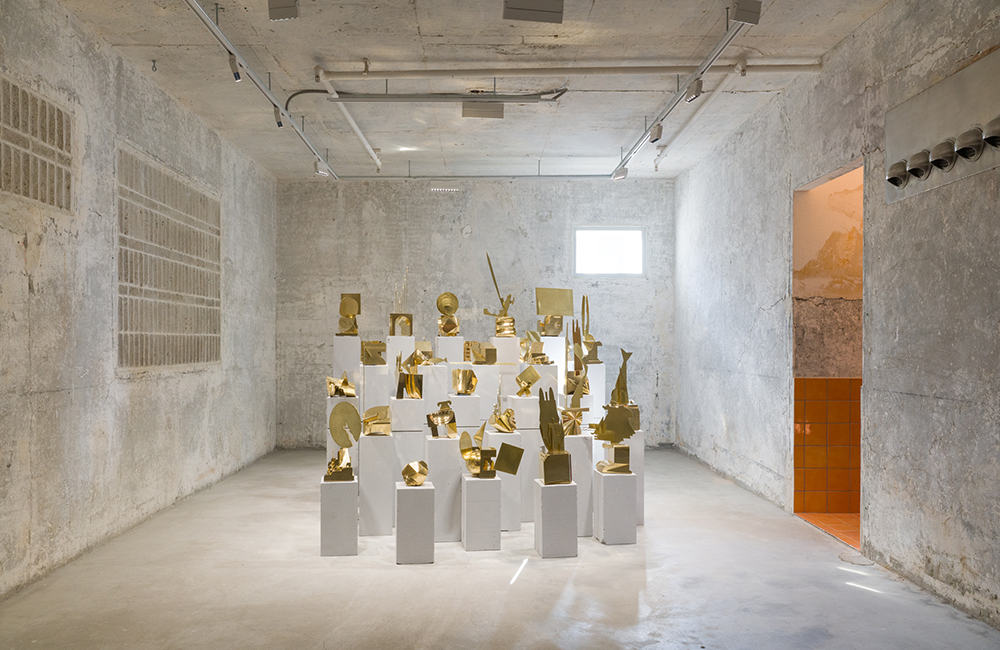
For his show at PHD Group, I Am a 70-Year-Old British Sculptor, Ho made 30 brass and aluminium sculptures forming one series, Return to Order, over the past three years. The full set was shown alongside 10 new drawings, each of which corresponds to one of the hefty three-dimensional works.
Installation view of Christopher K. Ho’s solo exhibition I Am a 70-Year-Old British Sculptor at PHD Group, Hong Kong, 2024. Courtesy the artist and PHD Group, Hong Kong. Photo by Felix SC Wong.
Ho’s creative process behind the artworks was anchored by an architectural exercise that starts with nine squares in a grid. By beginning with an arrangement of three rows or columns of three squares, architects make adjustments to introduce complexity to a space. The squares can be resized, reshaped or moved, and are then filled in with structural elements to create a final design. The technique prompts architects to focus on the formation of space—before considering style—and has been used to devise the drafts of modern residences, centuries-old temples and even the layouts of cities. American architect John Hejduk turned the nine-square grid into a formal exercise in the 1950s, and the process is still introduced to first-year students in many architecture schools around the world.
Presented in one cluster on cinder block plinths of varying heights, the sculptures of Return to Order involve a cornucopia of forms—tails of marine creatures, an animal that could be a cat or a cow, steps and terraces that could be parts of ziggurats, a rotary-dial telephone, figures that could be humans, mirror-like discs, rectangles, squares, the side-profile silhouette of a Canadian actor’s head, what could be the sail of a ship, a couple of unevenly shaped dice, and surfaces of different curvatures that elegantly intersect with other facets of the sculptures.
Ho applied the nine-square grid method to 16.5cm blank planes that were eventually merged, shaping each sculpture’s final form as a CAD drawing. In many instances, viewing different sides of the same sculpture led to the feeling of seeing different artworks.
The titles of Ho’s 10 drawings offer hints at the forms that the artist had in mind when creating his brass and aluminium works. The mustard, umber and artichoke green watercolour lines in Cross (2024) form an undulating grid framing a staircase, a nod at a sculpture that looks like steps cutting into a jack from the game knucklebones. The Big Cheese (2024) is made from two sheets of etching paper, cut and interwoven into a single image. A cinnabar and jasper lattice gives the impression of trusses and battens, embedded in a midnight-blue field. This drawing was the 90-degree axonometric representation of a sculpture that included archways, steps of varying sizes and orientations, a triangular prism, and a curved base resting on what looked like an aluminium teardrop.
Installation view of Christopher K. Ho’s solo exhibition I Am a 70-Year-Old British Sculptor at PHD Group, Hong Kong, 2024. Courtesy the artist and PHD Group, Hong Kong. Photo by Felix SC Wong.
The same technique, which was favoured by Hejduk, was applied to a brass piece that resembled a throne, with one small disc balanced atop a bulge emerging from the centre of its seat. The result was a glyph-like impression in Chair (2024), a white path cutting through coloured pencil and inkjet print markings, simultaneously presenting the sculpture’s top view (plan) and side views (elevations).
When asked about the declaration in the exhibition’s title, the artist had two answers. First, a cynical one: only an ageing, presumably white, male artist could get away with presenting a set of purely formal works in this day and age. Given the character of the Return to Order sculptures and their 10 accompanying drawings, why not lean in and name the show in a cheeky way?
Snail by Christopher K Ho, Coloured pencil, oil pastel, fabric, safety pin, gouache and archival inkjet print on Hahnemühle 320g etching paper with artist frame, 88 x 88 cm. Courtesy the artist and PHD Group, Hong Kong. Photo by Felix SC Wong.
Then, there was a more sincere reason: Ho wanted to demonstrate his art practice. While he is known for his artistic career in New York, Ho is chiefly associated with his role as an arts administrator in Hong Kong. That’s why he embarked on a rigorous, labour-intensive process to make these artworks over three years. Ho’s design process and choice of materials require precision and technique that could only be developed by spending decades honing his craft.
Return to Order leaves a powerful impression when seen in its entirety, with the sculptures reflecting warm, golden hues onto PHD Group’s bare concrete walls. The show was the first time all 30 sculptures had been shown in the same room, and it was hard to imagine another occasion when this could happen again.
Featured image: Installation view of Christopher K. Ho’s solo exhibition I Am a 70-Year-Old British Sculptor at PHD Group, Hong Kong, 2024. Courtesy the artist and PHD Group, Hong Kong. Photo by Felix SC Wong.
《Return to Order》系列中的雕塑作品集中擺放在高低不一的煤渣磚基座上,造型豐富多樣,有海洋生物的尾巴、某種疑似貓或牛的動物、像是金字塔中的台階和梯田、一台旋轉式撥號電話、 貌似人類的形象、鏡面圓盤、長方形、正方形、某位加拿大演員頭部的側面輪廓、船帆、幾個形狀不規則的骰子,以及與雕塑其他部分優雅交錯的不同弧度的曲面。
10幅畫作的名字暗示了何氏在創作黃銅和鋁製作品時所想到的形式。作品《Cross》(2024年)中由芥末色、黃褐色和苔蘚綠水彩線條構成的波狀網格,框住了樓梯,向拋接子遊戲中一格格樓梯被切割的雕塑致敬。《The Big Cheese》(2024年)由兩張蝕刻紙剪裁而成,交織成一幅圖。朱紅和碧綠色的格子給人一種桁架和板條的印象,鑲嵌在午夜般幽藍的田野中。這幅畫是某件雕塑的 90 度軸測圖,其中包括拱門、大小和方向不一的台階、一個三角形稜柱和一個相似鋁制水滴樣的弧形底座。
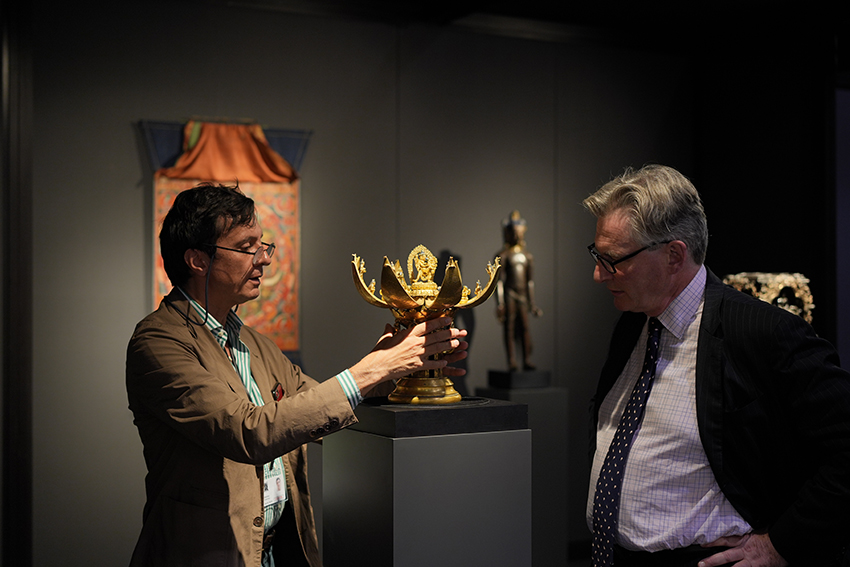
Fine Art Asia 2024, Asia’s leading fine art fair, is going to take place at Hall 1C, Hong Kong Convention and Exhibition Centre, from Friday 4 to Monday 7 October, 2024, with a VIP Preview on Thursday 3 October.
Successfully entering its 19th edition, Fine Art Asia has been striving to provide a vibrant platform and support cultural exchange in the arts between the East and the West. This year, the fair will introduce a dedicated sector focusing on ink art, INK ASIA, with the aim of expanding the vision and boundaries of contemporary ink art while promoting the traditional culture through an innovative perspective.Fine Art Asia also takes a major role in promoting intangible cultural heritage, shedding light on the spirit of craftsmanship and cultural significance.
Another fair highlight includes the debut of “Collectible Design – Asia Edition Pavilion”, showcasing a selection of outstanding collectible design items from Hong Kong, Mainland China, and other Asian cities. It aims to celebrate the magnificent blend of great design minds of designers and the exquisite skills of artisans, exemplifying the perfect convergence of design and art in a contemporary context and reflecting relevant cultures.
The Exhibitor List for Fine Art Asia 2024 is now available! We are thrilled to welcome over 60 galleries and organisations to this year’s fair. Please click here to learn more about our exhibitors and plan your visit in October.
In addition, there are various academic programmes on site for you to participate in discussions!
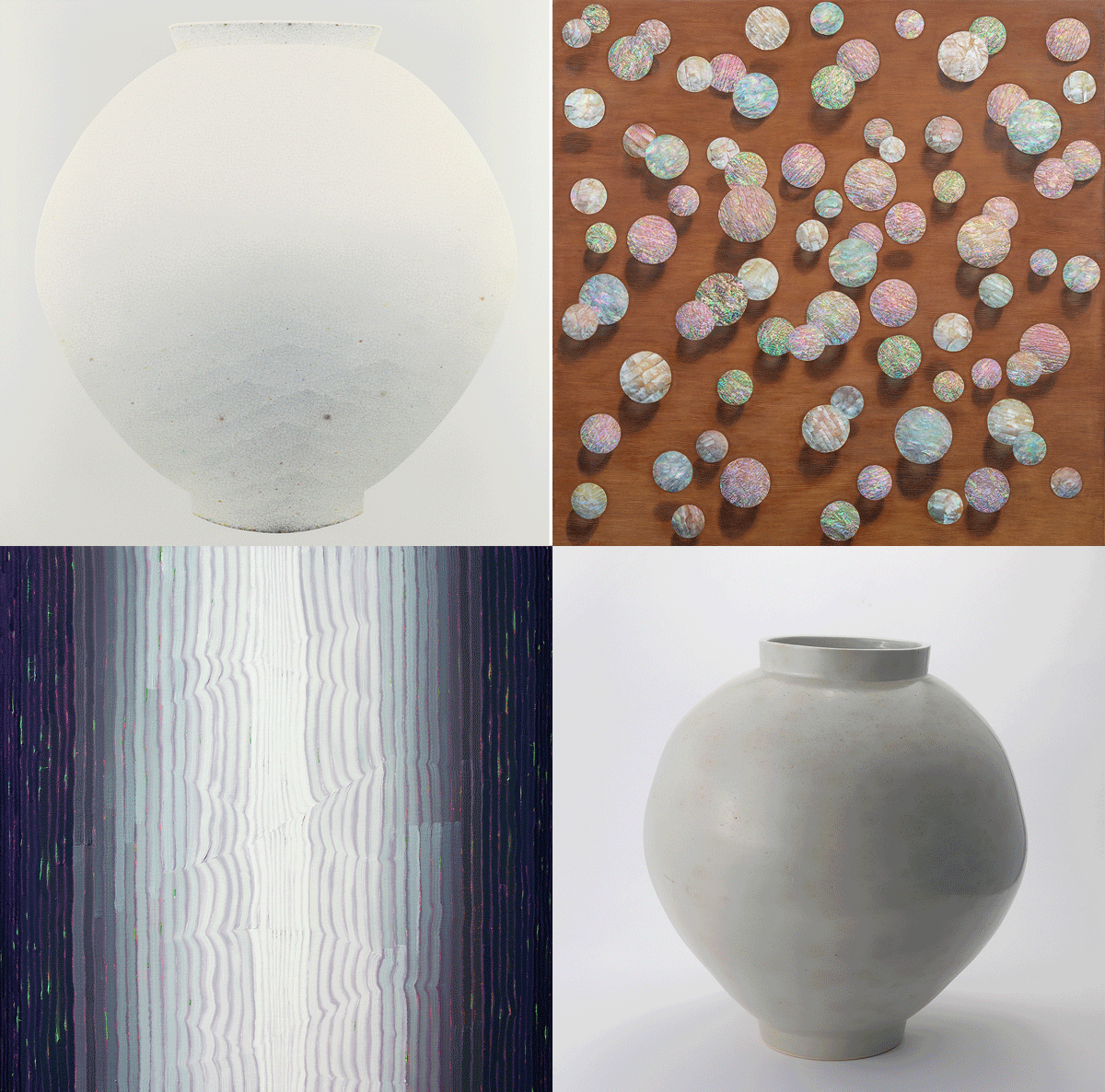
Soluna Fine Art proudly presents Pneuma 숨결, a group show featuring four established Korean contemporary artists: Choi Young-Wook, Kim Duck-Yong, Kim Young-Hun and Lee Gee-Jo. The word pneuma originates from ancient Greek, meaning “breath”, and can also be interpreted as “spirit” or “soul”. This exhibition aims to break down the boundaries between art and materiality, embodying the essence of Korean aesthetics and sharing the connected breath between the works and the soul. Through Pneuma 숨결, each artists intertwine traditional culture with their personal expression, presenting rich and diverse artistic styles that collectively reflect the unique spirit of contemporary Korean art.
apexart is soliciting idea based group exhibition proposals for its NYC Open Call October 1-31, 2024. Five winning proposals will receive up to a $10k exhibition budget and become apexart exhibitions at our NYC space as part of our 2025-26 exhibition season. Curators, artists, writers, and creative individuals, regardless of experience level or location, are invited to submit a proposal online
Submission process Submit 500 word proposals describing a focused, idea-driven, original group exhibition. No biographical info, CVs, links, or images needed or accepted. Submissions should be submitted in English. Jurors rate anonymous proposals based on their personal interest, cultural assessment, content and communicating the idea, See examples of winning proposals here.
Selection process Rather than convene a 5-person NYC panel to review hundreds of ideas, apexart’s crowd-sourced voting system involves hundreds of jurors from more than 75 countries to review proposals on their own schedule. The jury is composed of almost 800 individuals from a wide variety of professional backgrounds and international locations including students from 20+ participating university classes. Proposals are anonymous and randomized to ensure each submission receives equal consideration resulting in more than 20,000 votes on almost 500 proposals. apexart staff does not influence the results of the jury in any way.
Tai Kwun Contemporary is proud to present Tao Hui’s first institutional solo exhibition in Hong Kong, In the Land Beyond Living. Through painting, sculpture, video, sound, installation, and set design, the artist Tao Hui (b. 1987, Chongqing) constructs an absurdist, surreal landscape. Viewers are invited to reconsider the lives and spiritual states of ordinary folks as they navigate the ebb and flow of social development in China — from north to south, inland to coast, urban to rural, and industry to nature.
In the Land Beyond Living highlights the ways in which Tao Hui explores various individual struggles through his artistic practice. These include ethnic minorities living in the Hexi Corridor in the western province of Gansu, migrant workers eking out a living in rapidly developing cities, and new elites pursuing spiritual fulfillment. Weaving together stories of harsh conditions, migration waves, and regional disparities with the relentless search for a better life, Tao Hui forges surreal imagery and offers up new perspectives with which to understand the complexities of the contemporary present.
The exhibition features several new works especially commissioned from Tao Hui. Upon entering the gallery, visitors are greeted by a striking display of hyper-realistic yet vibrantly colourful glass chicken feet that frame the space as a threshold. This eerie yet enchanting work, entitled Money Grab Hand, guides viewers into an alternate realm “beyond living”. Within the space, the key piece—a multi-dimensional audio-visual installation titled Chilling Terror Sweeps the North—revolves around a love story replete with innuendoes, interpreting and reflecting on contemporary social disparities and divisions, along with the choices, compromises, confrontations, or escapes they entail. The work flows in a stream-of-consciousness manner, connecting different timelines and spaces, blending reality with dreams, and leaving space for poetic and imaginative exploration.
In the Land Beyond Living constructs a distinctive dreamlike, otherworldly scene around this key work, Chilling Terror Sweeps the North. From the ceiling down, the entire exhibition space is cast in a bluish hue, inviting viewers to step over undulating “hills” that make up “the land beyond living” and enter a pavilion with the exterior of a Chinese temple and an interior featuring an Islamic-styled arched dome. Inside, seated on glossy, marble-patterned vinyl flooring, the audience watches the film on a bright LED screen while a holographic storyteller offers remarks on the engrossing, unfolding tale of love and conflict while performing folk music from northern China. Through elements of sound, visuals, light, and touch, the installation prompts viewers to engage with the work on a multi-sensorial level.
The premiere of Tao Hui’s new piece Hardworking (2023) in Asia features a specially commissioned wooden sculpture resembling a melting human shape; supported on its back is a custom-designed slumped screen standing almost three metres tall. Following on his 2019 work Pulsating Atom, this piece once again adopts the vertical format of a mobile phone screen, depicting a livestream host on an e-commerce platform. She tirelessly performs and hawks products by day and by night, exploited to the point of being unable to tolerate the relentless demands of work and life. In this reflection on the increasingly dominant role of social media and mobile screen culture, Tao Hui invites viewers to explore the codependent relationships between the screen and reality, livelihood and hardship, the self and imagery in an ever-more digitised and isolated world.
Among the newly commissioned sculptures, Cuddle, which stands atop the undulating hills, marks Tao Hui’s first experimentation with ceramics and stone as materials. A petrified serpent coils tightly around a ceramic toilet, crushing it to the point of near rupture. The tension in the piece, though absurdist on the surface, feels oddly familiar. The sense of suffocating pressure, irrational yet unsettling, is precisely the atmosphere In the Land Beyond Living aims to evoke: it visualises the quasi-absurd pressures of everyday life—hard both to describe and to release—in the hope of finding resonance with the audience and providing a sense of relief.
Melting Suns on the Screen / DE SARTHE Gallery / Hong Kong / Aug 31 – Sept 28, 2024 /
As a preamble to his exhibition Melting Suns on the Screen, Liao Jiaming set up The Arcana Intelligent (2023), an interactive installation meant to simulate interactions with a sacred digital entity. Participants visiting de Sarthe Gallery sat or knelt on a cushion placed on the gallery’s floor, looking up at a nude, seemingly genderless avatar. Its barrel chest and awkwardly outstretched arms gave it an inhuman quality. Behind it was a vast vista of urban towers – blocky, dense, unclear whether they were part of an idealised, futuristic cityscape or a place at the end of civilisation.
The avatar and participant spoke to one another, their brief interactions culminating in a question posed by the visitor, the bigger the better. Silicon and software cogitations would yield an oracular response in the form of a dynamically generated tarot card. Do this on the right day and someone, such as artist Amy Tong, was present to decipher the image and elucidate the meaning locked within.
The entire experience stirs up associations with scapulimancy – divination using animal shoulder blades, sometimes known as oracle bones – or augury via Delphic fumes, and directly connects with Liao’s presentation that emerged from his time in 2024’s edition of the de Sarthe Artist Residency.
Through his show, the artist explored what it would be like to worship at the altar of a technological god, faith rooted in submission to artificial intelligence. The gallery, then, was hallowed ground, and the objects Liao created during his residency were reliquaries, icons and structures meant to inspire devotional awe.
The most direct connection was Vanity of Vanities (2024), a new audiovisual arrangement that used data mined and generated by The Arcana Intelligent. Hologram fans display images offered by visitors to the avatar in exchange for cosmic guidance, while audio tracks recorded from earlier interactions with the entity are played, each voice scrambled to mask the speaker’s identity. Electrical cables tangle and sprawl in different directions, punching into the white walls.
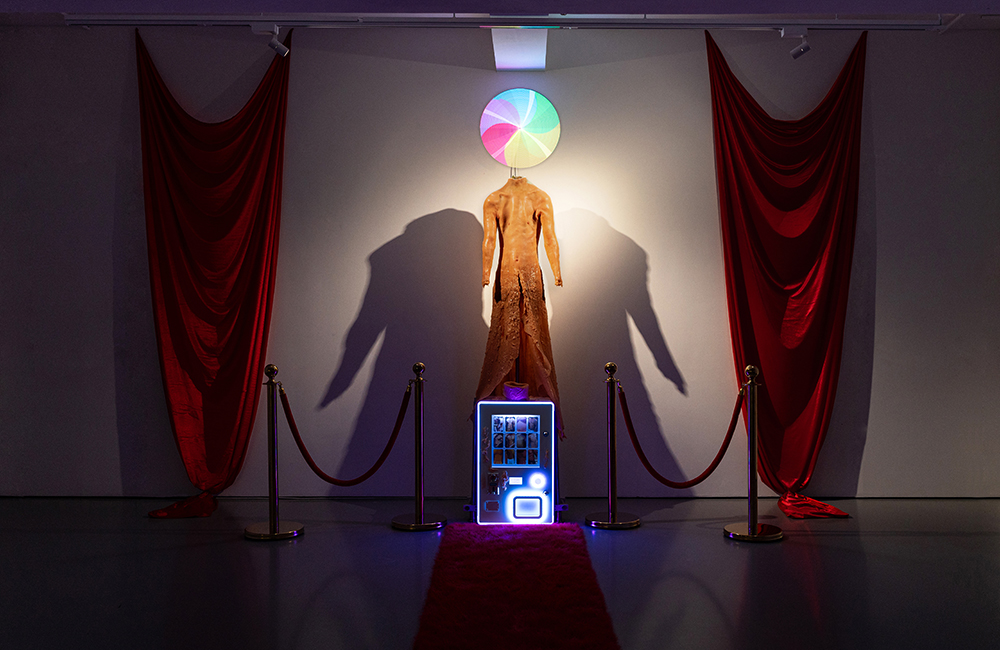
On the other end of de Sarthe’s space, The Creator 2.0 (2024) was set up like a station of worship, with a draping silicone bodysuit mounted atop a card vending machine. Visitors inserted a token to receive an AI-generated image of a male body, printed on cardstock, inspired by topless mirror selfies taken by men and uploaded to their photo galleries on dating apps. Viewed in a literal sense, the engagement was like a slanted derivation of encountering religious sculptures within a church or temple, then leaving with a charm meant to ward away evil or remind the holder of their faith.
There was more, including motherboards fused with glass and tarot card imagery from The Intelligent Arcana, as well as stained glass made to reference pictures from the same AI-created deck. These digital illustrations were an accumulation of answers, generated in response to the big and small questions posed by visitors in the early days of the residency – during the nascence of Liao’s techno-church.
In this scenario, what does that make the artist? Although playing the role of prophet and founder, Liao was absent from the theological experience. The show, after all, was meant to be an “abandoned site of worship”, with even the name of the religion lost to time. Yet the digital messengers of the AI god persist, still present to spark fascination in the pious and curious.
White Cube Hong Kong is pleased to present the first solo exhibition in Asia by New York-based artist Jessica Rankin (b.1971, Sydney, Australia).
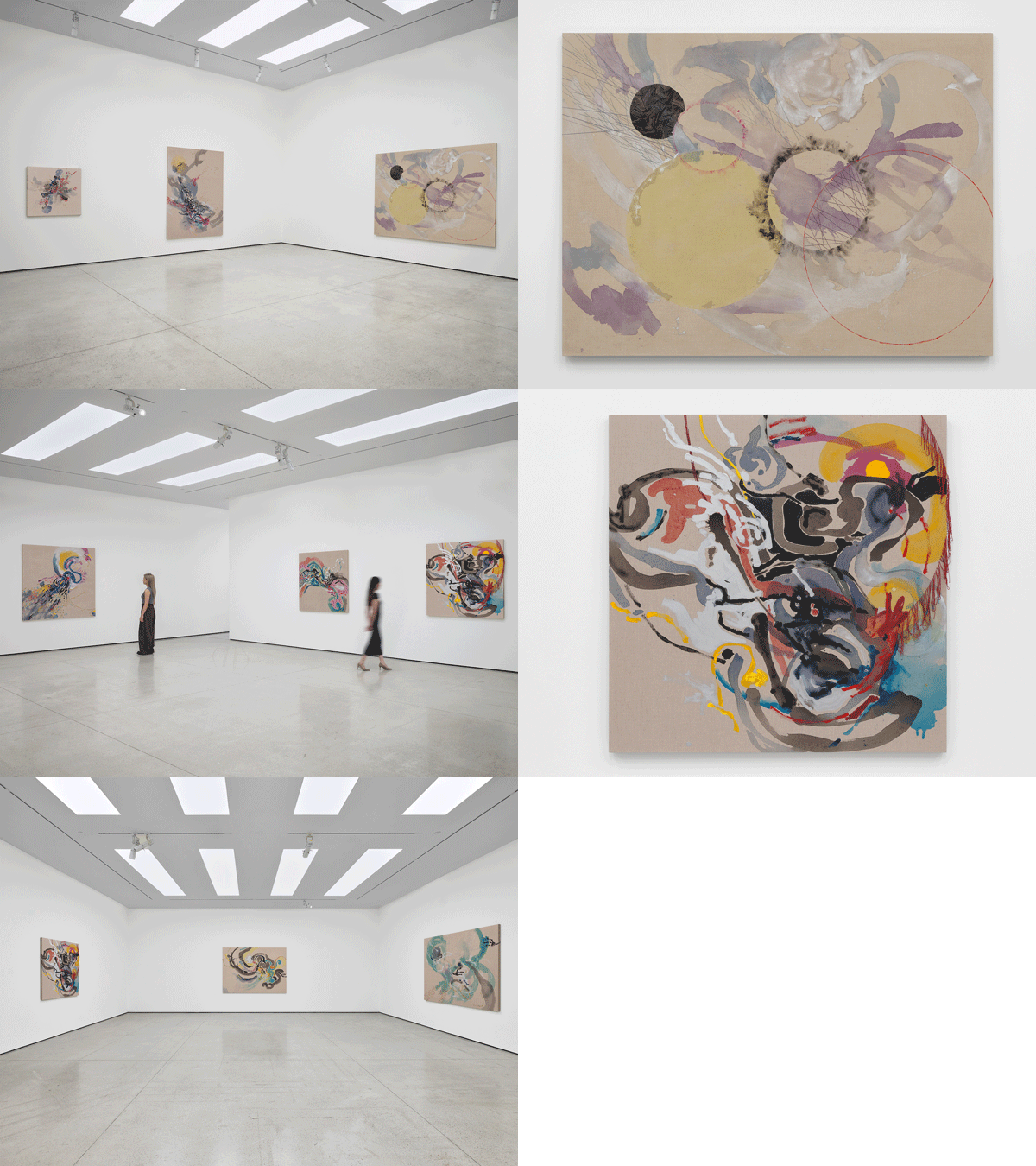
Working with gestural painting and embroidery, Rankin’s practice fuses personal experiences and memories with broader references to politics, history, literature and poetry.
The artist’s latest exhibition takes its title from her major painting, Sky Sound (2024), which references the poem ‘Earth web’, written by the artist’s mother, the renowned Australian poet and playwright Jennifer Rankin. The new canvases and double-sided works on paper featured in the show combine paint with delicate embroidered passages drawn from a variety of poems, including those by her mother.
Combining geometric and organic forms, the compositions feature vibrant interactions between paint splashes, trails, gestures, and the sewn line – elements which coalesce to create topographical and constellatory patterns, evocative of vast landscapes and cosmic realms.
Jessica Rankin: Sky Sound is open until 9 November 2024. The artist’s work is currently featured in the group exhibition Julie Mehretu: Ensemble, on view at Palazzo Grassi in Venice, Italy, until 6 January 2025.
SEEFOOD ROOM, a contemporary art gallery known for introducing global emerging artists and cultures to Hong Kong, is delighted to present the solo exhibition of Hannah Rollings (b. 1985, United Kingdom), See, Feel, Mark: A Journey of Exploration Painting in Hong Kong.
This plein-air exhibition documents eight distinctive sites across the city. Over two weeks eminent visual artist and scholar, Rollings, conducted an immersive plein-air painting performance and exhibition. She interpreted and portrayed the unique landscapes and botanical elements of Hong Kong.
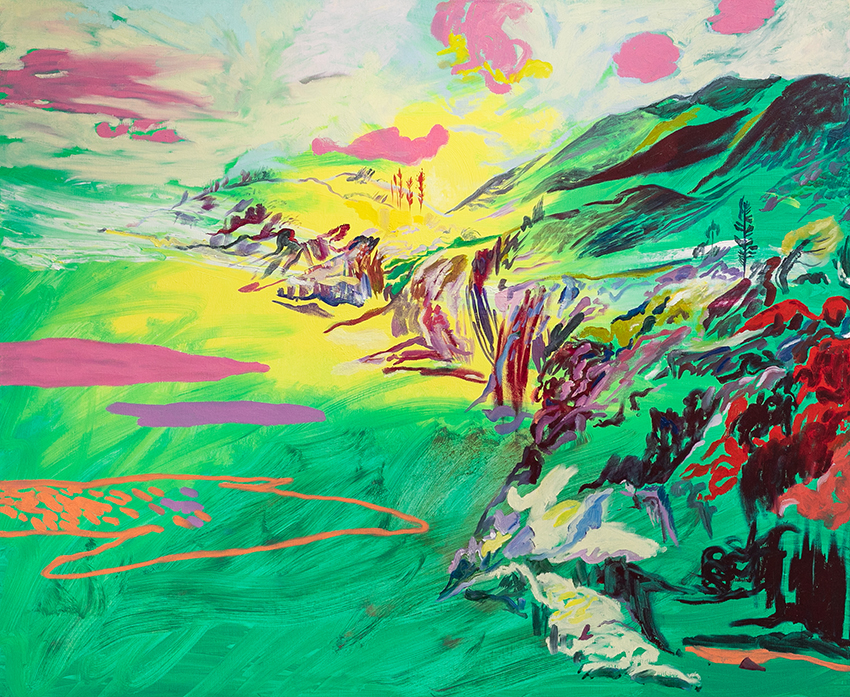
Rollings, a venerated practitioner of plein-air painting, connects profoundly with her environment through an artistic experience that explores an emotive response to colour and mark-making. Her method delicately straddles the line between abstraction and representation. As an environmental custodian, she employs traditional landscape painting techniques to encapsulate the essence of the land.
Featured image: Big Wave Bay by Hannah Rollings, Oil on canvas, 120 x 100 cm, 2024. Courtesy the artist and SEEFOOD ROOM.