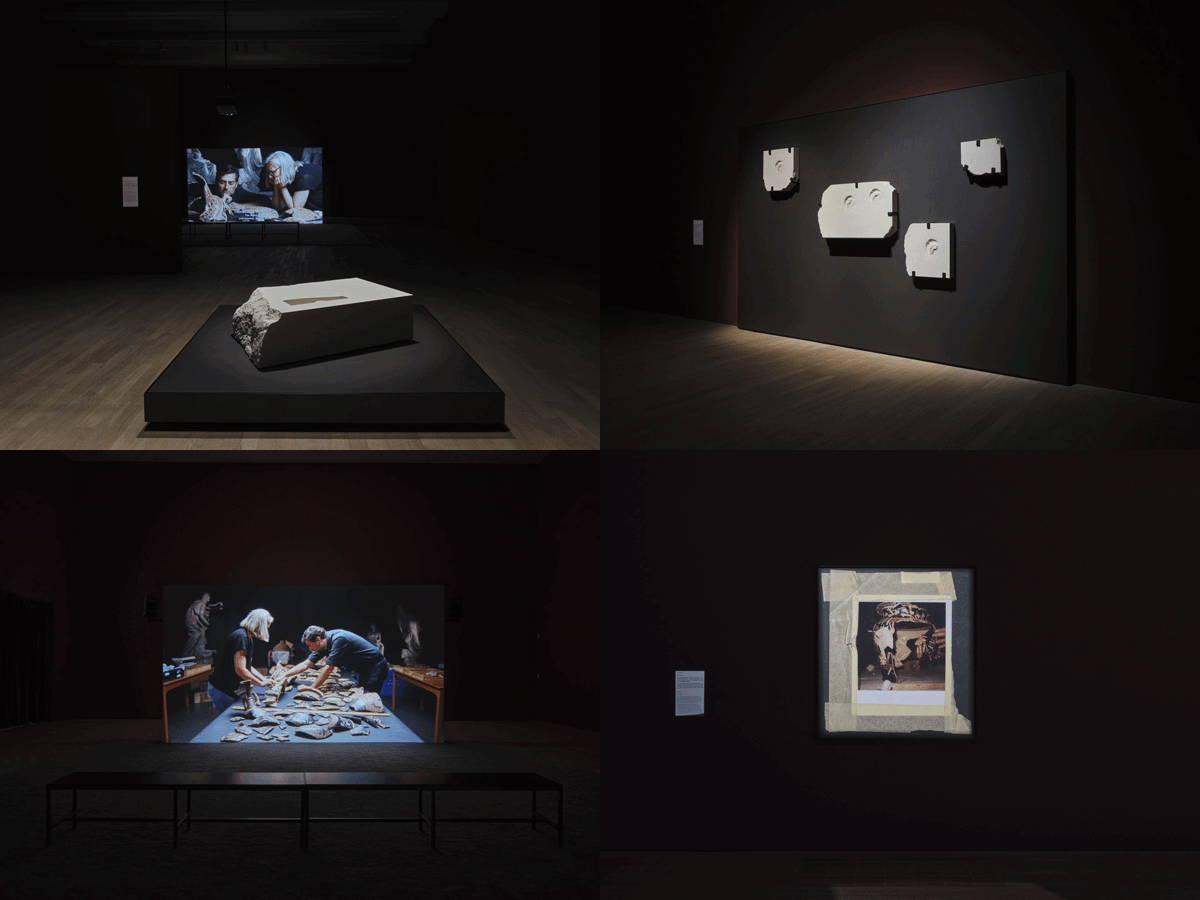
For her inaugural solo exhibition in Asia, Maeve Brennan(b. 1990) creates three newly commissioned works including a film shot in Puglia, Italy, and two sculptures. Brennan is a cinematic storyteller and filmmaker whose practice investigates material histories, underground economics, and ecological issues. Adopting a unique approach that blends forensic investigation with poetic tales drawn from real-life stories, Brennan has quickly established herself as one of the most compelling voices in contemporary documentary filmmaking. Through deep research and long-term collaboration, the exhibition uncovers the hidden world of stolen antiques, exposing the networks that shape our cultural past and present. Running from 21 March to 8 June 2025 at the JC Contemporary, Records features ongoing projects from the artist, spanning moving image, sculpture, works on paper, and printed matter.
The exhibition title Records speaks to the documentation, and preservation, of often-overlooked narratives surrounding places and objects. Resembling documentaries in their style, Brennan’s films draw the audience in with sweeping imagery and captivating characters. In her material practice, which the artist has described as “artefacts of her research enquiry,” she reconfigures elements of her research for different modes of storytelling. Brennan’s most recent film, Siticulosa (2025), co-commissioned by Tai Kwun, delves into the origins of the looted antiquities featured in her earlier film An Excavation (2022), tracing them back to the Puglia region of Southern Italy. Taking audiences on a one-of-a-kind journey, what begins as an examination of the impact of illicit archaeological excavations on Puglia’s landscape and communities becomes a rich and nuanced study of the area, extending beyond archaeology, and ultimately offering a breadth of local knowledge and intimate understanding of the land.
In the piece Box 29_01 (2022), the artist reproduces a Polaroid discovered alongside artefacts looted by Italian tomb raiders. This interconnectedness with spaces where marginalised histories appear resonates powerfully with Tai Kwun’s complex heritage, which – in its capacity as a cultural hub – is constantly under examination and reinterpretation. On a larger scale, Hong Kong’s longstanding role as a global centre of trade and exchange also provides a fitting context for Brennan’s exploration of cultural ownership and contested historical accounts, prompting audiences to consider the social and political implications embedded within objects and their surroundings.
In The Goods (2018 –), a multi-disciplinary project examining the international trade in looted antiquities, the artist continues her long-term collaborations with forensic archaeologist Dr Christos Tsirogiannis. Taking Brennan’s investigation from Lebanon to London and across Europe, The Goods gives a sense of the largely invisible economy of the illegal antiquities market, which is one of the most profitable, after weapons and drug trafficking. Through Brennan’s observations, the series uncovers the entangled backstories of recovered ancient objects. These narratives unravel the complex histories of artifacts violently stripped from their contexts by looters, while silently alluding to the irretrievable stories lost in the process. By doing so, The Goods sparks urgent conversations about ownership, restitution, and the ethics of preservation, challenging viewers to reconsider the moral implications of cultural heritage and its displacement.
White Cube is pleased to present the first exhibition in Asia of paintings by American artist Lynne Drexler (1928–99).
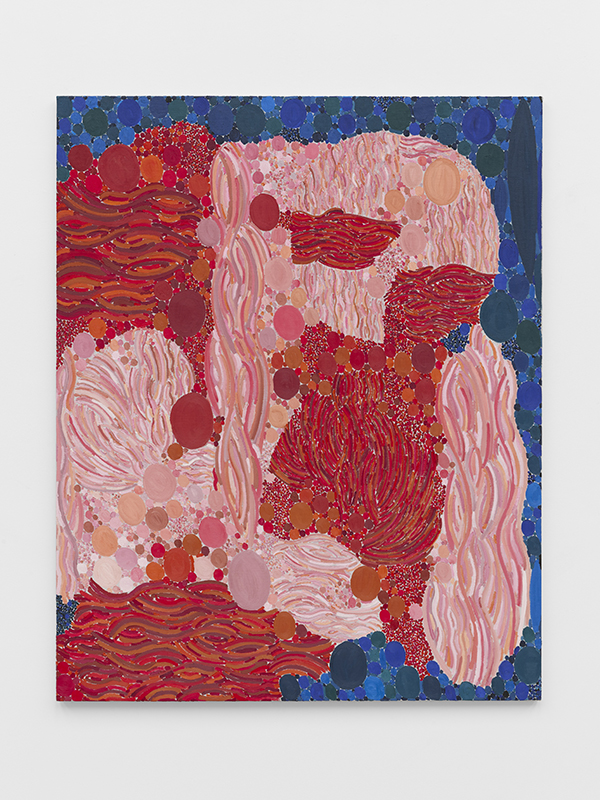
Coinciding with Art Basel Hong Kong, ‘Lynne Drexler: The Seventies’ will debut never-before-seen works created during a pivotal decade in the artist’s practice.
Affiliated with the second-generation Abstract Expressionist movement, the artist’s vivid chromatic compositions reflect a breadth of stylistic influences, drawing from Impressionism, Fauvism and Pointillism, as well as classical music and the natural landscape. Executed through tessellated rectangles of paint, Drexler’s colour fields emanate an organic, kinetic dynamism.
The exhibition follows White Cube’s first solo presentation of her work at Mason’s Yard, London, in November 2024, and the gallery’s announcement of the representation of The Lynne Drexler Archive in 2023.
DE SARTHE returns to Art Basel Hong Kong 2025 with a curated presentation at Art Basel Hong Kong’s Galleries sector, an interactive installation by Lu Yang at the fair’s Encounters sector.
In Galleries, the gallery will be participating with a nine-artist presentation, featuring a selection of works on canvas and paper, video, and multimedia artworks by the gallery’s roster of represented and collaborating artists, including Chan Ka Kiu, Hou Jianan, Lov-Lov, Ma Sibo, Mak2, Caison Wang, Wang Jiajia, Wang Xin, and Zhong Wei. Of particular note is a newly created interactive video game by Hong Kong-based artist Mak2 that visitors can play at the booth. Under the new cultural narrative forming amongst contemporary artists from Asia, cultivated by the emerging phenomenon of digital diaspora, the presented artists investigate the agents of identity in the post-technological era.
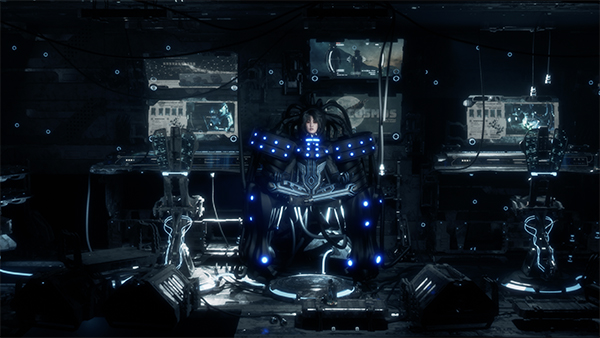
Following Mak2’s large-scale installation Copy of Copy of Copy of Copy for Encounters in 2024, the gallery will also be returning to the sector this year with a boundary-pushing multimedia installation by Tokyo-based artist Lu Yang, presented in collaboration with COMA. DOKU the Creator is an interactive installation that contemplates the art ecosystem under the contemporary context of a highly technologized society. The installation poses DOKU, a digital persona that Lu has been developing since 2020 combining digital art, AI, CG, and virtual reality, as an independent artist. Manifesting in the unexpected form of a pop-up store within an art fair, the encounter poses sharp but fundamental questions about authorship, creation, and the relationship between art and its value. Founded on the notion of art fairs as a critical part of the artistic value system, Lu’s unconventional approach encourages a fresh and playful interaction between art, the artist, and the audience – disrupting traditional modes of creation, challenging conventional art market practices, and redefining how art can be distributed.
David Zwirner is pleased to announce an exhibition of paintings by New Zealand–born and Los Angeles–based artist Emma McIntyre at the gallery’s Hong Kong location. This is McIntyre’s first solo show in Asia.
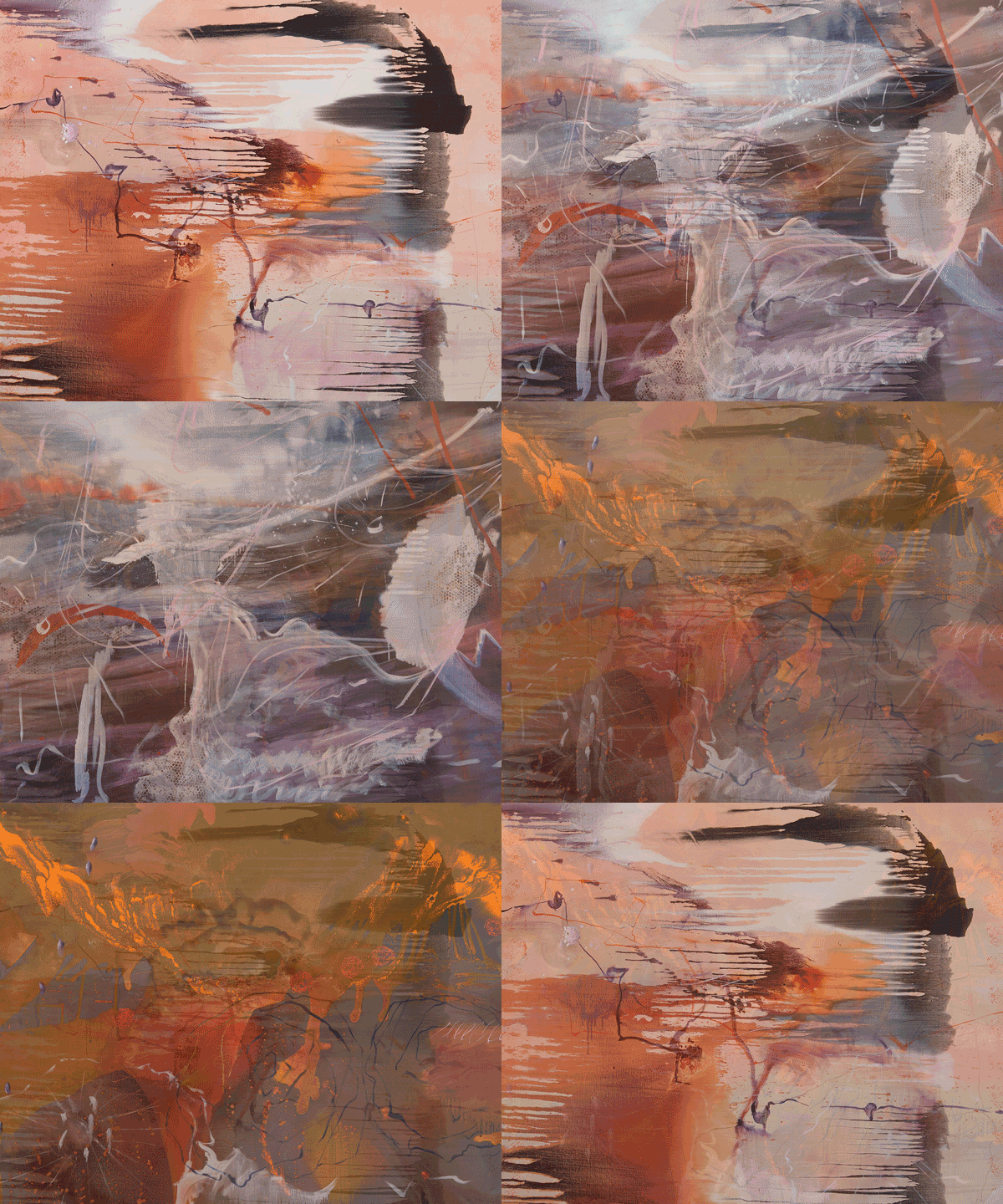
McIntyre creates vivid abstractions imbued with chromatic and gestural energy. Made with oils and unconventional substances like oxidized iron, her instinctual yet deeply considered works explore the alchemical possibilities of the painted medium and expand traditional understandings of landscape and the natural world. The artist’s practice is protean and rhizomatic; each painting shares its roots with the ones before and after it, enacting an endlessly transformative system of generation and discovery.
The show in Hong Kong, Among my swan, shares its title with a 1996 album by the band Mazzy Star that has inspired McIntyre; moreover, it alludes to the depictions of swans and cranes that often surface in her work and were also recurrent motifs for artists such as Robert Rauschenberg and Sigmar Polke. With their elegant, curlicued necks, McIntyre’s avians act as historical and mythical harbingers as well as tools of spatial orientation that signify the presence of open air and endless waters.
Building on McIntyre’s ongoing material and conceptual investigations, the paintings in Among my swan share a central focus on the transformation of images and mediums. The artist situates her paintings in a theatrical context in which space is rendered much like a stage set—a landscape built up from overlapping layers that collapse various locations and perspectives, both real and imagined, onto the same picture plane.
Other works are accented with patterns or borders made from unexpected materials: McIntyre creates rasterlike dots using the imprint of bubble wrap, for example, and repurposes a cut radicchio into a stamp that leaves behind a blossoming floral design. The resulting compositions provide an unorthodox path toward painterly abstraction—one that is rooted in textiles, craft, and domestic and interior spaces.
As the artist remarks: “Any idea of ‘pure’ abstraction is destroyed the moment I pick up a tube of paint. Pigments are made up of the world itself—the tube in my hand may contain blackened bones, crushed precious metals, the excretion of beetles, dirt, among many other things.… As these paintings develop, each is suggestive of a distinct environment or weather system, like little worlds within a larger ecosystem. They move through atmospheric space, cloud formations, watery environments, dirt, dust, domestic realms, wallpaper, through to earthly and almost hellish scenes. I aim to complicate abstraction, and my interest in landscape feeds into that.”
Whitestone Gallery Hong Kong is honoured to present Sacred Nexus, a solo exhibition by acclaimed Japanese artist Miwa Komatsu. Until now, Komatsu has presented works under the theme “sense of sacredness”, aiming to evoke inner spirituality. As part of a new venture, the Sacred Nexus exhibition unveils over 20 new works by the artist.
A sacred nexus is a confluence of sacred resonance – a place or moment where we can have spiritual interaction and dialogue with divine spirits and the natural world. Historical sites of worship, lands imbued with earnest prayers and nature itself are the inspirations for Komatsu’s practice; she envisions invisible energy and creates an intersection of the material and immaterial realms. She amplifies the resonance between her works and the viewers, reminding the audience of the sacredness deep within themselves and prompting their connection to divinity.
About the artist
Miwa Komatsu (b.1984) is known for one of her artistic expressions, live painting, which is not a performance but a solemn ritual, one of awakening to the sense of sacredness. In 2019, Komatsu captivated the audience with a live painting performance at the Cleveland Museum of Art in the US. Continuing her artistic journey, in 2022 and 2023 she showcased her talents with performances at Itsukushima Shrine in Japan and Mont-Saint-Michel in France respectively.
Her recent exhibitions have taken in a diverse range of themes and venues, including Prayer for Nature at Wood One Museum of Art (2020); Miwa Komatsu: Prayer at Whitestone Gallery Ginza (2020); a show at the Nagano Prefectural Art Museum (2021); Transparent Chaos: Spirituality and Mandala at Taro Okamoto Museum of Art (2022); We Love Korea: Miwa Komatsu at Whitestone Gallery Seoul (2023); Miwa Komatsu: Sense of Sacredness at Whitestone Gallery Singapore (2023), Whitestone Gallery Taipei (2024) and Whitestone Gallery Beijing (2024); Opening Up a New World of Art at Ashikaga Museum of Art (2024); and Zipangu at Saga Prefectural Art Museum (2024). A touring exhibition will be held in 2025 at the Sapporo Art Museum and the Hakodate Museum of Art in Hokkaido, Japan.
Komatsu’s works are in the collections of prominent museums and institutions such as the World Trade Center in New York, the British Museum, To-ji Temple in Kyoto, Nagano Prefectural Art Museum, Wood One Museum of Art, Izumo Taisha in Shimane, the official residence of Consulate-General of Japan in Cleveland and Walt Disney Japan, among others.
Multidisciplinary artist Michele Chu explores how human bodies interact and express our deep and often hidden emotions. Through performances and interactive installations, her practice engages with the tensions and societal norms that govern the public space and our cultural customs. Delicate and subtle, her work also involves sharing parts of her own intimacy and personal memory as an invitation for viewers to journey inward and question the threads that bind us to one another and the world we inhabit.
Caroline Ha Thuc: Your practice revolves around the ideas of intimacy and personal emotion. What triggered this interest? Michele Chu: My interest in intimacy dates to my graduate school, where I became aware of how many of my friends were struggling with loneliness. The juxtaposition of connection [through friendship] and isolation prompted me to question the nature of intimacy and what fosters closeness between people.
Michele Chu. Courtesy the artist.
Because intimacy is so inherently human-centred, in conjunction with doing academic research, I also conducted fieldwork through street interventions with strangers. These insights directly informed the design of one of my earliest projects, inti-gym – [short] for “intimacy gymnasium” – which was my response to the loneliness epidemic. The concept was to create a space where people could train their intimacy muscles, much like how we work out physical muscles. I created an architectural model with zones for intimacy training, with different levels of interaction – with the self, one on one and one to many. The one on one installation was built to scale during my final year of graduate school and later evolved into inti-gym version 2.0, which was exhibited at Tai Kwun in 2021.
Intimacy remains a central theme in my work and is something I want to keep exploring throughout my life. Feeling connected, belonged and seen is a universal human need. Fleeting intimacy with strangers can bring emotional resonance and meaning, and break our monotonous routines, [but] actually [causes] more vulnerability due to the lack of commitment.
CHT: How our bodies respond to these feelings is also at the core of your work. MC: My interest in somatic memory began when I started therapy. I was feeling very disconnected from my body. My therapist guided me through exercises that helped me recognise intense emotions, identify where they were stored in my body and release them through physical actions.
This experience and reading Bessel van der Kolk’s The Body Keeps the Score got me thinking about how emotions and memories live within different parts of the body. Clog in Throat (2021), Purge (2021), as well as my series of cyanotypes shown at 1a Space in 2021, stem from this exploration.
For Clog in Throat, for example, I reflected on a childhood memory that felt like hairballs stuck in my throat, similar to clogged drains. I made a glass cast of my décolletage and neck area, and used resin to stick hair to the throat area to embody this sensation in the sculpture. When I described this to my therapist, she asked what I wanted to do with that sensation and I said I wanted to vomit it out. She had me imagine purging this energy, which I visualised as a black pool of liquid ink. For the work Purge, I used an inflatable pool reminiscent of childhood and filled it with ink and other black liquids to embody that release.
CHT: The performance Take a Seat, Make a Friend (2021) worked as an invitation to meet a stranger in the street. To make friends is also at the core of Tozer Pak’s practice: do you think that this topic is specifically linked to the Hong Kong urban and cultural context?MC: I really like Tozer Pak’s practice, especially his waiting works [in which he waits in a given place in case a friend passes by], which I think are very romantic. I love their tension between public and private, friend and stranger, and this quiet, hopeful sense of waiting for something magical to happen.
At the core of these works, and of Take a Seat, Make a Friend, is a response to the pervasive sense of loneliness that is common in major cities. In Hong Kong, loneliness is amplified by the way people navigate public spaces, maintaining strict personal boundaries. People avoid eye contact, minimise unnecessary verbal exchanges and often retreat into their own private bubbles in daily life. This behaviour, though, is essential for psychological survival in such crowded conditions.
In my street interventions, I attempt to disrupt the monotony of daily life, offering moments of unexpected connection. I see these interventions as an effort to engage with the city in small, targeted ways – what I think of as a form of urban acupuncture. It’s an attempt to nudge people to engage with one another, to exercise their “intimacy muscles” and open themselves to the possibility of connection, despite the city’s fast-paced rhythm.
Clitch. Michele Chu and Sudhee Liao. Courtesy the artist.
CHT: What about the cultural resonance of touching someone you do not know? MC: This restraint ties into [anthropologist] Edward Hall’s concept of proxemics, which explores how physical distance correlates with different types of relationships. In many Asian societies, the comfort zone for physical closeness tends to be more expansive, particularly with strangers or acquaintances. This cultural norm creates a different resonance around touch – its rarity makes it more intentional and potentially more meaningful when it does occur.
In my practice, I try to challenge and explore these norms through participatory works, such as street interventions or inti-gym.
CHT: The skin, in particular, seems to be an important source of inspiration: as a veil, a membrane, a plastic film and so on. How do you approach this part of our bodies? MC: For me, skin represents both touch and connection. It acts as a barrier that protects us yet it’s also what brings us closer together. Touch, to me, is one of the most primal and universal forms of non-verbal communication. It can express reassurance, comfort, love and countless other emotions. Touch also has positive effects on the body – it’s known to trigger [bonding hormone] oxytocin, boost mental and physical well-being, and convey meaning through body language without words.
A significant part of my research examines how barriers, paradoxically, can foster intimacy and connection. They offer a sense of safety by allowing people to opt in or out of interactions. This principle inspired part of the design of inti-gym, where a fabric membrane divided participants into separate sections of the installation. Participants couldn’t see each other and the dim lighting added to the sense of anonymity and trust, akin to a confessional. The choreography encouraged touch through this fabric membrane, followed by conversation through prompts, and ended with a reveal moment when a window flap was opened, allowing eye contact.
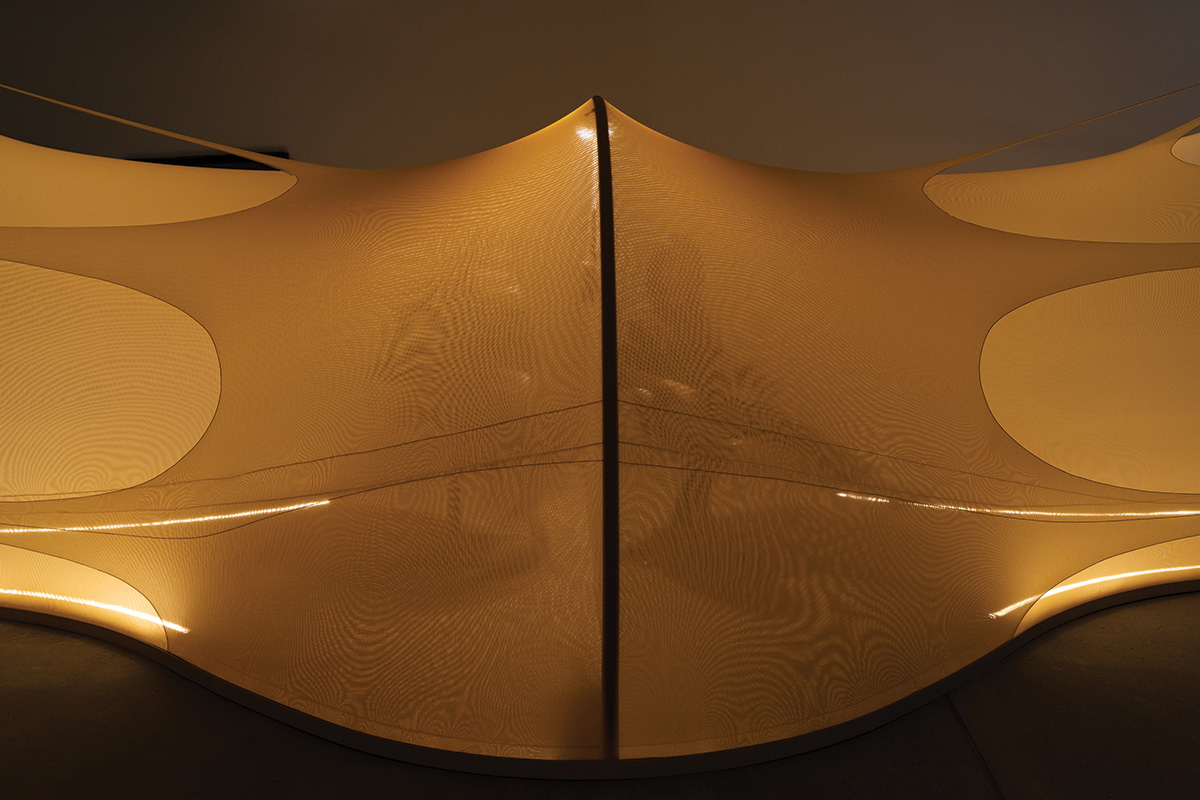
In the installation, I used mesh nylon fabric to create an organically shaped cocoon that invites and envelops you in its soft embrace, inspired by [Brazilian artist] Ernesto Neto [known for his large experimental sculptures and installations]. In my work, I often use nude tones reminiscent of human skin. This choice is a reminder of our shared humanity at its most basic level. My goal is to create environments where people feel safe enough to take an emotional risk – sharing a brief, magical moment of intimacy with a stranger, despite the initial vulnerability it might require.
During the Covid-19 pandemic in Hong Kong, I adapted this idea to work with the acrylic barriers used in restaurants for sanitation. These barriers, often associated with disconnection, were transformed into tools for connection. In one street intervention, I invited strangers to wear LED light gloves and trace light patterns with their fingers on one side of the acrylic barrier, while I mirrored their movements from the other side. Together, we followed each other’s light paths, creating a shared moment of interaction through the barrier. This simple, playful interaction transformed the barrier from something isolating into a medium of shared experience.
CHT: Many of your artworks make me think of Yoko Ono: not only the emphasis on touch but also instruction. Is she an artist you have been influenced by? MC: Since many of my works are participatory and require clear instructions for viewers to follow a choreography and engage physically with the piece, I’ve been experimenting with various methods of delivering instructions – auditory [via audio recordings or live voice], visual [via written words and prompt cards] or purely through body language and actions. In exhibitions, I often use written instructions but I enjoy experimenting with tone, word choice and detail. It’s always fascinating to see how individuals interpret and adapt these instructions, often contributing their own unique physical and personal responses to the work.
While I enjoy Yoko Ono’s work, I wouldn’t consider her a direct influence. I’ve rather drawn inspiration from figures like [American experimental composer] Pauline Oliveros, particularly her deep listening exercises. Her humming exercise, for instance, in which she explores collective meditation as a form of music, inspired part of the choreography for Glitch (2022), a performance I did as part of Sound Forms at Tai Kwun, in collaboration with dancer Sudhee Liao. This piece explored the gap in expectations of touch, proxemics and social cues that emerged during the pandemic. Extended isolation rewired how we think and behave, creating both a craving for touch and a hesitancy to reconnect. Glitch celebrated the awkward stumbles and recalibrations of learning how to be physically and emotionally close again, showing that vulnerability and adaptation are part of human resilience.
Installation view, Para Site. Courtesy the artist.
CHT: Spacial design is paramount in how you prepare the audience to encounter your work, almost like a ritual. At PHD Group, with you, trickling (2023), you created a very meditative space, while for the exhibition The Embrace and the Passage (2024) at ParaSite, you played with the corridor and surrounding area. MC: I think the root of this is how I approach creating immersive installations. With my design background, I tend to think of the viewer’s journey as a whole – before, during and after the exhibition. I often draw on frameworks like Jacques Lecoq’s levels of tension [used by the stage actor to explore a character] to design these transitions, and I find inspiration in user experience design and immersive theatre, like Punchdrunk productions. These influences help me craft spaces that nudge viewers into specific states of mind.
At Para Site, I considered how visitors might pass the nearby funeral home and funeral flower shop on their way to the exhibition. For the performance Ghost of Raspberry (2024), for example, I placed an aroma diffuser with the scent of orchids in the exhibition hallway, inspired by the fragrance of funeral flowers at the back of the shop, in Para Site’s parking lot. Inspired by the funeral home’s blue neon light and the nearby water, I tinted the windows and light box blue, creating a contemplative link between the external journey and the exhibition space. These sensory elements serve as subtle cues for reflection, grounding viewers in the present and preparing them for the work.
Similarly, at PhD, the rooftop gallery’s secluded location and layout inspired me to create an intimate experience, employing the pre-journey of going up the staircase after the top floor, and [the fact] that you pass by four doors before entering the main gallery space, which builds anticipation. I was thinking about these lead-up spaces and designed a pre-exhibition space that served as a transition into the main gallery space. Visitors were first greeted by a fabric curtain with a slit, resembling a skin-like membrane – an invitation into my inner world. Inside, a hallway featured a mist shower to disorient and cleanse the senses, almost like a mood palette cleanser. After passing a row of heat lamps in the hallway that sparked discomfort and built tension, viewers were then guided to light an incense stick and walk through a circular fabric installation, and instructed to pay attention to the soles of their feet in a circular, meditative walk. They were asked to repeat this circular path until they felt ready to exit the circle.
I believe transitions are essential for entering a particular headspace. My installations often include spaces or rituals that encourage viewers to turn their attention inwards before turning outwards again, creating a natural rhythm of expanding and contracting tension and focus, just like breathing.
CHT: I guess such a space was needed to open up and be receptive to the emotions that stem from your artworks. Grieving, in particular, seems increasingly present in your recent installations. How do you approach this delicate emotion? MC: Recently, grief became a theme in my practice both personally and communally. On a community level, there has been an undercurrent of loss in this city. On a personal level, my mother passed away last year.
The solo show at PhD focused more on anticipatory grief with my mother and creating spaces for communal grief. Currently, my recent work explores the intersection of grief and gastronomy. At Delfina Foundation in London in 2024, I collaborated with chef Barney Pau through a workshop, inviting participants to map their emotions and pair them with specific flavours and textures of food he prepared. Lately, I’ve also been working with salt as a medium. Salt, for me, symbolises both tears and preservation, encapsulating the duality of grief: the pain of loss and the act of holding onto memories.
Installation view of you, trickling at PHD Group, 2023. Courtesy the artist and PHD Group.
CHT: In Ghost of Raspberry, it felt as if we were at the same time sharing your loss and mourning our own deaths, in a very subtle way. MC: I wanted to recreate that duality – offering participants the space to explore their personal grief while fostering a sense of connection through shared actions. The performance was designed to offer a glimpse into my internal landscape while guiding you to reflect on your own emotions and experiences. This involved subtle communal moments, such as passing salt, drinking soup together or engaging in the same activity.
For me, processing grief has always been a tactile experience. I work through emotions with my hands and this naturally translates into my art practice. Creating work becomes a way to express and navigate grief when words may fall short.
CHT: Going back to the idea of intimacy, you include many personal elements in your work, such as family photographs and even your own menstrual blood. What do you expect from such exposure? MC: The intimacy of my artworks stems from their autobiographical nature. The materials I use must resonate with me personally before they can connect with others. While my physical body is absent, the emotions I aim to convey and my personal touch remain present, and I hope viewers feel that.
Sometimes, I literally incorporate parts of myself into my works, reflecting themes of time, memory and the body’s biological rhythms – like menstruation, nail clipping or shedding hair. This practice began during the disrupted sense of time in the Covid era, leading me to collect traces of my body as markers of transformation. Since 2020 I’ve gathered them, which culminated in a duo exhibition at 1a Space in 2021 [with Dave Chow] and later informed works for my PhD solo show.
I vividly recall the fear of publicly displaying my menstrual blood for the first time at 1a Space. Yet I’ve come to see fear as a compass – when I’m most scared to share something, it’s often the most meaningful. Vulnerability, to me, is what art should embody.
Similarly, my display of family photographs reflects a desire to share what moves me most. I focus on hands and gestures over faces, as they often capture intimate, non-verbal expressions of connection and emotion. My process involves selecting emotionally resonant photos, cropping them to emphasise these elements, printing them as Polaroids and transferring the emulsion onto glass or objects. Hands, for example, convey touch, care and memory in universally understood ways.
By incorporating personal elements, I explore vulnerability and the boundaries between self and others. These materials and themes – care, mortality, transformation and the cycles of existence – invite deeper connections with the viewer. My intention isn’t merely to expose personal details but to reflect on the fragility of life and shared human experiences.
CHT: You did a very moving piece about your mother’s skin, casting her sickness (tracing your scars I, 2023). How did you get the idea? MC: This series of metal repoussé works began when my ailing mother asked me to take photographs of her hand to document her symptoms for her doctor. As she underwent chemotherapy, she experienced blisters, sores and swelling, and the photographs helped track these changes. At the same time, I was going to a metalwork class and learned various techniques, including metal repoussé. While the teacher was demonstrating this technique, the idea to trace these patterns on her hand popped up in my mind.
I thought that the technique of metal repoussé was a perfect match to be able to intimately trace and record her permanently. Each hammer strike, each line was a painstaking, laborious effort to reflect the patterns of her hand. It’s almost like a gesture of care: an intimate act of tracing, like letters on a loved one’s skin.
CHT: Water, as an element and a symbol, offers another thread to enter your work. At PHD, we could hear the dropping of water all the time. What does it evoke to you? MC: Water has become so emotional for me. It’s about healing, grief and the memories it holds.
One memory stays with me: my family and I were walking by the beach, watching the waves in silence. My mother, almost to herself, said something wistful about stepping into the depths, letting the waves carry her far away – from all the pain. I remember the waves crashing against the rocks and noticing an empty lifeguard tower nearby. It was stark, cold and no one was on duty. That image stayed with me – the helplessness of it all. That’s when lifeguard towers began appearing in my work.
Water is unpredictable, like grief. A tap that isn’t properly closed: drip … drip … drip.
“rocking cradles, wet blankets” – that line came from a poem I wrote last year. Wet blankets remind me of childhood but also of the days before death: the discomfort of wet skin, wet socks, wet blankets. They remind me of bodily excretions, of the connection between mother and child, of life ebbing and flowing.
I’ve also been fascinated by the ritual of cleansing that comes with water. I was obsessed with onsens [Japanese bathhouses] for a while. They represent the duality of comfort and discomfort, the relationship between body and water, self and strangers. A few years ago, I wrote a poem about my first experience in an onsen that felt deeply cathartic. I tried to recreate that feeling at PHD, incorporating water in its many forms.
這段經歷加上讀過貝塞爾·范德寇的《身體從未忘記》後,我開始思考情緒與記憶如何儲存於身體的不同部位。《Clog in Throat》(2021年)、《Purge》(2021年)和我2021年在1a Space展出的藍曬系列都源於此探索。
在《Clog in Throat》中,我憶起童年時曾經有過一種頭髮塞在喉嚨裡,像是排水管淤塞的感覺。我用玻璃鑄造了胸口與頸的形態,再用樹脂將頭髮黏在喉嚨位置,透過雕塑呈現當時的感覺。我向治療師描述這種感覺時,她問我當時想怎樣排解,我說想將那些頭髮吐出來。她讓我想像釋放這股能量的感覺,腦海中浮現出一灘黑色墨水的畫面。於是在《Purge》中,我將墨水和其他黑色液體倒入令人聯想起童年的吹氣泳池,象徵情緒的釋放。
CHT:表演《Take a Seat, Make a Friend》(2021年)邀請路人認識街上的陌生人。白雙全的作品也涉及交友的題材,你認為這個主題是否與香港的城市及文化背景有關?朱凱婷: 我很喜歡白雙全的創作,尤其是他在特定地點等待,看會否遇見朋友的「等待」系列作品,我覺得非常浪漫。我喜歡作品在公共與私人、朋友與陌生人之間的張力,和那種安靜而充滿期盼的等待。
這類作品,包括《Take a Seat, Make a Friend》在內,都在回應大城市常見的孤獨感。在香港,孤獨感因為人使用公共空間的方式,嚴守個人界線。人會避免眼神接觸,減少不必要的語言交流,在日常生活中躲在自己的私人世界裡。然而,在如此擁擠的環境中,這種行為對心理健康來說是必要的。
Para Site的觀眾可能會經過附近的殯儀館與祭奠花店,因此我在表演《Ghost of Raspberry》(2024年)的展覽走廊放了一台香薰機,散發蘭花香,靈感源自Para Site停車場後方殯儀館的花香。我參考了殯儀館的藍色霓虹燈與鄰近的水域,將窗戶與燈箱染上藍色,使展覽空間與周圍環境微妙的連結。這些感官元素營造出一種沈思的氛圍,讓觀眾立於當下,為欣賞作品作好準備。
CHT:在《Ghost of Raspberry》中,我感覺我們好像在以一種非常微妙的方式感受你的傷痛並哀悼自己的死亡。我想重現那種雙重性,為參觀者提供個人哀悼的空間,同時透過共同的動作產生連結。表演的目的是讓你一窺我的內心世界,同時透過傳鹽、飲湯,或一起進行活動等一些小動作,引導參觀者反思自己的情感和經驗。
CHT:你創作了一件關於母親皮膚的動人作品,記錄她的病痛(《tracing your scars I》,2023年)。你的靈感源自什麼?朱凱婷: 這系列金屬浮雕作品的創作始於我生病的母親請我拍攝她的手,為醫生記錄她的症狀。在接受化療期間,她身體有水泡、膿瘡和腫脹,照片可以幫忙紀錄這些變化。那時我剛巧參加了一個金屬加工課程,學習了各種技術,包括金屬浮雕。當老師示範這種技巧時,我的腦海就冒出了描繪她手上圖案的想法。
Asynchronous Affinities marks a new phase in Gongkan’s creative practice, exploring displacement to challenge social norms, cultural codifications, and moral values while nurturing transcultural interconnections and individual development. The exhibition invites viewers to explore the poetics of in-between frontiers, gaps, and links across cultures and generations, as well as the interstices of sexual and gender diversities.
Rossi & Rossi is thrilled to announce Chitra-Kala: Weaving Awareness through Time, a solo exhibition on the work of Tibetan American artist Tenzing Rigdol (b. 1982). Derived from the Sanskrit words Chitra (light or awareness) and Kala (time or emptiness), the exhibition’s title Chitra-Kala translates to ‘art’. Reflecting a deep philosophical framework rooted in Eastern thought, it also speaks to the interplay between awareness and the passage of time.
Opening on 22 March 2025, the presentation, which features a new body of paintings and drawings, marks the artist’s fifth solo exhibition with the gallery. It follows his large-scale 2024 Met commission Biography of a Thought – – a site-specific installation of paintings and carpets, which was juxtaposed with traditional Himalayan art and ritual objects in the museum’s exhibition Mandalas: Mapping the Buddhist Art of Tibet.
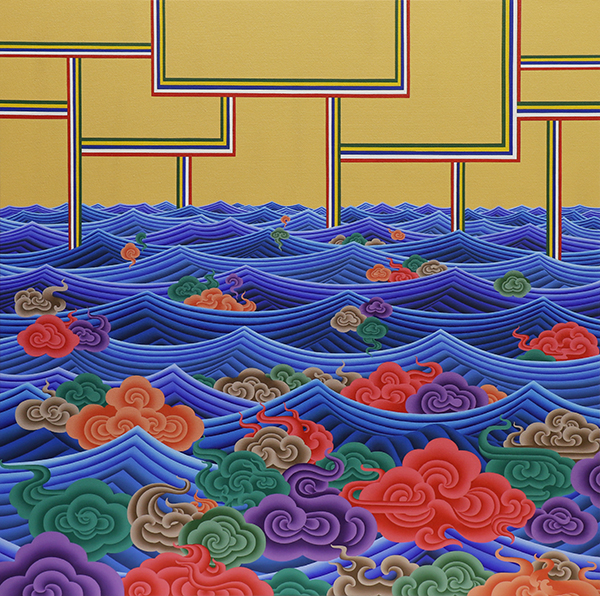
Conceived alongside Biography of a Thought, the artist’s new works on view – inspired by the Buddhist notion that ‘life is an ocean of suffering’ – delve into the interconnected realms of thought, emotion and awareness. In them, Rigdol contemplates humanity’s tendency to cling to the turbulent currents of thoughts and emotions. These unprocessed, untamed memories linger as imprints in the mind, often obstructing inner peace. Chitra-Kala: Weaving Awareness through Time is therefore an invitation to find balance in one’s mind, to observe without the disturbance of thought and to exist in a state of melodic tranquillity.
In The Invention of Morel, a 1940 novella by Adolfo Bioy Casares, a Venezuelan writer sentenced to exile on a deserted island in the South Pacific hides from a group of tourists who arrive suddenly. Observing them daily, he becomes fascinated and begins a journal recording their doings – and starts falling in love with a young woman named Faustine, who strangely ignores him when he approaches her. Even stranger, all the intruders repeat their actions again and again, as if caught in a Groundhog Day time loop. Later, the narrator discovers that the group’s host, Morel, is a scientist, and that the visitors are projected recordings of his guests, all of them granted technological immortality. After the guests have departed, the writer, having learned to operate Morel’s machine, interpolates his image into the projection, pretending to interact with Faustine.
Installation view of Intentness and song by Samson Young at the San Francisco Museum of Modern Art. Photo: Don Ross. Courtesy SFMOMA.
Eighty-odd years later, such plot lines may be commonplace in movies – like Woody Allen’s The Purple Rose of Cairo, with its movie characters stepping off-screen and into the real world – but the idea of interacting with fictive creations through advanced technology remains appealing and seductive, especially as reality seems more and more chaotic and threatening. Intentness and songs, an installation by Hong Kong multimedia artist Samson Young at the San Francisco Museum of Modern Art, his first American museum exhibition, reminded me of Casares’ narrator’s search.
Young is a postmodernist conceptual artist in his mid-40s who has had an extraordinary career. After earning University of Kong Kong bachelor’s degrees in music, philosophy and gender studies; a master’s in philosophy; and a PhD in music composition from Princeton, he began working with Hong Kong multimedia artists and expanded his practice to embrace drawing, video and performance.
His sociopolitical work, which touches on racial identity, migration and border issues, includes Nocturnal Music (2015), a New York performance in which the artist, clad in military garb, sat watching video of US war on terror aerial strikes with the sound muted, adding live foley sound effects to the onscreen pyrotechnics, both bringing the audience into the violence and distancing them from it, like the controllers who do their geopolitical jobs from computers thousands of miles from their victims. In Canon (2016), based on the 1979 Vietnamese refugee crisis, Young, wearing a police uniform and standing atop a scissor lift, projected the sounds of birds’ distress calls to viewers far away with an LRAD (Long Range Acoustic Device) sound cannon normally used in nonlethal but painful crowd dispersal. In 2017, Young represented Hong Kong at the 57th Annual Venice Biennale. His work has won many prestigious awards and is collected internationally.
Installation view of Intentness and song by Samson Young at the San Francisco Museum of Modern Art. Photo: Don Ross. Courtesy SFMOMA.
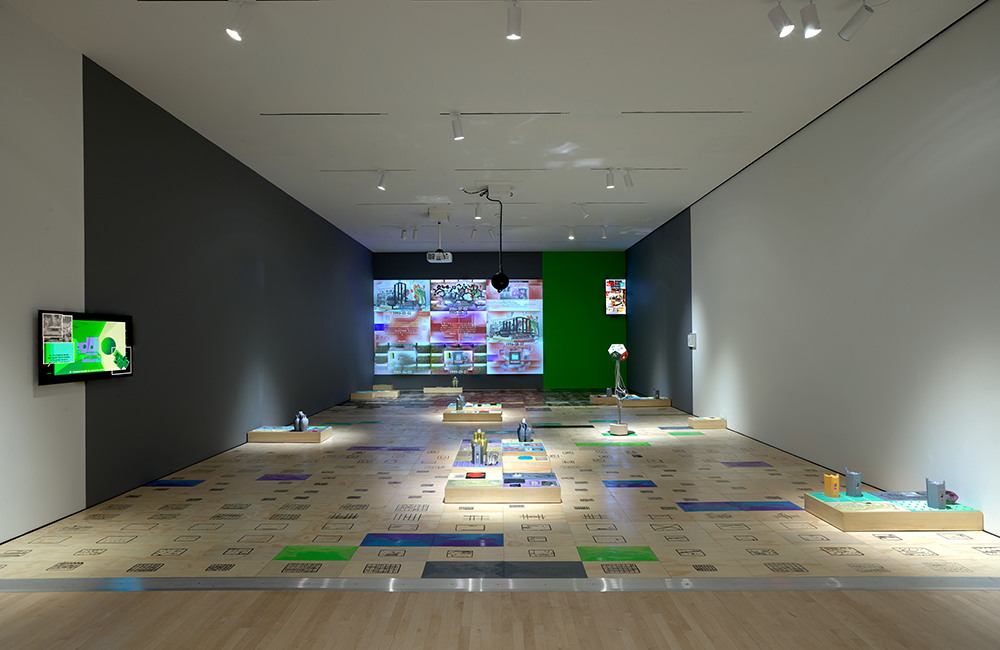
For Intentness and songs, he worked with the museum’s curators Alison Guh and Karen Cheung and a technical crew of 30 designers, project managers, fabricators and installers. In this complex installation of sculptures, videos and recorded music, he focuses on the personal and domestic, displaying ephemeral objects or their 3D-printed simulacra – such as beloved books, obsolete electronic gadgets, crystals, cigarette packs, magazines and keychains – important to the artist or his partner, Tommy, on 3D-printed panels. These tabletop assemblages – which may remind viewers of Rauschenberg’s once-revolutionary “flatbed” notion of composition, an approach that positions the canvas as a flat surface where various elements can be arranged, through techniques like collage and assemblage, without the limitations of depth or perspective – rest on low rectangular plinths, each adorned with a 3D-printed hexagonal tower/speaker programmed to play choral music to AI promptings based on real-time video feeds from the gallery or Young’s Hong Kong studio. Three video monitors present an ever-changing slide-show array of numbers, photographs, snatches of conversation and graphic images scraped from the internet or fed into AI by the artist, including his Google Calendar entries and recorded interviews. The plinth displays, the videos and the computer-drawn wooden tiles below, with each tile representing a month and each row of tiles a year, are connected electronically, with their AI magic concealed. All source material dates from between 2011, when the artist met his partner, and 2023.
Installation view of Intentness and song by Samson Young at the San Francisco Museum of Modern Art. Photo: Don Ross. Courtesy SFMOMA.
Young has claimed, self-deprecatingly, in an interview, “I am reasonably lousy at programming and 3D modelling but I have a lot of fun trying.” Viewers may be ignorant of the meanings of Young’s artefacts – although we are cognisant that the artefacts of any life can take on significance if considered metaphysically. The themes of memory, love and time receive a galvanic contemporary upgrade in Young’s songs of the self, exuberant yet elegiac, fashioned with the powerful, fun tech available now to digital-cloud netizens everywhere.
八十多年後,類似情節在電影已見怪不怪。在活地.亞倫的《戲假情真》中,電影角色從銀幕走進現實世界便是一例。然而,以先進技術與虛構作品互動的想法仍然很富吸引力,特別是現實世界越來越混亂和嚇人。香港多媒體藝術家楊嘉輝在三藩市現代藝術館的裝置作品《Intentness and songs》是他首個在美國藝術館舉行的展覽,讓我想起了卡薩雷斯筆下那位敘事者所想尋找的事物。
Installation view of Intentness and song by Samson Young at the San Francisco Museum of Modern Art. Photo: DeWitt Cheng. Courtesy DeWitt Cheng.
在創作《Intentness and songs》時,他與博物館的策展人Alison Guh和Karen Cheung,以及由30名設計師、項目經理、製造商和安裝人員組成的技術團隊合作。複雜的裝置包括雕塑、錄像和預錄音樂元素,楊嘉輝的主題是個人和家庭,他在3D 打印的面板上展出各種稍縱即逝的物件或3D 打印的虛擬圖像,包括心愛的書籍、過時的電子產品、水晶、煙盒、雜誌和鑰匙扣,這些都是對他或其伴侶 Tommy 來說很重要的物件。桌面上的林林總總,或許會令觀眾想起勞森伯格一時無兩的創新「平板」構圖意念,這種方法視畫布為平面,以拼貼和組合技巧把各種元素排列在上,不受深度或視覺限制;這些物件放在矮身的矩形基座上,每個基座都以 3D 打印的六角形塔或揚聲器裝飾,再以程式控制裝置根據來自畫廊或楊氏香港工作室的實時錄像,按AI 提示播放合唱音樂。三個顯示屏上,是從網上擷取或由藝術家以AI輸入的數字、照片、對話片段,以不斷變化的投影片呈現,包括楊氏的Google行事曆條目和訪問錄音。基座顯示器、錄像和下方由電腦繪製的木板,每塊木板代表一個月分,每行木板代表一年,各種組件均以電子連接,把AI魔法隱藏起來。所有素材都來自 2011 年,即楊嘉輝與伴侶邂逅的一年,至2023 年。
楊氏曾於訪問中自嘲說:「我的程式設計和 3D 建模相當不濟,但從嘗試中獲得很多樂趣。」觀眾可能不知道楊氏展品的含義,儘管我們意識到從形而上學的角度來說,人生中任何物件都可以有其重要性。記憶、愛情和時間的主題在楊嘉輝各首自我歌曲中化身現代化的昇華版本,扣人心弦、華麗而不失典雅;當中所採用的有趣科技強而有力,而且是全球數碼雲端網民都可以接觸的技術。
Pablo Picasso, Marc Chagall, Georges Mathieu, Kazuo Shiraga, Alex Katz, Robert Indiana, Fernando Botero, Manolo Valdés, Cho Sung Hee, Ron Arad, George Condo, Keith Haring, Kenny Scharf, Julian Opie, Feng Xiao-Min, Pieter Obels, Li Tianbing
Art Central Hong Kong Booth C5 Central Harbourfront Mar 26 – 30, 2025