Latest Posts

Danh Võ In Situ: Akari by Noguchi 傅丹創意現場:野口勇的「光」

There is a common cultural trope that in order to be a great artist one must struggle, undergo hardships and/or suffer from heartbreak. For artist Danh Võ, this is “fucking romanticised bourgeois bullshit. It’s coming from a privileged perspective.”

Võ is here to shift established perspectives and ask what it means to make great art – a question that he and his classmates found themselves constantly asking while at art school in Denmark. “I was lumped into a fixed idea of what art could be,” says the Vietnamese-born Danish artist, who is now based in Berlin. “Denmark is so privileged: you get money when you study; you have all the resources. The art academy was great, as were the people you met there. But we were all trying to think differently and figure out: how do we make good art?”

After making what he describes as “horrible paintings” as a student, Võ took a break and, in unconsciously trying to erase everything learned about what art could be, he found “a liberty, to work in completely different way” – a way that equates art with architecture. “For me, it’s specifically about testing a space through an object. That’s what you do as an artist, no? Whether it’s a palazzo, a park or a found space.” 

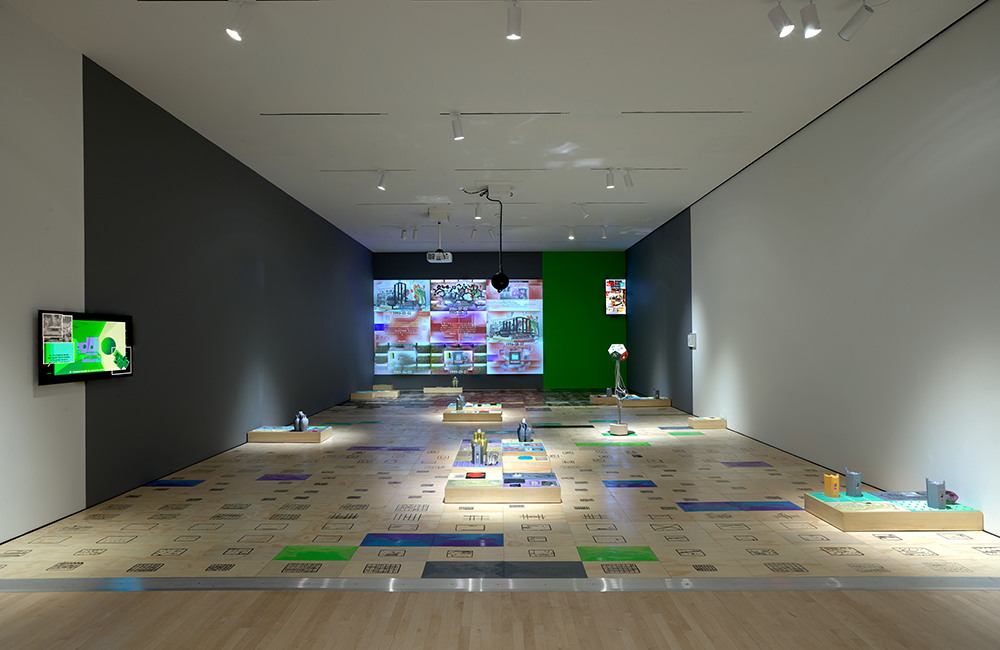
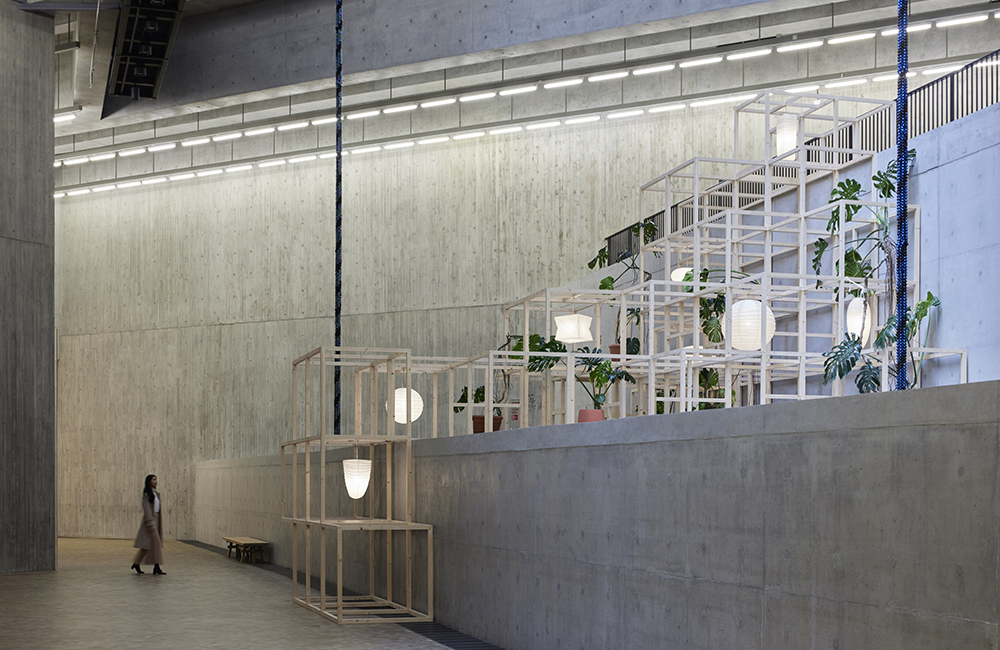
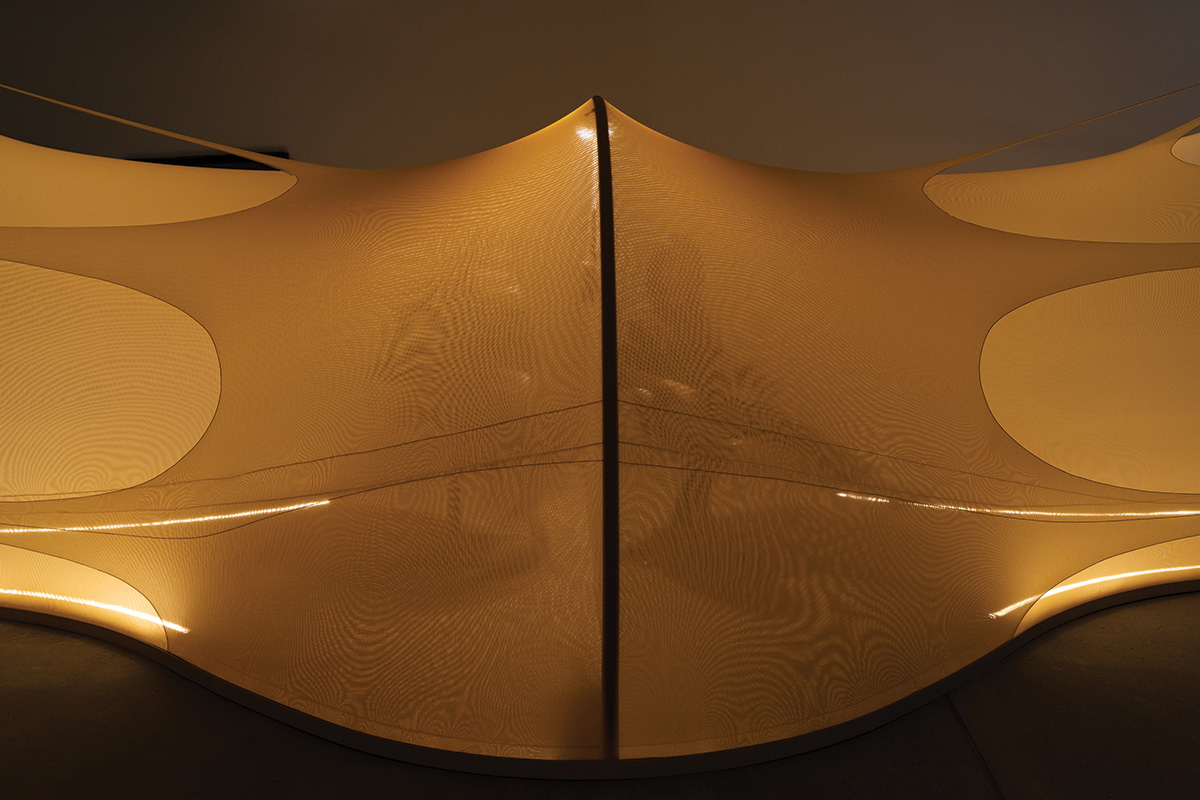
Installation view of Danh Vo In Situ: Akari by Noguchi, 2024.
© Danh Vo, Photo: Lok Cheng, Courtesy M+, Hong Kong.

He’s tested various spaces, from punctuating the iconic ocular hall of Paris’s Bourse de Commerce building with large tree trunks to exhibiting his works alongside those of modernist icons such as Isamu Noguchi and Park Seo-bo at Querini Stampalia in Venice, where various art-historical periods – from rococo to baroque to contemporary – were reflected through the resulting convergence of history and architecture. “When you put these works alongside portraits of popes and nobility in a palazzo, it entirely reshapes how you consider each object and your experience of the space.” 

Most recently, he’s asking viewers to reconsider their relationship with and perception of M+’s Found Space – the institution’s unique foundational feature and default basement – with his new installation, Danh Võ In Situ: Akari by Noguchi. A series of plywood frames, often used in Võ’s sculptural installations, form vertical, gridded intersections of space, in between which Noguchi’s iconic Akari lamps are embedded. Adjacent to this, sandwiched between two of Haegue Yang’s vertically suspended Sonic Rescue Ropes (2022), is a similar structure configured into a bleacher-like form, interspersed with plants, functioning somewhere between an amphitheatre and living room. 

The structure mimics the intersecting lines of the museum itself, whether one is looking bottom up or top down. For Võ, Found Space is reminiscent of a highway intersection in Los Angeles. “The vast infrastructure and the big columns holding up the building; it helps me visualise how to use the space.” 

Given that the entire West Kowloon cultural complex is built on reclaimed land, it was a literal blank canvas for new institutional models to emerge. Found Space was accidentally discovered during M+’s construction process, when the team found Airport Express and Tung Chung Line rail tunnels cut across that area diagonally. The tunnels were excavated and then covered with concrete to cement a new foundational feature, overcoming what was initially a design challenge. The idea of revealing something which always existed but was hidden is thematically carried through Võ’s practice.  

“I curate other artists’ work but focus on bodies of works which are less exposed – like Noguchi’s playscape.” That’s not a facet of his work that people focus on. It’s not the first time Võ has shown his work in Found Space, let alone Noguchi’s at M+. The artist’s We the People (2011-16) was exhibited here earlier, and he installed an iteration of Noguchi’s playscape, Noguchi for Danh Võ: Counterpoint, outdoors in 2018. “Another thing that was lesser known is Akari lamps. What I find troubling is that they’re not so visible in the design field.”

Akari are functional. They are sculptures but also lamps, reflecting Noguchi’s design- and architecture-driven practice. They also signify Võ’s interest in equating art with architecture in the way they’re exhibited in the artist’s modular installation. The structure is adaptable, parts of it are interchangeable and items within it can be swapped with other objects such as the artist’s own works throughout the duration of the exhibition.

Installation view of Danh Vo In Situ: Akari by Noguchi, 2024.
© Danh Vo, Photo: Lok Cheng, Courtesy M+, Hong Kong.

Noguchi created more than 100 sculptural lighting designs between 1951 and 1986; the name “akari” means “light” or “illumination” in Japanese. After the Second World War, in an attempt to rebuild the nation, a government programme took designers, architects and artists around the country to see if they could revive traditional craft practices. Akari were paper lanterns which traditionally had candles inside, and were bought to cemeteries to worship ancestors. The practice had died down significantly after the war. Noguchi took this craft and created his own version from mulberry bark paper and bamboo. Heavily inspired by Brâncuși, the Japanese artist created forms reminiscent of the modernist sculptor’s work, and then added a light bulb to them. “What you see in these beautiful structures is the fusion of two giant modernist thinkers [and] artists,” says Võ.  

His interpretation adds a third, contemporary dimension to this modernist melange. “This comes back to highlighting other artists’ work within my own practice, whether it’s Noguchi or my father. If things already exist, then it’s good, because I can just be the observer. But if things are under the lid, then I think it’s worth the time and energy to reveal another perspective that I feel has been neglected or under-prioritised.”

The need to revitalise practices, customs and even spaces rendered defunct comes from a personal place and inspired one of the works Võ is most proud of – his father’s writing. Growing up in Vietnam, Võ’s father learned how to write Vietnamese in Latin script. He knew the form well but couldn’t read any western language. When the family migrated to Europe, his skill, ironically, was rendered useless, except when it came to creating signage and menus for the family-run food business. 

Installation view of Danh Vo In Situ: Akari by Noguchi, 2024.
© Danh Vo, Photo: Lok Cheng, Courtesy M+, Hong Kong.

This prompted a simple question for Võ: “What is it that handicaps or produces a skill and when does it get expressed for its quality? And then, how do you make it into a qualification or skill or something productive?” In his quest to find an answer, Võ included his father’s handwriting in his own work. 2.2.1861 (2009) was an artwork in which Võ’s father hand-copies a letter written by a French missionary, Jean-Théophane Vénard, to his father, before he was beheaded in Vietnam. Here, Võ’s father’s skill is being celebrated as art rather than relegated to being the labour behind a menial task. This outlook can also be applied to spaces, as the random discovery of Found Space led to it becoming part of an art institution, a new status with a new value.  

It’s fitting that an artist who’s witnessed the evolution of M+ during its construction process was tasked with developing a three-year project that is supposed to prompt the institution to reimagine ways of exhibition-making and continuously evolve the space, while rendering it multifunctional. One condition is consistent, says Võ: “People have to engage. It should be fun.”


人們常以為在文化的世界,掙扎拼搏、歷經艱苦和/或撕心裂肺都是成為偉大藝術家的必經之路。然而對於藝術家傅丹來說,此說只是「資產階級浪漫化的胡說八道,源自特權視角」。

傅丹要做的正是改變既有視角,探問創造偉大藝術意義何在。早於他在丹麥藝術學院修讀時,傅丹已常與同窗討論這個問題。這位生於越南的丹麥藝術家現居於柏林,他表示:「當時我執著於藝術的可能性。丹麥是片福地:你唸書時有收入,還享有所有資源。藝術學院很是美好,那邊遇到的人也很好。但我們努力嘗試以不同角度思考,希望找出如何做好藝術。」

傅丹在學生時代完成了他認為「糟透的畫作」,其後選擇暫停創作,在不知不覺間試圖抹掉所有藝術可能性的認知,從中找到了「以截然不同方式工作的自由」。這種方式讓藝術與建築對等。「對我來說,那關乎如何透過物件測試某個空間。那不就是藝術家要做的事情嗎?不論場域是奢華宅邸、公園,還是無意中發現的空間。」

他在各種空間進行測試,曾以大型樹幹點綴巴黎證券交易所大樓內的標誌式圓形大廳,也試過在威尼斯的奎利尼·斯坦帕里亞基金會博物館,把自己與野口勇和朴栖甫等現代主義大師的作品同場展出;在這場展覽中,傅丹讓歷史和建築融為一體,反映洛可可、巴洛克以至當代的各個藝術歷史時期。他表示:「把這些作品與奢華宅邸內的教宗和貴族肖像放在一起,可以徹底重塑你對每件物件的看法和空間體驗。」

最近,他在傅丹創意現場:野口勇的「光」展出最新裝置藝術作品,請觀眾重新反思自身與M+潛空間的關係和感受。潛空間位於M+地庫,是該博物館獨有的地基特色。傅氏的雕塑裝置經常採用組合夾板框架,這種結構在空間中交織成垂直網格,交匯處放著野口勇的標誌式Akari燈。兩旁是梁慧圭的聲之通天繩(2022),這組懸垂裝置呈現類近而貌似看台座椅的型態,中間散落著不同植物,在功能上介乎圓形劇場與客廳。

無論是自下而上還是自上而下地觀賞,裝置的結構都仿效著M+本身的交叉線條。傅氏認為潛空間讓人聯想到洛杉磯高速公路的十字路口。他說:「大樓由大型基建和巨柱支撐,幫助我想像怎樣善用空間。」

由於整個西九文化區都是建於填海而來的土地,儼如一幅空白畫布,讓全新的機構式模型演進成型。潛空間是在興建M+過程中的意外發現,團隊在機場快綫和東涌綫兩條鐵路隧道沿對角線穿過之處找到了這個空間,於是把隧道挖空和鋪上混凝土,再建成全新的地基展場,從而克服了原有的設計挑戰。傅氏藝術實踐所表達的主題,與展現一直存在但難以發掘的事物不謀而合。

「我策展時會挑選其他藝術家的創作,但會聚焦於較少曝光的作品,例如是野口勇的玩味意境。」那不是人們欣賞傅丹作品時所聚焦的一面。傅氏已非第一次在潛空間展出作品,野口勇的作品也不是首度現身M+。傅丹的我們人民(2011-16)早前已在此展出,而他也曾於2018年在室外展出對位變奏:野口勇之於傅丹。「Akari燈較鮮為人知。令我不安的,是這些燈在設計界不太顯眼。」

Akari有其功能,既是雕塑也是燈具,反映了野口勇的實踐由設計和建築推動。而傅氏以模組裝置形式展示作品,則標誌著他認為藝術與建築具備同等地位的看法。這種結構可以引入不同變化,在整個展期中,部份元素可以互換,結構內的物件也可以由其他物件替代,例如是藝術家本身的創作。

野口勇於1951至1986年間創作了過百組雕塑燈光設計:akari在日語中代表「光」與「亮」。二次世界大戰後,政府為了重建國家而試行了一項計劃,邀請全國各地的設計師、建築師和藝術家攜手活化傳統工藝。Akari傳統上是以燃點蠟燭照明的紙燈籠,掃墓時會帶同祭祖,但習俗在戰後已式微。野口勇選擇了這種工藝,利用桑樹皮和紙和竹創作出個人風格的akari。這位日本藝術家深受現代主義雕塑家布朗庫西影響,在作品中呈現後者的形態,然後加上燈膽。傅丹說:「你看到這些美麗的結構,融合了兩位現代主義思想家和藝術家的意念。」

傅氏的演繹為融合現代主義的作品增添了第三個當代維度。「我的實踐初心是突顯其他藝術家的作品,無論是野口勇還是家父。物件早已存在當然很好,因為我可以安然擔演觀察者。但是如果未被發掘,我便覺得值得花時間和精力來展現另一個我認為被忽視或未被重視的觀點。」

對於傅丹而言,追求活化藝術實踐、傳統習俗甚至廢棄空間都是很個人的事情,而且啟發了他創作了其中一件最引以為傲的作品:他父親的書畫。傅丹的父親在越南長大,自小學會以拉丁字母寫越南語。他很熟悉這種書寫形態,但卻不諳任何西方語言。最諷刺的是,當傅家移居歐洲時,傅爸爸的技能變得一無所用,只可以在家族經營的食店寫招牌和菜單。

這令傅丹想到簡單的問題:「是什麼令技能變得無用武之地?又是什麼令人產生技能?技能的質量在什麼時候才呈現出來?接下來,如何將它變成資格、技能或可供生產用的事物?」為了尋找答案,傅氏在作品中引用了父親的筆跡。在2.2.1861 (2009),傅爸手抄了法國傳教士 Jean-Théophane Vénard 在越南被斬首前寫給父親的家書,傅爸的技能成為作品歌讚的藝術,他也不再是執行卑微任務的勞動者。這種觀點也可以應用到空間,因為潛空間被無意發現,令其成為了藝術機構的一部分,被賦予了新的身份和價值。

傅氏在M+的建設過程中見證了它的演變,由這位藝術家肩負重任,策劃為期三年的專案最適合不過;這項專案旨在令M+重新構想展覽製作方式,並不斷把空間改良演進,令它的功能更趨多樣化。傅丹指出一項不變的條件:「人們必須參與,事情一定要有趣。」

NOĒMA樂季

Auditorium, Tsuen Wan Town Hall /
Hong Kong /
Jan 11, 2025 /
Ernest Wan /

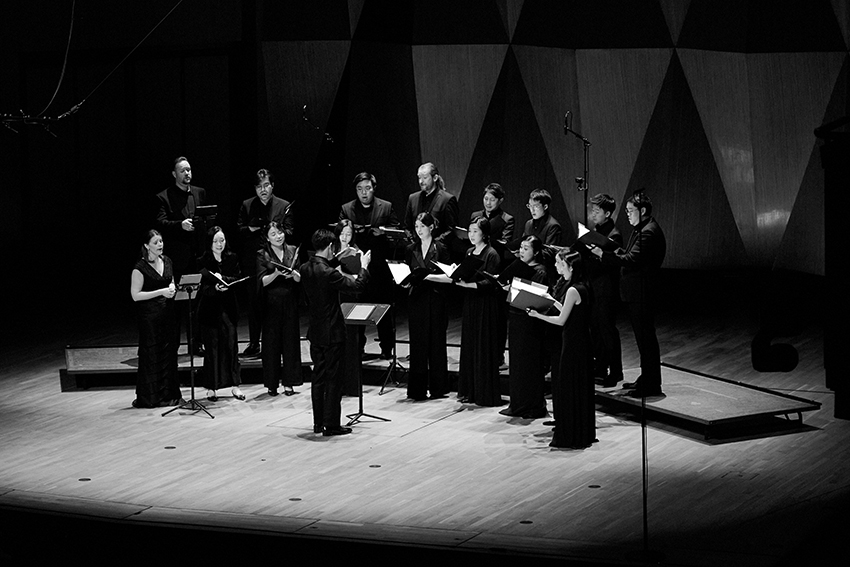
Founded by Sanders Lau as recently as 2022, NOĒMA has already taken to calling itself “Hong Kong’s leading chamber choir” – and indeed, with its programmes in this 2024/25 season of numerous serious and challenging works, it puts other local choral groups in the shade. It had a slightly different line-up of singers for each of its past concerts, and for its recent performance at Tsuen Wan Town Hall, it comprised four sopranos and three each of altos, tenors and basses. Among them were four members of the renowned British choir Tenebrae — one of each voice type — who in the days before the concert had shared with the other performers their expertise in the British 20th-century a cappella music that constituted that evening’s programme.

The evening opened with John Tavener’s The Lamb (1982), a simple setting of William Blake’s famous Songs of Innocence. This served as a gentle warm-up for the choir, producing a sense of rapt wonderment. In the Hymn to St Cecilia (1942) by Benjamin Britten, the choir sang from the outset with a lilting fluency befitting the patron saint of music. The important lengthy soprano solo was sung by Tenebrae’s Katie Trethewey, whose fluttering vibrato was a letdown, while the same group’s Tom Robson, in his brief tenor solo near the end (“O wear your tribulation like a rose”), made an unforgettable contribution, with a voice sweet and clarion.

Sanders Lau conducting NOĒMA.
Photo by Calvin Sit. Courtesy of NOĒMA.

The rest of the works all deal with death and the beyond. Lau led the singers in a moving rendition of Herbert Howells’s Requiem (1932), its emotional power deriving from the ably sustained slow chords and the many attendant dissonances, especially in the two sombre Latin-text movements. The ensuing Lux aeterna by John Cameron (1996) fits a similar text to Nimrod from Edward Elgar’s orchestral Enigma Variations (1899). The performance of this miniature, riddled with swoops of sevenths, was a rushed affair little suggestive of celestial peace, and was at any rate superfluous and anticlimactic, so luminous already was NOĒMA’s pianississimo delivery of the words “Et lux perpetua” in the Howells.

After the intermission, the choir was divided into two for an echo effect in William H Harris’s Faire is the Heaven (1925), and this time fine pacing and vocal control evoked serenity and brought out the harmonic surprises towards the concluding “endlesse perfectnesse”. This was followed by Hubert Parry’s Songs of Farewell (1918), a set of six motets of increasing textural complexity, a welcome choice inasmuch as the programme had thus far been dominated by homophony. The male singers now came to prominence, as their cries of “Thy God, thy life, thy cure” in the opening motet forcefully demonstrated. Imitative passages proved effective, and the lines “Eternal be the sleep” in the fourth motet and “But let them sleep” in the fifth were either chordally or contrapuntally hypnotic. The encore, Richard Rodney Bennett’s A Good-Night (1999), gave further comfort and closed what was indeed a good night of choral balm.


荃灣大會堂演奏廳
香港
2025年1月11日
尹莫違

NOĒMA由劉卓熙於2022年創辦,短短數年已開始被稱為「香港領先室樂合唱團」,而事實上,其2024/25樂季的表演曲目已納入不少認真而頗具難度的作品,令其他本地合唱團體相形失色。NOĒMA過往一直以不同陣容舉辦演唱會,最近的荃灣大會堂演出便派出了四位女高音,同場獻藝的還有女低音、男高音和男低音各三人。表演者中有四位為英國著名合唱團Tenebrae的成員,他們分別是高、中、低音的代表,並在開演前數天率先與其他表演者切磋唱功,為當晚選曲中的英國20世紀無伴奏合唱做好準備。

是夜表演以泰雲納的《羔羊》(1982年)揭開序幕,該曲為英國詩人布雷克名作《天真之歌》譜出簡約的合唱作品,是合唱團的熱身表演,營造出令人欣喜和投入的氣氛。在布烈頓的《聖西西利讚歌》(1942年)中,合唱團由初段開始便輕快流暢地演唱,恰如其分地歌頌了作品所描寫的音樂守護神。較長的重要女高音獨唱部份由Tenebrae的Katie Trethewey演唱,然而她飄搖的顫音令人失望;篇幅較短的男高音作品由來自同一合唱團的Tom Robson主唱,他以甜美清脆的嗓音在曲末唱出「O wear your tribulation like a rose」(苦困就像玫瑰配飾一樣),令人一聽難忘。

其餘作品都圍繞著死亡與死後的主題。演唱者在劉氏指揮下演繹了賀維士的《安魂曲》(1932年),精湛彈奏的慢和弦令聽眾縈迴在耳,配上不和諧音後令情感力量更見豐富,效果在兩段陰沉的拉丁文樂章尤其明顯。緊接其後是金馬倫編曲的《Lux aeterna》(永恆之光,1996年),把題材相近的歌詞配上艾爾加管弦樂作品《Enigma Variations》(謎語變奏曲,1899年)中的Nimrod樂段。這首小品在演出中有不少七度起伏,匆匆完成而未能引起聽眾對平靜天國的共鳴,可以說是反高潮的多餘枝節,尤其是NOĒMA方才已亮眼地演繹了賀維士的作品,以極小聲唱出一句「Et lux perpetua」同樣是永恆之光的意思。

中場休息後,合唱團為哈里斯的《美哉天庭》(1925年)分成兩組來呈現回音效果,優美的節奏和聲音控制塑造出寧靜安謐,更以令人驚喜的和聲完成尾聲的「無盡完美」。接下來是柏利的《離別之歌》(1918年),這首合唱組曲由六首贊歌組成,曲式質感層層遞進,為至今僅以主線旋律為主的選曲一新耳目。男歌唱家主導了這首作品,在首段贊歌中高呼 「Thy God, thy life, thy cure」(你的上帝、你的生命、你的療藥 ),有力地展現曲式的層次感。多個模仿段表達出更深的感染力,而第四首贊歌的歌詞「Eternal be the sleep」(從此長眠)和第五首贊歌的 「But let them sleep」(且讓他們睡去)在和弦或伴奏上都展現出懾人魅力。合唱團在安歌環節帶來貝納特的暖心作品《良宵》(1999年),為美好的合唱之夜作結。

Angela Su 徐世琪

Angela Su’s work flows from the intersection of science and art, where intricacy meets imagination. With roots in biochemistry and visual arts, her practice is a dance between the tangible and the ethereal, as she weaves delicate lines into intricate drawings, often unsettling and always profound. Her creations—whether on paper, in video or through hair embroidery—speak of bodies in flux, beings in metamorphosis, and the tension between control and chaos.

Su’s art explores the shifting nature of the human body, its transformations, and the interplay of science and fiction. Through her meticulous renderings of invented anatomies, she questions the certainty of the medical gaze, creating speculative worlds where bones become snowflakes, veins twist into vines, and organisms float in space, suspended in the in-between. Her hybrid figures exist in a state of becoming, fragile yet fierce, inviting us into the mystery of the body as it unravels and reforms.

In her hands, the body is a site of resistance, a vessel for transformation and a story waiting to be told. With each line, Su reimagines the universe, drawing us into a world where the boundaries of the possible stretch beyond the limits of flesh and form, offering us a glimpse of something both intimate and infinite.

Jessica Wan: Can you tell us why you decided to undertake your residency in the UK?Angela Su: From April to June this year, I participated in a private artist residency programme in north London, which partly aimed to allow artists to leave their own workshops and take a rest. Because of how busy I have been these few years, I have been constantly stressed, so it was a welcome respite. I first visited London in 2018 at the invitation of the Wellcome Collection, for a two-week residency in the Contagious Cities project that it had commissioned. The last time I was in London was to take part in Frieze London in 2019. I had good experiences both times I was there, so I have been hoping to stay in the city for a longer period.

I had planned to take some taxidermy courses during this residency, but it didn’t happen in the end. I found several places that offered courses when I was visiting in 2018 but, perhaps due to the pandemic, many of them had been cancelled. A friend told me about Get Stuffed, an old place in Islington which has been run by at least three generations. The shop is inconspicuous; its windows and door are behind bars. All visitors have to make an appointment and are only allowed to enter after ringing the doorbell.  

As I got through the door, my heart began to race and my eyes widened. Taxidermy mounts of different sizes filled the 300 to 400 sq ft shop space, not in an orderly display like those of a boutique but rather like in a workshop. Through these piles of lifelike animal carcasses was a narrow aisle, with a messy desk at the end of it. I didn’t know if there was a huge workspace hidden at the back, but I imagined there was, and it was a bloody one. Apart from the ordinary mounts of rabbits, white mice and birds, there were also rarer specimens such as bears, lions and kangaroos. The shop owner told me that these carcasses were all donations from zoos and not hunting trophies. Often when an animal died in a zoo, the zookeepers didn’t know what to do, so they asked him to make taxidermy of the body. Other, more common animals were also obtained through humane channels. 

The shop owner emphasised that it takes years of training and practice to become a taxidermist. Even if you know how to taxidermy one species, it doesn’t mean you’d know how to do it with another. If a piece is not properly preserved, it might collapse, rot and breed maggots. He was honest enough to tell me that, rather than taking a class on taxidermy, it’d be better to buy books and teach myself, and to practise consistently. I casually asked if I could film his work process, and he answered that his shop had been passed down for generations, the techniques were not shared with outsiders and filming the taxidermy process was not allowed. He also mentioned that many artists, such as Damien Hirst, had collaborated with him. The real human skull used in Hirst’s diamond-encrusted skull [For the Love of God, 2007] was provided by him. After just a 30-minute conversation, I felt that this shop owner was extremely professional and had a true craftsman’s spirit. But at the same time, he had a certain attitude, as if he didn’t want to entertain visitors who were there to satisfy their curiosity, let alone tourists like me. However, after a local friend explained, I learned that years ago, Get Stuffed had been attacked by an animal rights organisation, which is why the shop’s windows were protected by iron bars. No wonder the shop owner was so wary. Is it right to use animal carcasses as art pieces? I don’t really have an answer to that question. I only remember walking down the aisle in the shop, feeling as if time had frozen, as if I were walking between life and death.

Hunterian Museum, London. Photo: Angela Su.

JW: In a similar way to how early architectural drawings were heavily influenced by anatomical perspectives and the structural form of the human body, your works often lie at the intersection of different disciplines. How have your studies influenced your work?AS: It might be because I majored in science during university that I have always been interested in research beyond the realm of fine art. I often read books about the history of medicine or the history of technology and think about how to incorporate these discussions into my work. This time in London, I noticed that bookshops often promote books on popular science, which might have something to do with the post-pandemic times, or perhaps it was related to the widespread discussions on [subjects like] artificial intelligence in recent years. So, I took the opportunity to buy many popular science books. I love London because of its long history, including the Enlightenment and the Industrial Revolution. I was incredibly excited to see Charles Babbage’s Difference Engine in the Science Museum. The Viktor Wynd Museum of Curiosities, Fine Art & Natural History in Hackney [in east London] has a certain Victorian Gothic horror feel to it, which also fascinates me.

Whenever I visit a country, I make a point of visiting the local medical museum. I remember when I visited London in 2018, the Hunterian Museum was closed for renovations, so I was fortunate to have the chance to visit this time. I didn’t expect such a small-looking museum to have so many anatomical specimens, neatly arranged in bottles. The way the specimens are presented is different from the Natural History Museum or the Grant Museum of Zoology [both also in London], which retain a 19th-century atmosphere. Typically, historical museums of this kind only use ordinary glass, which reflects light, making it difficult for visitors to clearly view the exhibits. But the Hunterian Museum is different; it uses expensive, non-reflective museum glass, allowing visitors to get closer and view the specimens in high definition. I wanted so much to sit down and sketch right away, but the collection was so vast that I couldn’t possibly finish it all.

The Natural History Museum in London emphasises historicity, but I noticed that the explanatory texts throughout the museum often mention reflections on colonial history. Institutions like this often face historical issues, as many exhibits were acquired through unfair means during the British Empire period, either through trade or plunder. However, they openly acknowledge this history and claim to be working towards better ways to address these issues. Of course, I can’t know for sure whether the museum will truly handle these complex problems, and it’s possible that displaying these explanatory texts is already enough to avoid criticism. On the other hand, precisely because of the need to address decolonisation, artefacts that used to be part of the permanent collection at the Wellcome Collection before the pandemic [that perpetuate racist, sexist or ableist views] have been removed. This is quite disappointing. I’ve heard that these artefacts can now only be displayed sporadically in temporary exhibitions within specific contexts.

Sewing Together My Split Mind, Straight Stitch by Angela Su, Hair embroidery on fabric, 2020.
Courtesy the artist and Blindspot Gallery.

JW: What was the thinking behind the three hair embroidery pieces you exhibited in the Unravel: The Power and Politics of Textiles in Art exhibition at the Barbican Centre in February? AS: It was a very interesting exhibition, and many of the works were related to freedom of expression. Unfortunately, in February, the Barbican Centre abruptly cancelled a talk titled The Shoah after Gaza, which addressed the massacre of Palestinians in Gaza. In response, a collector called on the artists participating in Unravel to withdraw from the exhibition in protest and to support freedom of speech. I believe six artists eventually responded to this call. One thing to clarify is that the Barbican’s public programming department and its art exhibition department are two separate entities. Personally, I see this incident as a public relations and administrative disaster. The Israeli-Palestinian issue is highly complex, involving nearly a century of history and conflict. Rather than calling on artists to withdraw from the exhibition, it might have been more productive to organise a dialogue or forum on how art and cultural institutions can navigate such challenging and contentious situations.

I think the curatorial team handled the situation well, given the pressure. They placed notices in the gallery spaces vacated by the artists who withdrew, explaining the context to visitors. They respected the artists’ choices and didn’t hide any facts. Malaysian artist Yee I-Lann’s approach was commendable. She didn’t withdraw but made an intervention by displaying books on Gaza’s history in front of her work, inviting the audience to delve deeper into the roots of the Israeli-Palestinian conflict. Indeed, for artists, the dilemma is whether to let the work continue to be shown and keep the conversation about freedom of expression alive, or to withdraw as a form of protest. It’s a difficult decision. Simplifying such a complex issue into a binary opposition by demanding that artists exit or cancel exhibitions seems reductive. After careful consideration, I decided to continue exhibiting my work.

I exhibited three pieces from my Sewing Together My Split Mind: Straight Stitch series. I began this series in 2019, focusing on bodily perception and representation while exploring the trauma and healing caused by social events. The objective of stitching is to heal but the process can be incredibly painful. After trauma, how do we heal? Can we ever fully recover? Or will trauma leave permanent scars? Is it even possible to choose not to heal? The audience is free to find their own answers to these questions.

JW: After this residency, what other subjects do you want to continue exploring? AS: Probably subjects related to technology and artificial intelligence. These are popular topics in recent years but I don’t want to give the impression of jumping on a bandwagon. I’ve always been interested in science fiction and speculative literature, and these elements often appear in my work. My first solo exhibition, in 2008, was about imagining cyborgs, and my 2013 solo show explored the relationship between humans and machines. In 2015, I initiated a science fiction publishing project called Dark Fluid. The book uses science fiction to imagine the future of Hong Kong. The project invited artists, cultural workers and activists involved in social movements to participate in a writing workshop, after which each participant created a short text or visual piece. These works, along with essays and workshop transcripts, were included in the book.

Two months in London felt too short, and there were so many things I wanted to do. One of my regrets was not being able to meet with Hong Kong artists who have relocated there. Indeed, I think the topic of Hongkongers moving to the UK is worth exploring. While this isn’t part of my own research focus, I hope that in future, artists will take this up as a subject for their work.


徐世琪的作品誕生於科學與藝術的交融之中,在精確與想像的邊界上展開一場靜默的對話。她的創作根植於生物化學與視覺藝術的雙重背景,遊走於現實與幻象之間。無論是紙上描繪、影片呈現,還是通過髮絲刺繡,她的作品捕捉了身體不斷變化的輪廓,探索著存在的蛻變,並在控制與混沌之間尋找平衡。

她的藝術實踐探討了人體的流動性和不断轉化的本質,以及科學與虛構的交織。通過細膩描繪虛構的解剖結構,她挑戰了傳統醫學的凝視,開闢出一個充滿想像力的全新世界。在她的視覺語言中,骨骼如雪花般輕盈,靜脈彎曲成藤蔓,生命體懸浮於虛空,游移於現實與幻象的邊緣,呈現出一種既脆弱又堅韌的狀態,隨時準備蛻變,呼應自然的神秘。

在她的創作中,身體不再僅僅是抗爭的場域,而是變革的容器,承載著關於未來的故事。每一條細緻的線條彷彿重塑了整個宇宙,邀請觀者踏入一個超越肉體與形態界限的世界。在這個世界裡,可能性的邊界無限延展,開啟了一片既親密又無垠的境界,讓人流連其中,探尋無盡的未知。

Jessica Wan: 可以談談你當時為什麼決定會去英國做駐留嗎?Angela Su: 今年四月到六月份,我參加了一個位於倫敦北部的私人主導藝術家駐留計劃,計劃部分目的是讓藝術家有可以離開一下自己的工作環境到倫敦休養生息。由於這幾年工作繁忙,身體長期處於繃緊狀態,所以想藉機會勞逸結合。我第一次到倫敦考察旅行應該是2018年,當年獲威爾康博物館(Wellcome Collection)特別委托參與一個名為「疫症都市」的項目,因此被邀駐留兩星期,而最後一次去英國是參與2019年Frieze London。這兩次在倫敦的經驗都很好,所以一直希望可以在這城市逗留一段比較長的時間。

本來打算在這次駐留計劃期間,參加一些動物標本製作(taxidermy)課程,但最後沒有實現。我在2018年做考察的時候,打探了幾個舉辦這類課程的地方,但可能因為疫情的影響,現在很多課程已經停辦。後來朋友介紹我到伊斯靈頓(Islington)區一家已經至少有三代歷史的老店 “Get Stuffed” 。這店毫不起眼,店面門窗都被鐵欄杆圍住,而且拜訪前必須預約,按門鈴後店主才會開門讓你進入。

進去以後,我開始心跳加速,眼睛發亮。這個只有300-400呎左右的店鋪擺滿了大大小小各種動物標本,不是精品店般擺得很精緻整齊的模樣,而是比較像一個工作室的狀態。在這些栩栩如生的動物屍體中間有一條窄窄的通道,通道的末端有一張凌亂的辦公桌。我並不知道辦公桌後的門是否隱藏了一個巨大的工場,但我的腦海裡頓然呈現了一個血腥工場。除了一般的小兔、白老鼠、小鳥的標本外,這裡還有很多稀有的動物,比如熊、獅子和袋鼠。舉店主所講,這些稀有動物的遺體全都是動物園捐出,並非被獵殺的動物。很多時候動物園的動物死了,管理員不知道怎麼處理,就交給他來製作標本。其他較普遍的動物都是從合乎人道的渠道獲得。

店主強調,要成為一個動物標本剝製師需要經過多年的實踐學習。即便你學會了如何製作某一種動物的標本,不代表你懂得製作其他動物的標本。保存不當的話,標本會垮掉、腐爛,還會吸引蟲子。他誠言與其參加一般製作標本的興趣班,不如買書自學,堅持練習。我隨口問他是否可以拍攝他的工作過程,答案是他的店鋪是世代相傳,技術不傳外人,也不准許拍攝製作標本的過程。他還說很多藝術家例如達米恩·赫斯特(Damien Hirst)等等都曾經跟他合作,赫斯特那鑽石骷顱的真人頭骨,就是他提供的。經過短短30分鐘的傾談,我覺得這店主非常專業且具有工匠精神,但同時他很有態度,似乎不想招呼純粹獵奇的訪客,何況是像我這樣的遊客。但經過當地朋友解釋後,得知原來多年前,Get Stuffed 遭受關注動物權益組織襲擊,因此用鐵欄杆保護櫥窗,怪不得店主那麽有戒心。到底是否應該用動物屍體作為藝術品呢?對這問題,我沒有甚麼答案。我只記得走在店內的通道,時間似乎凍結了,就像走在生命和死亡之間。

Jessica Wan: 你剛剛提到解剖學,而早期的建築繪圖深受解剖視角和人體形態結構的影响。那麼,這些研究是怎麼影響到你的創作呢?Angela Su: 可能因為我大學主修科學,所以我一直關注非純藝術領域的研究,經常讀一些關於醫學歷史或者科技歷史的書籍,然後思考如何把這些討論融入我的作品中。這次到倫敦,察覺書店很多時候會推廣科普書籍,這可能是疫情後的現象,也可能與人工智能和量子物理學近年的廣泛討論有關,我於是趁機買了很多科普的書籍。喜愛倫敦,因爲它的歷史久遠,見證了啟蒙運動和工業革命這兩個重要年代。當我在倫敦科學博物館 (Science Museum)裡面看到Charles Babbage 的Difference Engine, 我會感到非常興奮。位於Hackney區的The Viktor Wynd Museum Of Curiosities, Fine Art & Natural History帶有多少維多利亞時代歌德式恐怖,也令我著迷。

我通常到每一個國家,都會特地到當地的醫學博物館。記得2018年到倫敦的時候,亨特博物館(Hunterian Museum)正閉館進行裝修,所以興幸這次有機會可以參觀。沒想到這看起來小小的博物館裡有那麽多一瓶一瓶的生物解剖樣本,而且樣本的呈現方法並不像自然博物館(Natural History Museum)或倫敦動物學博物館 (Grant Zoology Museum)般保持原有19世紀的風格。通常各地這類型歷史悠久的博物館一般只採用普通的玻璃,這種玻璃會反光,觀眾很難清晰地觀賞展品,但亨特博物館不一樣,它用的是不反光的貴價博物館玻璃(museum glass),讓觀眾跟展品的距離拉近,可以「高清」地觀賞展品。我當時很想坐下來速寫,但因為藏品太豐富,根本畫不完。

倫敦的自然史博物館強調歷史性,但我察覺到在館內各處的說明文字或多或少會提及對殖民歷史的反思。像這樣的機構往往有歷史問題,例如許多展品是大英帝國殖民時代通過不公平的手段獲得的,來源於貿易或掠奪。但他們公開承認這段歷史,並表示正在努力尋找更好的方式來處理這些問題。當然,我沒法知道到底博物館是否真的會處理這複雜的問題,有可能這些說明文字的展示已經足夠令博物館避免受到批評。另一邊廂,正正因為要處理去殖的問題,疫情前曾經在威爾康博物館常設展內展出的文物已經被全部收起。這令人頗為失望。據聞這些文物現在只能夠零星地在臨時展覽裡特定的語境下展出。

Jessica Wan: 記得你有三幅髮絲刺繡作品參加了 「Unravel: The Power and Politics of Textiles in Art」 這個展覽。Angela Su: 對,我被邀參與了巴比肯中心(Barbican Centre)在二月份舉辦的展覽「Unravel: The Power and Politics of Textiles in Art」。這是一個很有意思的展覽,其中有很多作品都和言論自由有關。奈何,巴比肯中心在二月份臨時取消了一個關於巴勒斯坦人在加沙被屠殺的講座(The Shoah after Gaza)。某藏家有見及此,立即呼籲參展Unravel的藝術家退出展覽,從而向巴比肯中心抗議及表達對言論自由的支持,好像最後有六位藝術家響應了。要澄清一點,巴比肯中心負責公眾項目的部門與藝術展覽的部門是屬於兩個不同的單位。這次事故,我個人認為是一場公關及行政災難,加上以巴問題複雜,牽涉起碼近一百年的歷史和衝突。與其呼籲藝術家退出展覽,不如舉辦講座對談,探討藝術文化機構怎樣可以處理和面對如此複雜兩不討好的情況。

我覺得策展團隊在這麼多壓力下對這事故處理得很好,他們在場館裡因為藝術家退出而掉空的位置放了告示,向參觀者說明事件的前因後果,他們尊重藝術家的選擇,並沒有隱瞞任何事實。馬來西亞藝術家于一蘭(Yee I-Lann)的處理方法值得一讚,她並沒有退出,但她做了一個intervention, 把一些關於加沙歷史的書籍展示在作品前面,邀請觀眾深入了解以巴衝突的前因後果。其實對藝術家來說,到底應該讓作品繼續展出來持續展覽中關於言論自由的討論,還是以退出作為抗議?這是一個兩難的決定。以要求藝術家退出展覽甚至封殺展覽來表達政治取態,似乎把複雜的問題變成很簡化的二元對立。我自己經過細心思考,決定繼續展出作品。

這次我展出了三幅屬於 《Sewing Together My Split Mind: Straight Stitch》系列的作品。這個系列是從2019年開始創作的,主要關注身體的感知與表象,並探討社會事件所致的創傷與癒合。縫合的目的是治癒,但這個過程非常痛苦。經歷創傷後,我們該如何療癒?我們真的可以痊癒嗎?還是創傷會永遠留下疤痕?可以選擇不療癒嗎?觀眾可以自行決定屬於自己的答案。

Jessica Wan: 這次駐留後,有什麼想要繼續討論的主題嗎?Angela Su: 可能是關於科技、人工智能之類的主題吧。這些都是近年熱門的話題,但我不想給人一個投機的印象。其實我一直對科幻小說及推想文學很有興趣,作品也不時流露科幻或關於科技的元素。我在2008年的第一個個展是關於cyborg賽博格的想像;2013年的個展是關於人類和機械的關係。2015年我發起了一個科幻創作出版計劃叫《暗流體》。《暗流體》這本書以科幻小說為方法,是一個探討關於香港未來想像的思考練習。這計劃邀請藝術文化工作者以及活躍於社會運動的人士共同參與一個寫作工作坊,工作坊後參與者各自創作一部短篇文字或圖像作品,連同論文及工作坊的文字記錄,一併收錄於此書當中。

其後因緣際會,我邀請了住在英國東北部的得獎科幻作家吳志麗,為我威尼斯雙年展香港館的個人作品集撰文。吳志麗年幼時已經從香港搬到英國居住,她腦袋的「轉數」很快而且很感性,也對香港非常關心。曾經一次跟她在香港一家咖啡店聊天數小時,她妙語連珠,我頓然覺得她比藝術家更有藝術氣質。我很想有機會跟她再次合作。可惜這次未能跟她會面。

在倫敦兩個月的時間實在太短,想做的事情真的很多。其中一個遺憾就是未能與移居倫敦的香港藝術家會面。其實我覺得移英港人的議題很值得討論。這不屬於我自己研究的範疇,我希望日後有藝術家可以以此為創作議題。

Jessica Wan: 的確,近年許多香港人移居英國,他們面臨不少挑戰。大多數人選擇搬到英國的二線城市,因為那裡的房租或房價比較便宜,減輕了生活壓力,也讓移民能夠享受更寬敞的空間和悠閒的生活。然而,這些城市與倫敦相比,缺乏多元文化背景,藝術氛圍較弱,且種族歧視問題更加嚴重,移民或難民可能難以融入當地社區。

相比之下,倫敦的情況要好一些,這裡的文化更加多樣化,人們比較包容和理解彼此的差異,而在其他城市,排斥移民的情況可能更為普遍。Artnet記者Vivienne Chow曾在文章中討論過去十年英國藝術產業的資金削減,加上高淨值人士的流失,這些因素都影響了藝術界的發展。除了經濟問題,種族歧視和反移民現象也日益嚴重。幾個月前,英國多個城市發生暴動,伯明翰和利物浦首當其衝,這些生活成本較低的城市,由於移民較多,成為右翼團體的主要攻擊目標。

Angela Su: 對像我一樣的香港人來說,在英國生活的確不容易,除非我非常富有,否則就要放棄很多香港的生活習慣,例如出外飲食、購物和娛樂等等。再者,英國脫歐以來,社會和政治氣氛都變得不穩定,人才和資金流失更為嚴重,很多歐洲投資者也撤資了,新移民能夠找到工作已經很幸運。

移英港人需要面對的問題的確很多。據朋友所說不少家庭因為對移民有不同的期望而發生家暴以致離婚。另外一個問題就是,他們究竟應該積極融入當地社會還是與其他港人為伴?這個問題難以回答。香港是一個單一文化的地方,關於多元文化的議題並不存在,很多港人也沒有文化差異討論的意識,對於其他族裔社群往往視而不見。聽說,有些在香港支持民主的人士,到了英國反而可能會支持保守黨,他們認為英國應該是白人國家,放鬆移民政策只會拖垮英國的經濟。換句話說,他們流露了種族主義意識,這樣的現象很值得我們深思。

Lain Singh Bangdel

Rossi & Rossi /
Wong Chuk Hang, Hong Kong /
Sep 28 – Nov 14, 2024 /

The adjective that you will most often see associated with Nepali artist, preservationist, novelist and scholar Lain Singh Bangdel (1919–2002) is “iconic”. He is the man who single-handedly brought contemporary art into the Himalayan country, while at the same time being the most dedicated scholar of Nepal’s artistic past, painstakingly and doggedly compiling catalogues of looted or lost art, and making a remarkable contribution to our understanding of Nepal’s history and artistic heritage. A pioneer and the first truly international Nepali artist, Bangdel kept his deep interest in his country’s ancient art rather separate from his own artistic practice, which mainly consists of very modernist oil paintings, with clear influences from his contemporaries from all around the world.

A recent show at Rossi & Rossi Wong Chuk Hang’s gallery was a very rare chance for people in Hong Kong to get a glimpse of the work of this household name in Nepal – a small but still quite comprehensive overview of the different styles and approaches Bangdel adopted throughout his career as a painter. 

Bangdel was born near a tea estate in Darjeeling, India to a Rai family – an ethnic group indigenous to the Khotang valley in eastern Nepal. Before settling in Nepal in the second half of his life, he travelled extensively in India and Europe, absorbing new ideas and influences that he would then apply to his own work, switching styles and approaches but always painting about Nepal, its scenery, its people and its colours.

Bangdel graduated from the Government College of Art and Craft in Calcutta, now Kolkata, with a degree in Fine Arts in 1945, and spent his time in the city not only studying arts but also writing a number of novels about Nepal in Nepali. Initially, he adopted a rather classical, 19th-century style of writing, until his novel The Cripple’s Friend (1951), which is regarded as the first Nepali work of fiction written in a realistic style. This literary shift foreshadowed his growing interest in contemporary ways of describing modern life, whether in visual art or writing, which is the art form for which he is most recognised today.

Mother & Child by Lain Singh Bangdel, Oil on canvas, 1965.
Courtesy Rossi & Rossi.

In 1952, he left for Europe, letting himself be inspired by Picasso and other cubist artists, Gauguin, Cézanne and, more generally, modernism. In the early 50s, Bangdel was part of a group of Asian artists residing in Paris, including Zao Wou-Ki and Sanyu from China; Affandi from Indonesia; Zubeida Agha, one of the first Pakistani modern artists; and Paritosh Sen and Akbar Padamsee from India. Like them, Bangdel studied at the École des Beaux-Arts, which is when he became exposed to and absorbed the techniques and aesthetics of the modernist movements that were being developed in Europe at the time.

Unlike some of his Asian contemporaries in Paris, though, he never explored western scenery or themes, transposing onto his paintings only the techniques but not the subject matter; whether they are landscapes, depictions of social vignettes or portraits, his paintings are always unmistakably about Nepal. The Rossi & Rossi show features examples of the different styles he used to paint Nepali themes. In his realistic phase, Bangdel painted portraits and self portraits in a nearly academic style, infusing just a slight touch of irony or tenderness, depending on the person portrayed – keeping the irony mostly for his self portraits. When he moved onto abstraction, he depicted Himalayan villages as geometrical clusters of colour set in the middle of a grey-to-white scale of snow and mountain peaks, or azure rain, in works such as Rainy Season (1974) and Winter in the Valley (1984). In spite of their abstraction, with only patches of colour depicted amid a snowy landscape, a close look reveals recognisable Nepali village architecture, with its characteristic tiles, thatched roofs and multiple front windows. In A Village near Kathmandu (1963), on the other hand, he sticks to more representational depictions of the Himalayan countryside, with rural houses in red and yellow, thatched roofs faithfully reproduced, contrasting against the sharp white of the snow-covered peaks behind them.  

All of these works were produced after Bangdel had returned to Nepal and decided to settle down there – initially, at the invitation of King Mahendra, who had asked him in 1961 to live in the country to help modernise the art scene there. 

In the 60s and again in the 90s, Bangdel showed how deeply he had been influenced by Picasso, especially with paintings such as Mother and Child (1965), where this eternal theme is explored through precise contours and blurry details, against a very colourful background; and even more so in Mother Nepal II (1990) which, in its nearly monochrome blue and pale blue palette, recalls the Spanish artist’s Blue Period. Not that Bangdel’s work is derivative, even when the influences he has absorbed are so recognisable: in works such as Misty Mt. Everest (1978) he mixes abstraction, in how he depicts the mist and the clouds, and very careful realism, in the portions of the painting that show the mountain’s granite in all its details. In order to pay homage to his deep knowledge of traditional Nepali sculpture and his work as a conservationist, the show, co-curated by Rossi & Rossi and Kathmandu-based Swosti Rajbhandari Kayastha, is also dotted with classical Buddhist statues and sculptures, in bronze and hard stone, which are what we more commonly associate with Nepali art. In this, too, Bangdel caused a revolution of sorts, pushing both private and public institutions to become more engaged with protecting the country’s cultural heritage.

From his own personal observations in his copious writings, we can see how he positioned himself as a “Nepali that is new to Nepal”, balancing the desire to be fully acknowledged as a Nepali artist, in spite of the decades he had spent out of the country, and to be someone who challenges the traditional notions of figurative art, in line with the task that had been given him by the king. The lasting influence and prestige of his work show that he was more than successful in his endeavour.


最常用於形容尼泊爾藝術家、保育者、小說家和學者Lain Singh Bangdel ﹙1919-2002的詞語是「標誌性」。他獨力將當代藝術引入這個喜馬拉雅山國家,同時他也是最專注於尼泊爾藝術史的學者。他煞費苦心、堅持不懈地編撰被盜或已丟失的藝術作品,在讓我們了解尼泊爾的歷史和藝術遺產方面作出了傑出貢獻。Bangdel作為先驅和首位真正蜚聲國際的尼泊爾藝術家,他把對自己國家古代藝術的強烈興趣與他的個人藝術分開。其個人藝術作品主要是非常現代主義的油畫,明顯受到世界各地同代藝術家的影響。

最近在位於黃竹坑的 Rossi & Rossi畫廊舉辦的展覽,予香港人一個難得的機會一睹這位尼泊爾家喻戶曉的畫家的作品——展覽的規模雖然不大,但是仍然全面地概述了 Bangdel 在其畫家職業生涯中所用不同的繪畫風格和方法。

Bangdel出生在印度大吉嶺一個茶園附近的拉伊族家族。拉伊族是尼泊爾東部Khotang山谷的原住民。在決定下半生定居在尼泊爾前,他曾在印度和歐洲很多不同地方遊歷,吸收新的思想和影響,並將之應用到自己的作品中。他不斷改變創作風格和方法,但其作品描繪的通常都是尼泊爾的風景、人民和色彩。

Bangdel於 1945 年從加爾各答的政府工藝美術學院畢業,取得美術學位。他在加爾各答不僅是學習藝術,還用尼泊爾語寫了多本關於尼泊爾的小說。在撰寫小說《The Cripple’s Friend》(1951 年)前,他一直採用了比較古典的 19 世紀寫作手法。《The Cripple’s Friend》是第一部以現實主義風格寫作的尼泊爾小說作品。這種文學風格的轉變預示了Bangdel無論在視覺藝術還是寫作方面,都對以當代藝術方式描述現代生活的興趣日漸濃厚,而寫作是他現在最廣為人知的藝術形式。

他在1952年前往歐洲,受到畢卡索和其他立體派藝術家、高更、塞尚以及泛義上現代主義的啟發。 在50年代初,Bangdel與一群亞洲藝術家在巴黎居住,其中包括來自中國的趙無極和常玉、印尼的 Affandi、巴基斯坦最早的現代藝術家之一Zubeida Agha,以及印度的 Paritosh Sen 和 Akbar Padamsee。Bangdel與他們一樣在法國美術學院學習。他在那裡接觸並吸收了當時正在歐洲發展形成的現代主義運動的技術和美學。

可是,有別於在巴黎的一些亞洲同代藝術家,Bangdel從未描繪過西方的風景或主題,他只在畫作中運用了所學的技巧,而非主題。無論是關於風景、生活片段還是人像,他的畫作總是毫無疑問地以尼泊爾為主題。Rossi & Rossi的展覽展示了他描繪尼泊爾的各種畫作風格。在他的寫實創作階段,Bangdel以類似學院派的風格繪畫人物肖像和自畫像,並根據描繪的對象加入些微的諷刺或感性元素(諷刺通常只會在他的自畫像中出現)。當他轉向抽象創作後,他在《Rainy Season》(1974 年)和《Winter in the Valley》(1984 年)等作品中將喜馬拉雅村莊描繪成位於灰白色的雪和山峰或天藍色雨水中的幾何色彩斑塊。雖然這些作品比較抽象,只在雪景中的描畫了幾塊色彩,但如果走近觀察就能辨認出其中的尼泊爾村莊建築,包括其特色瓦片、茅草屋頂和多個前窗。然而在《A Village near Kathmandu》(1963 年)中,他卻用更具體的方式描畫喜馬拉雅鄉村。他以紅色和黃色繪畫農村的房屋,寫實呈現茅草屋頂,與背景中亮白色的山峰形成鮮明對比。

所有這些作品都是在Bangdel回到尼泊爾並決定在那裡定居之後創作的——起初,他是應國王馬亨德拉的邀請回尼泊爾。國王於 1961 年邀請他回尼泊爾居住,幫助國家藝術發展現代化。

在 60 年代和 90 年代,Bangdel展現了他深受畢卡索影響的風格,尤其是在如《Mother and Child》(1965 年)的作品中,他在色彩繽紛的背景上透過精準的線條和模糊的細節探索這個永恆的主題;而在《Mother Nepal II》(1990 年)中,他用近乎單色的藍和淡藍色調讓人回想起了畢卡索這位西班牙藝術家的藍色時期。即使Bangdel的風格受到非常明顯的影響,但他的作品並非是模仿:在《Misty Mt. Everest》(1978 年)等作品中,他用抽象手法描繪雲和霧,同時又用寫實的手法畫出山上花崗岩的細節。為了展示Bangdel對於傳統尼泊爾雕塑的深厚知識和向他的保育貢獻致敬,這個由Rossi & Rossi 和加德滿都的 Swosti Rajbhandari Kayastha 聯合策劃的展覽還展出了以銅和石頭雕刻而成的古典佛教雕像和雕塑,這類型雕塑常與尼泊爾藝術聯繫在一起。在這一方面,Bangdel也帶來了變革,他推動了私人和公共機構更加積極地保護尼泊爾的文化遺產。

從他豐富的著作中可以看到他如何將自己定位為「新來尼泊爾的尼泊爾人」。即使他曾在國外生活了幾十年,但他亦希望能作為一名尼泊爾藝術家得到認可,同時又希望能達成國王的期望,成為一名挑戰尼泊爾傳統具象藝術觀念的人。他的作品的長久影響力和美譽證明他的努力取得了巨大的成功。

Austin Bell at Blue Lotus Gallery

Austin Bell /
Shooting Hoops, All 2,549 of Hong Kong’s basketball courts /
Jan 17 – Feb 23, 2025 /
Solo exhibition and book launch /

Blue Lotus Gallery 
G/F, 28 Pound Lane
Sheung Wan, Hong Kong 
+852 5590 3229 
Monday – Sunday, 11am – 6pm

bluelotus–gallery.com

Blue Lotus Gallery is proud to announce the latest exhibition, Shooting Hoops by Austin Bell, coinciding with the release of his self-published book of the same title.

In this ambitious project, Bell catalogued every outdoor basketball court in Hong Kong—an impressive total of 2,549 courts. His journey took him through the city’s nooks and crannies, relying solely on public transport. Through aerial photography, the images highlight the unique designs of these courts, their ubiquity, and their stark contrast against the city’s vertical density.

This exploration not only mapped the locations of the courts but also captured the diverse topography of Hong Kong.


Alicja Kwade at Tai Kwun Contemporary

Alicja Kwade /
Pretopia /
Jan 10 – Apr 6, 2025 /

Tai Kwun Contemporary
10 Hollywood Road 
Central, Hong Kong
Tu – Su, 11am – 7pm

taikwun.hk

Tai Kwun Contemporary proudly presents renowned contemporary artist Alicja Kwade’s inaugural solo exhibition in Hong Kong. Alicja Kwade: Pretopia showcases nine works that spanning different periods of the artist’s career, together with newly commissioned installations tailored to the history and architecture of Tai Kwun’s F Hall. Blending various mediums, including sculpture, sound, light, and performative installation, Kwade draws inspiration from abstract scientific and philosophical concepts, posing questions about reality and social structures. Alicja Kwade: Pretopia is on view from 10 January to 6 April 2025 as part of Tai Kwun Contemporary’s new Breakthrough series. Additionally, Kwade’s first site-specific public art in Hong Kong, Waiting Pavilions, is now on view. The work transforms the landscape of the Prison Yard, investigating the passage of time in the setting of a former prison, bridging the past and present within this landmark heritage site. The work was unveiled on December 20, 2024, and will remain on display through the second half of 2026. 

Artist Alicja Kwade (born in Katowice, Poland, and currently based in Berlin), is one of her generation’s leading contemporary artists. Leveraging her expansive experience in outdoor public sculptures and installations, Kwade has crafted a perceptually extraordinary multiverse at Tai Kwun called Pretopia, a conceptual state preceding utopia. We see a clock turning in reverse, rocks floating in orbit, an anti-fragile chair, and clock hands faintly shifting its visibility with time. The exhibition offers a sensory experience in a sculptural environment that intertwines reality and illusion. It invites the audience to contemplate and reflect on their perception of time, space, systems, and the world.

Alicja Kwade: Pretopia is part of Tai Kwun Contemporary’s new Breakthrough series, which underlines emerging artistic positions through solo presentations, commissions, and innovative formats. For Spring 2025, Alicja Kwade: Pretopia is presented alongside Hu Xiaoyuan: Veering and Maeve Brennan: Records. These solo exhibitions by three female artists explore materials and storytelling through diverse approaches.

During the exhibition, Tai Kwun Contemporary will host a series of diverse public and education programmes, including Family Day at Tai Kwun Contemporary and Teacher’s Morning! and Teacher’s Workshop offering insights into the artists’ exploration of material and narrative. Guided Tour: Who’s Next? invites docents to share their perspectives on the artist’s creative process, techniques, and sources of inspiration with the audience. 

Learn more.


IM Pei 貝聿銘

The 1980s were volatile. Amid uncertainty over Hong Kong’s future before the signing of the 1984 Sino-British Joint Declaration, the FCC’s relocation in November 1982 to its current home, the Old Dairy Farm Building, offered some stability for a club with an itinerant history. A few months earlier, in August 1982, the city’s social climate had plummeted as the Hong Kong government announced the sale of a key piece of land to the Bank of China, triggering the Hong Kong dollar and the city’s stock market to tumble. The site was symbolically significant: Murray House, the officers’ quarters of the British Army at Murray Barracks at the bottom of Garden Road. The sale was a first step in the dismantling of British military facilities in Admiralty.

Visitors at the opening of ‘IM Pei: Life is Architecture’ mimicking IM Pei, who is photographed on-site in front of his Grand Louvre project in Paris, circa 1984. 
Photo: John Batten. Courtesy M+.

The current big show at Hong Kong’s M+ museum is devoted to the work of Chinese-American architect Ieoh Ming Pei (known universally as IM Pei, 1917-2019), designer of Hong Kong’s Bank of China Tower and other prestigious projects, including the Louvre 

Pyramid in Paris. The exhibition avoids discussing the controversy surrounding the construction of the tower but gives an excellent introduction to Pei’s vision of contemporary architectural design and planning, one that reflects Hong Kong’s own urban development challenges.

Born into a middle-class Suzhou family, Pei’s father, Pei Tsuyee, was an accountant and career banker for the Bank of China, working in different cities around the country. IM Pei was born in Guangzhou and the family then moved to Hong Kong in 1918, where his father opened the Bank of China’s first branch outside the mainland. Away from China’s volatile economy, political uncertainty and regional warlords, he built a stable, profitable foreign exchange business for the Chinese Republican government, which later had branches in London and New York. 

IM Pei’s formative years and early education were spent in Hong Kong. In 1927, the Pei family moved to Shanghai, again for Pei senior’s work. These early Hong Kong experiences and connections would later be useful, and his cosmopolitan persona, including learning written Chinese and spoken English, was formed in Hong Kong. 

Pei moved to the United States in 1935, studying architecture at the Massachusetts Institute of Technology (MIT) and Harvard University. His teachers included Marcel Breuer, Le Corbusier and Bauhaus school founder Walter Gropius, and he adopted their architectural milieu: a modernist design sensibility of clean, angular lines. For a 1946 graduate masterclass led by Gropius, Pei’s conceptual design for a Shanghai art museum dismissed the Chinese motifs often seen in Shanghai architecture of the period, as they were “added to public buildings in a superficial way”. He demonstrated the inklings of a personal style in this early design.

He identified two Chinese elements that were to feature in later projects. Visiting his grandfather in Suzhou and the city’s famous gardens as a child, he appreciated, as related by Gropius, “bare Chinese walls” and “small open patios”. These design elements were realised when Pei worked for a prominent New York property developer, William Zeckendorf of Webb and Knapp, on large-scale, high-rise office and residential designs between 1948 to 1955. These projects included ground-level “social interaction” spaces for art, gardens and open plazas. The company strove for architectural excellence and profitability, and Zeckendorf later quipped that employing Pei “was a matter of de’ Medici looking for a Michelangelo”. 

Site model of the Bank of China Tower (detail), with surrounding buildings and environment, acrylic 
and wood, 1988. Courtesy Bank of China (Hong Kong) Limited. 
Photo: John Batten. Courtesy M+.

Pei already had a reputation for high-quality work when he set up his own architectural practice in 1955. Comprising a multi-disciplinary team working collaboratively, it designed commercial and residential projects, including for Webb and Knapp. However, its scope expanded in 1966 with his appointment to design the John F Kennedy Library at Harvard. Immediately, his company was selected to design more prominent and prestigious public and international buildings and museum projects, increasingly using geometric forms in its designs. Kennedy’s widow, Jacqueline Kennedy, said that Pei was selected to design the library because his work was “always beautiful”.

Pei’s first project in Hong Kong, Sunning Plaza (built 1977-82) in Causeway Bay, reflects his designs for similar US projects. It was a quality commercial office tower and residential block with a small, interconnecting outdoor plaza, sadly demolished in 2013. The plaza provided the district with a rare outdoor space in which to sit, eat and drink. One late-night bar built its identity by providing live music and free peanuts, with the discarded shells thrown onto the ground, trampled underfoot by customers. 

Pei’s landmark Bank of China Tower (built 1983-89), with its tall, triangular form, is one of Hong Kong’s defining images. Seen in advertising and travel promotions, it ranks alongside Lion Rock, the view from The Peak and double-deck trams as an icon of the city. 

The Hong Kong government’s announcement to sell the Murray House site was controversial. It was accused of favouritism towards China, as the land’s selling price was considerably lower, with payment terms spread over 13 years, compared to a recent sale to the MTR Corporation of a similar-sized parcel of land in Admiralty. The official spin surrounding this, and similar later land deals, would become familiar, culminating in the agreement to build a new airport at Chek Lap Kok: each deal was promoted as “confidence” by the mainland in Hong Kong’s future. 

The Admiralty area, reflected in its name, had been the centre of British armed forces and government activity in the colony and region since the earliest days of colonisation. The Bank of China land sale was the first in the slow transformation of the area to predominantly civilian use. The large Victoria Barracks army site became Hong Kong Park in 1991. HMS Tamar’s naval facilities were returned and, after extra land reclamation, became the new government headquarters and Legislative Council complex in the early 2000s. 

Surrounded by major roads and on a sloping site, the Bank of China Tower’s location was described at the time of construction as “difficult”. According to Sandi Pei, Pei’s son, who worked on the project, and the M+ exhibition curators, Pei “… negotiated with government officials [and] by exchanging a public area in one [western] corner for another space, the site was reshaped into a parallelogram with the tower framed by triangular gardens.”

As the building took shape, its fung shui was questioned, together with the intention of having such angular, knife-like architecture. Pei dismissed such talk, reflecting his banking client, and its majority shareholder, whose mainland campaigns argued against such old-fashioned, superstitious ideas. Undeniably, the unique, sharp-edged form of the building is strong – especially seen from near the chief executive’s residence (the former Governor’s House). 

Lease brochure cover showing an illustration of office tower and apartment tower (detail), Sunning Plaza, 
Causeway Bay, Hong Kong, 1981. Printing ink on paper. 
Courtesy Chien Lee. Photo: John Batten. 

Working with his long-time structural engineering collaborator, Leslie E Robertson (1928-2021), Pei developed the building’s form by constructing four steel corner columns, onto which weight transfers from its distinctive triangular/diamond framework. The building’s great height and angular appearance give it great presence, alternatively contrasting and blending with Hong Kong island’s mountain-backed and harbour-fronted urban topography.

If there were initial spatial restrictions, these are not obvious now. The tower’s footprint on the renegotiated, reshaped site aligns with Central and the surrounding roads, and the tower has good ground-level pedestrian access and an imposing presence. Its architectural height is 315 metres; its two distinctive antenna masts give it a total height of 367 metres. 

Despite its height, the Bank of China Tower does not dominate Hong Kong like tall buildings in other cities, such as Taipei 101 in Taiwan. The building backs onto The Peak and, with mountains and other high-rise buildings running through Hong Kong island, views of the tower are blocked even from nearby Sheung Wan and Happy Valley. It is the tower’s architecture that has a strong, now iconic, presence. 

The early controversies are now largely forgotten; however, Pei ensured the tower’s place in the city’s imagination because he strongly believed that “architecture is not about isolated objects in space. It is a civic art that contains and ennobles human activity in an enduring way that uplifts society.”

I.M. Pei: Life is Architecture, M+, Hong Kong, 29 June 2024 – 5 January 2025

This article was originally published in The Correspondent, the Foreign Correspondents’ Club Hong Kong magazine, October 2024.


80年代是動盪的時期。1984年簽署中英聯合聲明前,香港的未來充滿未知。1982年11月,香港外國記者會搬遷至現址,亦即舊牛奶公司倉庫,給予一直沒有固定會址的記者會一種穩定。幾個月前,即1982年8月,社會氣氛急轉直下,當時政府宣佈將一塊重要土地出售予中國銀行,導致港元和股市大跌,而這塊土地就是美利樓的舊址。當時的美利樓位於花園道盡頭,是美利軍營內的駐港英軍軍官宿舍,意義非常重大。該次出售是拆除金鐘英軍設施的第一步。

M+博物館目前的大型展覽展出了美籍華裔建築師貝聿銘(1917-2019年)的作品,他設計過多個著名建築項目,包括香港的中銀大廈和巴黎的羅浮宮金字塔等。展覽沒有討論建造大廈背後的爭議,但仔細介紹了貝聿銘對當代建築設計和規劃的眼光,反映香港城市發展的挑戰。

貝聿銘生於蘇州一個中產家庭,父親貝祖貽是一名會計師和中國銀行的職業銀行家,曾去過全國不同城市工作。貝聿銘生於廣州,1918年舉家移居香港,父親在香港開設了中國銀行內地以外的第一間分行。遠離中國波動的經濟、政治不確定性和地方軍閥,他為中華民國政府建立了一個穩定、有利可圖的外匯業務,後來在倫敦和紐約也開設了分行。

貝聿銘的成長歲月和早期教育都在香港渡過。1927年,貝氏全家再次因為父親工作的關係舉家搬到上海。這些早期在香港的經歷和人脈之後對貝氏非常有用,他廣闊的見識,包括寫中文和英語會話的能力,都在香港習得。

貝聿銘於1935年移居美國,在麻省理工學院和哈佛大學學習建築。他的老師包括馬素.布勞耶、勒.科比意和包浩斯學校創辦人華特.葛羅佩斯,他學習了他們乾淨清晰、棱角分明的現代主義建築風格。1946年,他在葛羅佩斯的研究生班設計上海一座藝術博物館的概念時,拋棄了當時上海建築常見的中式元素,因為這些元素「是對公共建築流於表面的添加」。在這個早期設計中,他的個人風格已經逐漸萌芽。

他找到了兩個會出現在後期項目的中式元素。小時候到蘇州拜訪祖父和城中著名花園時,他領會到葛羅佩斯所述的「空蕩中式牆」和「小型露天庭院」。1948年至1955年間,貝聿銘為紐約著名地產開發商威廉.錫堅杜夫的公司齊氏威奈設計大型高層寫字樓和住宅項目時就實現了這些設計元素,這些項目包括為藝術、花園和露天廣場提供地面的「社交互動」空間。公司追求建築卓越和盈利,威廉.錫堅杜夫後來提過,聘請貝聿銘「就像是美迪奇家族尋找米高安哲羅一樣」。

貝聿銘於1955年成立自己的建築事務所,當時他已經以優質的作品聞名。事務所由一支多學科團隊協作,設計商業和住宅項目,包括齊氏威奈的項目。1966年,他被任命設計位於哈佛大學的甘迺迪圖書館,公司的設計領域逐漸擴張,隨即被選中設計更多重要和傑出的公共和國際建築和博物館項目,並越常在設計中使用幾何形狀。甘迺迪的遺孀積琪蓮.甘迺迪說過,貝聿銘被選中設計圖書館是因為他的作品「總是美麗的」。

貝聿銘在香港的第一個項目是位於銅鑼灣的新寧大廈(建於1977-1982年),大廈的設計與他一些美國項目的設計類似。新寧大廈是一座優質的商業辦公大樓和住宅,配有一個小型的室外廣場,可惜大廈已於2013年拆卸。新寧大廈是當時銅鑼灣區罕有可以讓人閒坐和飲食的室外空間,附近有一間以現場音樂和免費花生作招徠的深夜酒吧,食客可將花生殼丟在地上踩滿腳下。

貝聿銘的高聳三角形地標建築中銀大廈(建於1983-1989年)是香港的代表建築之一,經常可以在廣告和旅遊推廣中見到它的蹤影。它與獅子山、太平山景和電車並列,成為了香港的標誌。

政府宣布出售美利樓土地一事引起了爭議,有人指責政府向中國示好,因為當時的地價遠低於同期向港鐵出售一塊大小相約的金鐘地皮,而付款年期長達13年。官方為此事及後來類似的土地交易所編造的說辭變得耳熟能詳,直至在同意建造赤鱲角機場前,每筆交易都被宣傳為中國大陸對香港未來的「信心」。

早於殖民地時期,金鐘就一直是英軍和殖民政府的活動中心。中銀大廈土地的出售,是這區慢慢轉變為民用的開始。1991年,域多利軍營改建成香港公園。添馬艦的海軍設施歸還後進行了填海,2000年代初建成了新的政府總部和立法會大樓。

中銀大廈位於主要道路周圍,且地勢崎嶇,它的位置當時被形容為「難以應付」。根據貝聿銘的兒子、參與該建築項目的貝禮中和M+展覽策展人所述,貝聿銘「與政府官員提出換地,以西面角落的一個公共區域交換另一個空間,將該地塑造成一個平行四邊形,大廈被三角形的花園環繞。」

大廈建成後,人們開始質疑它的風水和它棱角分明、呈尖刀狀的原因。貝聿銘駁斥了這種說法,並表示他的銀行客戶及其主要股東在大陸的活動中亦反對這種過時和迷信的想法。這座建築無疑是非常獨特和銳利,特別是從禮賓府(前港督府)附近看。

貝聿銘與他長期合作的結構工程師萊斯利.羅伯森(1928-2021年)合作,構建四根鋼角柱,將重量轉移到獨特的三角形/菱形結構上,發展出建築的形式。建築的高度和角度外觀令它在香港島的山脈和面海的城市地形中有著強烈的存在感,時而與之對立,時而與之融合。

最初的空間限制現在已不再明顯。大廈在重新協商和塑造的土地上,與中環及周邊道路成一直線,具有良好的地面行人通道,看起來非常壯觀。建築高度為315米,連同兩枝獨特的天線總高度達367米。

中銀大廈雖然高,但並未如其他城市的高樓大廈(如台北101)那樣霸佔香港的景觀。大廈背靠太平山,與香港島的山脈和其他高樓大廈融為一體。即使從附近的上環和跑馬地觀望,也看不到大廈的蹤影。大廈之所以擁有強大而有代表性的存在,就是因為它的建築特色。

早期的爭議現在已經被遺忘,然而,貝聿銘讓大廈在城市的想像藍圖中佔一席位,因為他堅信「建築不是關於空間內的獨立個體,而是一種可以承載和提升生活品質的公共藝術,以持久的方式改善社會。」

貝聿銘:人生如建築,M+,香港,2024年6月29日至2025年1月5日

此文原刊於香港外國記者會會刊《The Correspondent》2024年10月號

Wu Jiaru 吳佳儒

It’s no simple task to pin down Wu Jiaru’s practice. Blending mythical themes with personal experiences, contemporary cogitations with historical perspectives, her paintings, sculptures and other artworks are the results of constant discovery. Her artistic creations have been shown in New York, London and across Asia. On the occasion of her most recent exhibition, A Brief Digression, presented at HART Haus, Wu sat down with Artomity for a conversation about the way she makes art, the flow of people and goods, and the way information is lost and recovered through multiple stages of translation.

Brady Ng: We’re visiting your studio. Tell me about it. Wu Jiaru: It’s like a storage unit! My studio is in HART Haus, which is basically a coworking space for artists. When I need to make larger pieces, I use the public spaces that are more open. My own studio space is mainly for storing artworks.

I’ve been renting space here since I graduated from City University of Hong Kong in 2017.

BN: Jeffrey Shaw, who is one of the pioneers of digital media, hired you as a research associate. Did he influence what you do? WJ: He is an inspiring figure. But at the same time, I don’t really categorise my career as an artist based on media.

BN: Your show A Brief Digression is currently at HART Haus. What’s it about? WJ: I’ve made a lot of art about identity as it relates to people’s relocation. That reflects my own status in Hong Kong, where I’m an immigrant. But this year, I realised those changes aren’t limited to myself. Everyone has a lot of baggage—metaphorically and literally. 

Installation view of A Brief Digression, 2024.
Courtesy the artist.

I thought about the journey of objects that have travelled with me to different places, and the care that I give them when I wrap up and pack them over and over again. There are some themes of logistics, of going from point A to point B, but that route is not always straightforward. There could be detours and long paths during the journey.

BN: What’s the digression that you refer to? WJ: It’s the English translation of a phrase I’ve been thinking about (不達). There are different layers of meaning from there, like taking longer to do something if you try to go too quickly (欲速則不達) or failing to express oneself precisely (辭不達意). 

These ideas are a bit like logistical paths being congested, and goods not being able to reach their destinations efficiently. 

BN: You were a one-person crew during the show’s installation. WJ: I worked on the entire exhibition and installation process on my own. I’m quite familiar with HART Haus, so I wanted to experiment and make adjustments to create something that is site-specific. I’m more patient with the space here.

BN: You’ve been in Hong Kong for nearly a decade. Do you still carry that identity as an outsider or immigrant? WJ: I don’t think I can shed that identity. It’s not that I emphasise it but people see my work and say that a born-and-bred Hong Kong artist probably wouldn’t follow the same line of thinking or might not make art like I do. 

That’s how these keywords became associated with me, but that doesn’t bother me.

Grandma’s Twelve Lovers ii by Wu Jiaru, Oil and acrylic on elmwood, 30.4 x 21.3 x 2 cm, 2022.
Courtesy the artist.

BN: How do you specifically think about layering different ideas into your work? WJ: It’s like muscle memory for me. I prefer to express myself in ways that aren’t so direct. Sometimes, this can feel like it’s a puzzle. I also want to keep it interesting for people who like my art, so they don’t get bored. Their interactions with my artworks can lead to different feelings or conclusions. 

Putting my work out there makes me feel vulnerable. I want to explore new things as much as possible—at least that keeps me happy. 

BN: Some of your artworks in A Brief Digression have a quality of vulnerability. They’re literally hidden in cardboard boxes. WJ: Yes! It’s all about being in a package or being like a message in a bottle—it’s floating in the sea but nobody knows when the contents will be taken out by another person. Yet a stranger may eventually come along, open it and reveal a surprise within. 

BN: Francis Bacon appears in your work repeatedly. You even made a moving-image work, C Bacon (2015), that directly refers to him. Why? WJ: I find his sense of aesthetics and his life story appealing. He was also the first artist whose work left an impression on me when I was a kid, and I remember thinking, “Wow, that’s how someone can express themselves.” It’s impossible to shake off the feeling or imprint after that. He’s a constant source of inspiration, and there are times when I try to unlearn things and break Bacon’s composition. 

It’s also his use of colour. As a painter, I think a lot about how colours come together in a scene or image, and I appreciate how he approached this. On that note, when it comes to colour, I also like Matisse a lot, but not his lackadaisical brushstrokes.

Overall, my practice is informed more by western or expressionist styles, even though my artistic education was chiefly in the Chinese-Soviet style. 

BN: You were one of the 2022 Asian Cultural Council grantees. What did you do during your six months in the US? WJ: I visited museums often and spent a lot of time walking around New York, and I worked hard to develop an understanding of what the artistic circles were like there by having conversations with artists. I was the most interested in Asian artists who have gone over and are now based in the US, especially if they were originally from Hong Kong or mainland China. Through my interactions with them, I tried to find out how they subsist.

There were a lot of other things that were memorable, like the subway and the people in general. The energy was different there. I was also a different person—I was more open and small talk was easier with strangers.

After a while, I left New York and visited Angel Island [in San Francisco Bay]. It was an immigrant station in the early 1900s, where immigrants from China and other parts of Asia were processed and sometimes detained for a long time. But it happened to be Juneteenth [June 19, a public holiday marking the end of slavery in the US] when I visited, so the museum was closed. I made some 3D scans of the spaces on the island, and it was an eye-opening place.

For instance, the people who were kept there were separated by race. Chinese people had their meals in one cluster, Europeans were in their own group and so on. There are plaques that describe all of this at the site.

spillover_iv by Wu Jiaru, reflective paint and oil on linen, 90 x 60 x 5 cm, 2024.
Courtesy the artist and P21.

BN: Your research focus was on Asian immigrants in the US. How did you approach that?WJ: For some of the people who are a bit older, like the ones who emigrated in the 1970s, I felt like I would be too intrusive if I asked them about their history and experiences, and I felt like that interaction may not be meaningful for them.

So I decided to let those encounters unfold naturally, as fate would flow. Instead of actively seeking out people to interview, it made more sense to me to let connections happen without forcing them. 

BN: You travel with a bolt of linen. WJ: A larger roll of linen is part of my show at HART Haus, but I also have another that’s smaller and lighter, and I also bought a bolt in New York and sent it back to Hong Kong. For me, travelling with linen is about anticipating the opportunity to make new work. But I also worry a lot, like can my oils be sent to different places? Would the tubes break? Would they dry out? Would the fabric tear, would the frame warp? 

BN: What was your conclusion from the residency? WJ: That I can’t live in New York. It’s a great place to experience and the people are inspiring. But the city’s pace is hasty and it can be difficult to find a balance there.

I feel more comfortable in Hong Kong. No matter what sort of event or opening I go to, there are other people who aren’t constantly in work mode. This place is where I feel comfortable.

BN: Tell me about your tattoo. WJ: It’s a red line on my left arm. If a collector buys this work, they can claim my left arm and anything attached to it. This is written into my will. The logistics and execution will be up to the collector.

There is a point about the legality of all of this: is it, in legal terms, the same as selling a human organ? I’m not sure, but the point of the artwork is about consent rather than the actual transfer of my arm to the person who has the right to claim it.

BN: Has somebody already bought this artwork, Will (2021)? WJ: Yes, and their name is in my will. They can transfer the ownership to another person if they want.

After I die, whoever owns this artwork shall receive a copy of my will, which explains this work in more detail. So the artist statement will only be fully revealed after my passing.

BN: What are you working on now? WJ: I have some series of paintings that are being developed. Some were shown at Supper Club [an alternative art fair held at the Fringe Club in March 2024]—my spillover paintings that are darker and a bit more violent.

I want to continue to develop Unknown Tales. Four of the paintings [Unknown Tales iii, iv, v, vi, all 2024] are in A Brief Digression. I want them to be a continuation of my solo show at Flowers Gallery [To the Naiad’s House, 2022] and include themes of mythology and intimacy. 

BN: Tell me about the reflective coating that you use in some of your paintings and sculptures. WJ: It’s related to the scenes I saw in 2019, particularly during the evenings in Western District. That was the first time I experienced tear gas smoke. Right when the canisters begin to release smoke, there’s a flash. I wanted to recreate that moment. I tried it with a lot of silvery materials, and the coating I use now is the closest to the flash effect I want to emulate, in the moment when light fills everything. Now, it’s a flash linked to persistent memories.

BN: We’re speaking in Cantonese now. I’ll file this article with Artomity in English. Then, they’ll translate that text back to Chinese for print, and we’ll end up where we started, but different. WJ: [Laughs] That’s very much like my art practice. Things get lost and found in translation.


要理解吳佳儒的作品一點也不容易。她融合了神話和自己的個人經歷、現代思想和歷史觀點,她的畫、雕塑及其他藝術作品就是她持續探索所衍生的成果。她的作品曾於紐約、倫敦和亞洲各地展出。就她最近在 HART Haus 舉辦的展覽「不達」,吳佳儒與 Artomity 坐下來討論她創作藝術的方式、人和物的流動,以及信息如何丟失並透過多個階段的翻譯恢復。 

Brady Ng: 我們正在參觀你的工作室。請你介紹一下。吳佳儒:這就像一個儲物櫃!我的工作室位於 HART Haus,這裡基本上是藝術家的共同工作空間。當我需要製作更大的作品時,我會使用更開放的公共空間。我自己的工作室空間主要是用來存放藝術品的。

自 2017 年從香港城市大學畢業後,我就一直在這裡租用空間。

BN: 邵志飛是數碼媒體的先驅之一,他聘請了你擔任研究員。他是否有對你產生影響?WJ:他是位很有啟發性的人。但與此同時,我並沒有把自己的事業歸類為以媒體為基礎的藝術家。

BN:你的展覽「不達」目前正在 HART Haus 舉行。這次展覽是關於什麼?WJ:我創作了很多關於與人移居有關的身份的作品。這反映了我自己在香港的狀態,我是香港的新移民。但今年,我意識到這些改變不僅限於我自己。每個人都有很多包袱——無論是比喻的還是實際上的。

我想起了那些陪我去過不同旅程的物品,以及我小心翼翼地反覆包裹和打包的時候。有一些關於從 A 點到 B 點的運輸主題,路線並不一定是直接到達。旅途中可能會遇到彎路和長路。

BN:你所指的「 digression」是什麼?WJ:這是一個我一直在思考的短語(不達)的英文翻譯。這個詞有多層的意思,例如「欲速則不達」或「辭不達意」。

這些想法有點像是物流路線堵塞,所以貨物無法迅速地到達目的地。

BN:你獨自一人準備展覽的裝置。WJ:整個展覽和裝置過程都是我一個人完成的。我對 HART Haus 非常熟悉,所以我想嘗試和調整作品令它們更融入HART Haus這個特定地點。我對這裡的空間更有耐心。

BN:你來香港近十年了。你是否仍然覺得自己是局外人或新移民?WJ:我不認為自己可以擺脫這個身份。我在創作中並沒有強調這一點,但是觀眾看到我的作品後都說一個土生土長的香港藝術家的思路不會是這樣,也應該不會創作出這樣的作品。

這些關鍵字與我一直息息相關,但這並不會讓我覺得困擾。

BN:你對於將不同的想法層層加疊到作品之中有何看法?WJ:這對我來說就像是肌肉記憶。我更喜歡以不那麼直接的方式表達自己。有時候,這種感覺就像是拼圖。我也想讓喜歡我的作品的人一直感到有趣,這樣他們就不會覺得無聊。他們與我的作品的互動可以帶來不同的感受或結論。

公開展示自己的作品讓我感到脆弱。我想盡可能探索新事物——至少這會讓我高興。

BN:你在「不達」中的一些作品可以看出其中的脆弱感。它們隱藏在紙板箱中。WJ:是的!這就像是裝在一個包裹裡或者漂流瓶中的訊息一樣——它在海中漂浮,但是沒有人知道裡面的東西什麼時候會被另一人取出。可能最終會有一個陌生人出現,打開它並看到裡面的驚喜。

BN:法蘭西斯·培根在你的作品中多次出現。你甚至製作了一部直接提及他的動態影像作品《C Bacon》(2015年)。為什麼?WJ:我覺得他的美感和人生故事很吸引。他也是第一個在我年幼時作品給我留下深刻印象的藝術家。我記得自己當時在想:「哇,這就是一個人表達自己的方法。」我不可能忘記這種感覺或印記。他就是我源源不絕的靈感來源,有時候我也會試著忘記一些東西和放下培根的對我的影響。

他對色彩的運用也很吸引我。作為一名畫家,我會想很多關於顏色如何在場景或圖像中組合在一起的問題,我很欣賞他的處理方式。說到色彩的運用,我也很喜歡馬蒂斯,但卻不懂得欣賞他慵懶的筆觸風格。

整體而言,儘管我的藝術教育主要是中蘇風格,但是我的創作更受到西方或表現主義風格影響。

BN:你是 2022 年亞洲文化協會的受資助者之一。你在美國的六個月裡做了什麼?WJ:我經常去博物館,也花了很多時間在紐約散步。透過與藝術家對話,我努力了解當地的藝術圈。我對移居美國的亞洲藝術家最感興趣,尤其是來自香港或中國大陸的藝術家。我嘗試通過與他們的互動去了解他們如何適應當地。

還有很多其他難忘的事情,例如地鐵和當地的人。那邊散發的能量不一樣。我也變成了一個不一樣的人——變得比較開放和與陌生人閒聊也比較容易。

過了一段時間後我離開了紐約,去了舊金山灣的天使島。這裡是 1900 年代初的一個移民站,來自中國和亞洲其他地區的移民都會在這裡進行移民程序,有時甚至會被長期拘留。我去的時候正值六月節(6月19日,代表美國奴隸制結束的公共假期),所以博物館休息了。我對島上的空間進行了一些 3D 掃描,這是一個令人大開眼界的地方。

例如,被關在那裡的人是按種族分類的。中國人被放在一起吃飯,歐洲人又被放在一起吃飯等等。那裡有牌子描述這些所有情況。

BN:你的研究重點是美國的亞洲移民。你是如何進行研究的?WJ:對於一些年紀大一點的人,像是1970年代移民的人,我覺得如果我問關於他們的過去和經歷會過於侵犯,而且這種互動可能並沒有意義。 。

所以我決定讓那些相遇順其自然,順著命運流動。我認為與其主動找人採訪,不如讓聯繫自然發生。

BN:你帶著一捆亞麻布旅行。WJ:我在 HART Haus 展覽有一卷更大的亞麻布,但我還有另一卷更小更輕的。我還在紐約買了一捆寄回香港。對我來說,帶著亞麻布旅行是在等待著創作新作品的機會,但是我也對很多事情感到擔憂,例如我的油可以寄到不同的地方嗎?它們的管子會破裂嗎?它們會變乾嗎?布料會撕裂嗎?畫框會變形嗎?

BN:對於是次旅程你有什麼結論?WJ:我不能住在紐約。這是一個很值得體驗的地方,這裡的人也很有啟發性。可是這座城市的步伐很急促,很難在那裡找到平衡。

我在香港感覺比較舒服。無論我參加什麼樣的活動或開幕式,都有些人不會總是處於工作模式。這個地方是我覺得很自在。

BN:請說說你的紋身。WJ:這是我左臂上的一條紅線。如果有收藏家想購買了這件作品,他們可以拿走我的左臂以及附著在上面的任何東西。這已經寫進我的遺囑裡了。運輸和執行將由收藏家決定。

這個安排有一個法律問題:從法律角度來說,這是否等同於出售人體器官?我不確定,但是這件藝術品的意義在於我的許可,而不是把我的手臂實際轉移給它的買家。

BN:有人已經認購了這件藝術品《Will》(2021年)嗎?WJ:有,其名已納入我的遺囑裡。如果他們想,他們可以將所有權轉移給另一個人。

在我死後,擁有這件藝術品的人會收到我的遺囑副本,其中更詳細地解釋了這件作品。所以藝術家聲明只有在我過世後才能完全揭曉。

BN:你現在有什麼進行中的計劃?WJ:我正在創作一些系列的繪畫作品。其中一些曾在藝匯(2024 年 3 月在藝穗會舉辦的另類藝術博覽會)上展出過——我的《溢出》系畫作的風格更深沉也更暴力些。

我想繼續發展《Unknown Tales》系列。其中的四幅畫作 《Unknown Tales iii, iv, v, vi》 (2024年)都有在「不達」中展示。我希望它們成為我在弗勞爾斯畫廊的個展「轉轉瀟湘館」(2022年)的延續,並加入神話和親密的主題。

BN:請說說你在一些畫和雕塑中使用的反光塗層。WJ:這和我在2019年看到的場景有關,特別是西區的晚上。那是我第一次經歷催淚瓦斯煙霧。當罐子開始釋放煙霧時,就會出現閃光。我想重現那一刻。我嘗試了很多銀色物料,現在使用的塗層最接近我想模仿的閃光效果,在那一刻我只看到閃光。現在,它是與深刻的回憶相連的閃光。

BN:我們現在用廣東語對談。我會用英文向 Artomity 提交這篇文章。然後,他們會將文字翻譯回中文出版,所以我們最終會回到開始的地方,但又有點不一樣。WJ:[笑]這很像我的創作習慣。在翻譯的過程中會失去又加入一些東西。

Gillian Ayres at Tang Contemporary

Gillian Ayres /
Song of Hours Fled /
Jan 9 – Feb 15, 2025 /
Opening:Thursday, Jan 9, 6pm – 8pm /

Tang Contemporary Art
10/F, H Queen’s
80 Queen’s Road Central
Central, Hong Kong
Tuesday – Saturday, 11am – 7pm
T +852 2682 8289

tangcontemporary.com

Gillian Ayres (1930 – 2018) was an influential English painter renowned for her large, vividly colored abstract works and prints, characterized by thick layers of pigment that draw from diverse styles and movements. 

Ayres viewed abstract painting as a vital language reflecting the energy of the 20th century and its evolving relationship with nature and society. Rather than depicting figures or landscapes, she explored the materiality of painting, often placing the canvas on the ground to engage with the physicality of her work. This approach allowed her to experiment with shapes, colors, and textures that convey a spectrum of emotions.

Her early works featured thin vinyl paint in simple shapes, while her later oil paintings became more exuberant and colorful, created with thick layers of paint. Titles were often assigned post-creation, resonating more with the work’s mood than its content. Ayres also produced ambitious prints using various techniques, including etching and woodcut, culminating in a significant body of graphic work in her later years.


Immersive Performance manτεία at Freespace

manτεία /
Sunday, Dec 22 /
3.30pm – 4.30pm and 7.30pm – 8.30pm /

The Box
Freespace
WestK

Tickets

metamaps.hk

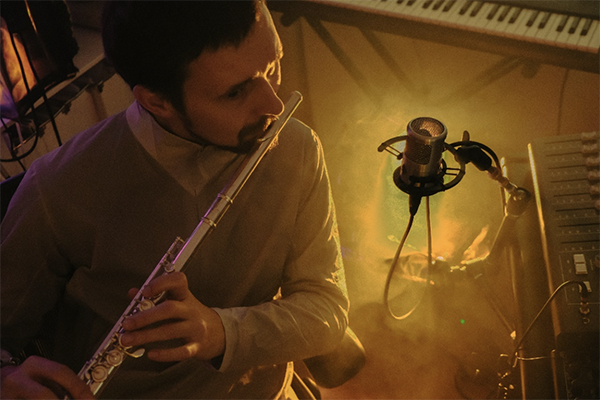
manτεία (meaning prophecy or divination) is a new performance written and produced by MBow (Roberto Alonso Trillo and Peter Nelson) that examines how ancient practices of geomancy and divination relate to our desire to find meaning in AI. Apophenia is the human tendency to look for meaningful patterns in random patterns, from the shapes of clouds to the scratches in oracle bones, to the outputs of AI generators. As our cultures grapple with the rapid evolution of AI, manτεία returns us to the ancient quest to communicate with the transcendent, by looking for messages in clouds and melodies in noise. Premiering at Freespace West Kowloon on the 22nd of December 2024, manτεία uses a unique approach to artistic collaboration, where artists produce sculptures, compositions and virtual worlds that send signals to one another, linking them together into a chain of creation via a technical process known as ‘multimodal mapping’. A giant mechanical sculpture will create an irregular heartbeat that drives a sculpture made of smoke. A costume provides a digital portal into another world, and an AI trained on classical texts of Chinese and European mythology tries to find meaning in these heartfelt gestures from young contemporary artists.

𝗢𝗿𝗴𝗮𝗻𝗶𝘇𝗲𝗱 𝗯𝘆
MBow Limited

𝗔𝗿𝘁𝗶𝘀𝘁𝗶𝗰 𝗗𝗶𝗿𝗲𝗰𝘁𝗼𝗿𝘀
Roberto Alonso Trillo
Peter A C Nelson

𝗣𝗮𝗿𝘁𝗶𝗰𝗶𝗽𝗮𝘁𝗶𝗻𝗴 𝗔𝗿𝘁𝗶𝘀𝘁𝘀
Taurin Barrera
Joseph Chan
Lazarus Chan Long Fung
Vvzela Kook
Samuel Swope
Davor Vincze
Karen Yu
Current.cam

𝗣𝗲𝗿𝗳𝗼𝗿𝗺𝗲𝗿𝘀
Ching Chu
Keung Hoi-Ling
(Appearance by kind permission of Unlock Dancing Plaza.)

𝗣𝗿𝗼𝗱𝘂𝗰𝗲𝗿
Jiafan Weng

𝗟𝗶𝗴𝗵𝘁 𝗗𝗲𝘀𝗶𝗴𝗻𝗲𝗿
Rachel Ip Chun-Lam

𝗦𝗼𝘂𝗻𝗱 𝗗𝗲𝘀𝗶𝗴𝗻𝗲𝗿
Allison Fong Tsz-Ching

𝗦𝘁𝗮𝗴𝗲 𝗠𝗮𝗻𝗮𝗴𝗲𝗿
Vivia Ho

This Project is financially supported by the Arts Capacity Development Funding Scheme of the Government of the Hong Kong Special Administrative Region. The content of this programme does not reflect the views of the Government of the Hong Kong Special Administrative Region.