All posts filed under: IN-RESIDENCE

Yim Sui Fong 嚴瑞芳

Between the personal and the political lies Hong Kong-based artist Yim Sui Fong’s long-standing enquiry into how we come to know and relate to the world – an enquiry shaped by playful, embodied, socially engaged practices. Her work often explores how individual agency can generate new ways of seeing and being within power structures embedded in everyday life. Through participatory listening, performative archiving and collaborative workshops, she creates artworks that become public encounters and platforms for collective meaning-making. In recent years, she has developed sonic interventions, such as A Stream A Path (2025-) and Stair Mass (2022), to explore the role of sound in remembering personal experience and sparking collective imagination. These works expand the role of the artist as storyteller, facilitator and social archivist. From June to August 2025, she was a resident artist at Delfina Foundation in London, where she continued researching archives and collaborative learning practices across cultural contexts. Jessica Wan: What brought you to Delfina Foundation and how has the residency community influenced your thinking or practice so far? Yim Sui …

Angela Su 徐世琪

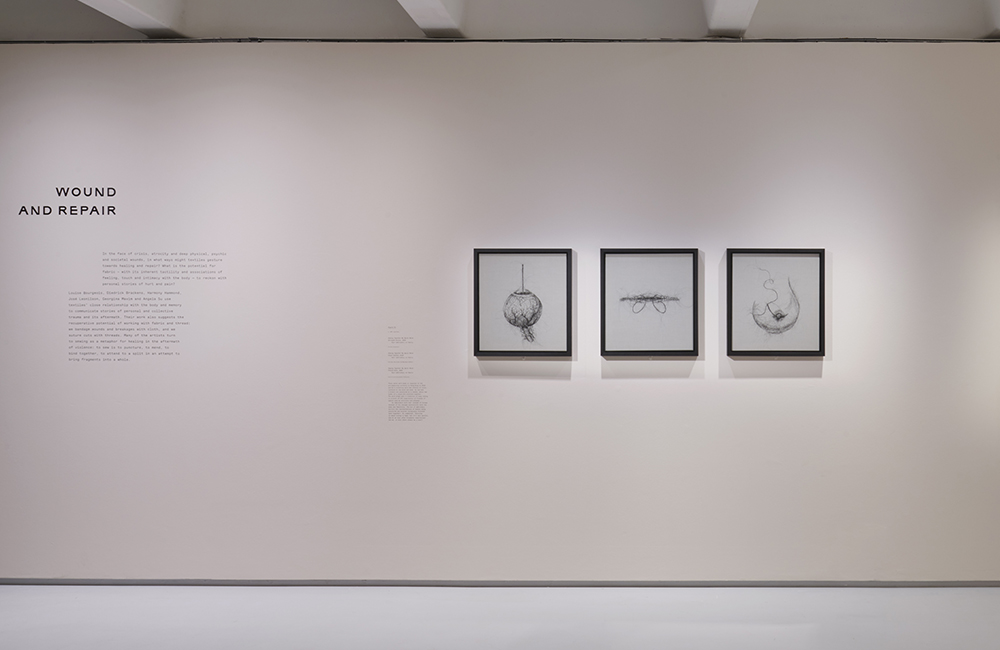
Angela Su’s work flows from the intersection of science and art, where intricacy meets imagination. With roots in biochemistry and visual arts, her practice is a dance between the tangible and the ethereal, as she weaves delicate lines into intricate drawings, often unsettling and always profound. Her creations—whether on paper, in video or through hair embroidery—speak of bodies in flux, beings in metamorphosis, and the tension between control and chaos. Su’s art explores the shifting nature of the human body, its transformations, and the interplay of science and fiction. Through her meticulous renderings of invented anatomies, she questions the certainty of the medical gaze, creating speculative worlds where bones become snowflakes, veins twist into vines, and organisms float in space, suspended in the in-between. Her hybrid figures exist in a state of becoming, fragile yet fierce, inviting us into the mystery of the body as it unravels and reforms. In her hands, the body is a site of resistance, a vessel for transformation and a story waiting to be told. With each line, Su reimagines the universe, drawing us …

Resonance Islands – Linkshouse Orkney Arts Residency 島島共鳴 – 藝術家駐留有感

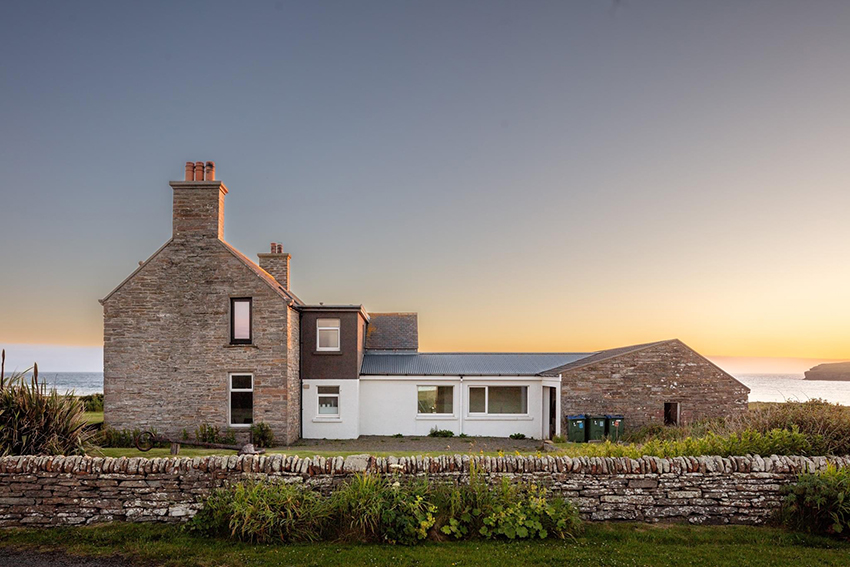
By Wong Ka Ying / There is an ancient saying on the Orkney Islands: “If you scratch the surface in Orkney, it will bleed archaeology.” This group of about 70 small islands is slightly smaller than Hong Kong but home to only 20,000 people. Despite its small size, Orkney has long produced artists and attracted creatives from elsewhere to its shores. In 1979, a modest yet significant art gallery was established, the Pier Arts Centre, in Stromness, Orkney’s second-largest town. Scotland’s northernmost art gallery, it’s a sea away from the Svalbard Museum in Norway, the world’s northernmost museum. The gallery was not created by wealthy elites or set up by the government but by Margaret Gardiner, an anti-fascist, anti-Vietnam War pacifist and writer, alongside her artist friends. Gardiner descended from a prominent family – her father was an Egyptologist involved in the discovery of Tutankhamun’s tomb. After graduating from Cambridge University, she briefly worked as a teacher and then, from the early 1930s onwards, devoted herself to social activism. She was also a major supporter of the artists …

Ling Pui Sze 凌佩詩

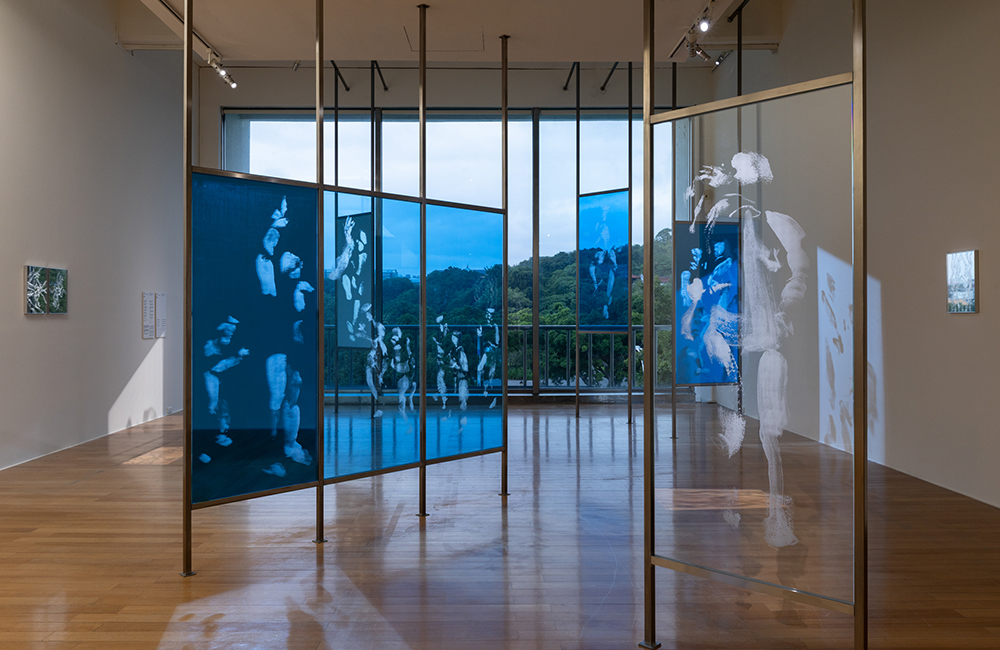
Much like gazing at the night sky during the new moon in minimal light, Ling Pui Sze’s works capture ever-evolving textures and organic forms, evoking a sense of tranquility and boundlessness. Inspired by her personal medical experiences and a deep connection to nature, Ling employs experimental ink techniques and collages to create videos, sculptural installations and works on paper. Her intuitive approach to arranging collected images of nature transfigures creatures and landscapes into abstract representations that recall both the familiar and distant. Ling embraces and reconstructs the incidental organic through an iterative process, reflecting on the interconnectedness of various life forms. To further explore the interplay between biological traits and the evolution of human society, Ling has participated in several artist residencies, including ones supported by Haohaus in Taiwan in 2015 and Listhus Artspace in Iceland in 2018. From July to December 2023, she undertook an artist-in-residence programme at Robinson College, part of Cambridge University, with Artecal Foundation. Her latest work, White Mirror 2, is on view until 9 March at the group exhibition Living …

Leung Chi Wo 梁志和

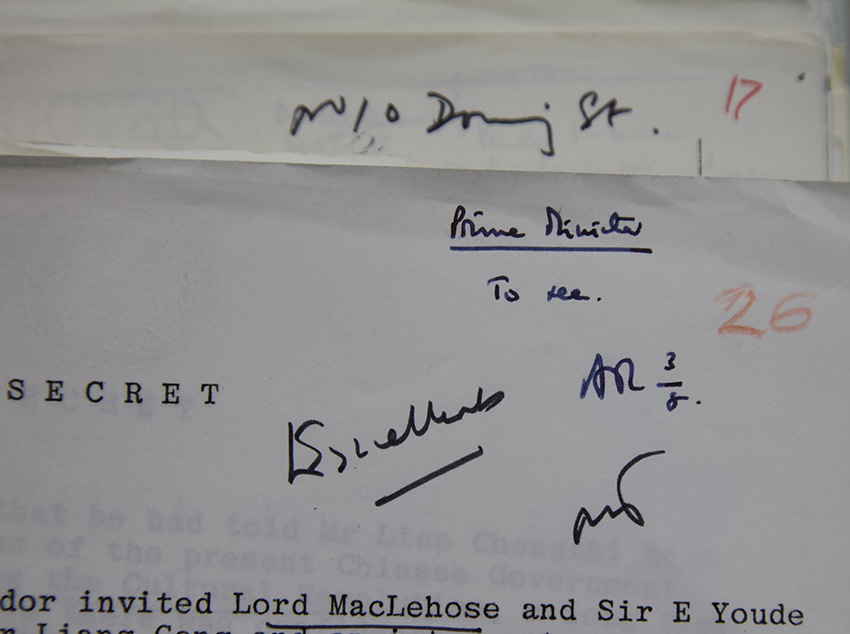
For Leung Chi Wo, to make sense of the present is to rediscover the past. Born in Hong Kong in 1968, a turning point during the city’s colonial period, after large-scale riots broke out the year before, the artist has always been fascinated by the development of its sociopolitical framework. He has spent more than two decades, both individually and with long-term collaborator Sara Wong, exploring the complex relationship between then and now, uncovering hidden narratives from the past and recontextualising them with alternative understandings of subjectivity. Also central to Leung’s practice are notions of time and perception, navigated through the power of photography and deconstruction of memories. Exhibited extensively across the world, Leung’s work ranges from photography and video to text, performance and site-specific installation. From September to December, Wong and Leung are undertaking a residency with the Delfina Foundation in London to continue developing their ongoing project Museum of the Lost. A collection of images from newspapers, magazines, brochures and other publications dating from the 1930s onwards, the project foregrounds anonymous people who …

Andrew Luk 陸浩明

A few years ago, Hong Kong artist Andrew Luk stumbled across Abney Park Cemetery during a visit to London. He was immediately drawn to its sense of autonomy, as though detached from the surrounding city life. Shrouded by lofty trees and brick walls, the cemetery embraces a different temporal experience, embodied by a curious mixture of tipping gravestones, decaying statues and a profusion of organic growth. Originally built to alleviate the overcrowding of graveyards during the Victorian era, the garden cemetery became defunct in the 1970s after its management went bankrupt. Further neglect in the years since has led to its evolution into the ecological sanctuary that it is today. Over the course of his two-month residency at London’s Delfina Foundation this summer, Luk returned to the cemetery and continued his exploration. Reflecting on this quality of otherness, he draws on Michel Foucault’s concept of “heterotopia” and disciplines such as garden studies and cemetery management to further understand the cemetery’s historical significance and present circumstances. Tiffany Leung: You first came across Abney Park Cemetery a …