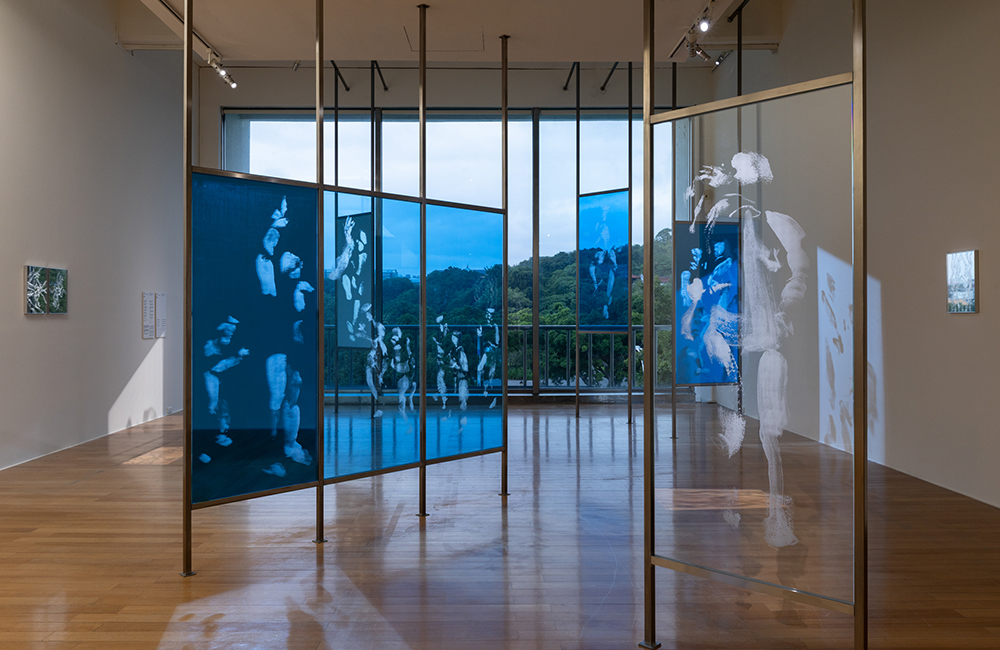
At a moment when the vocabulary of visibility feels both urgent and exhausted, Isaac Chong Wai approaches the body as an instrument of memory and resistance. The Berlin-Hong Kong artist, who has shown internationally, including recently at the 14th Taipei Biennial, Whispers on the Horizon, works across glass, photography, video, drawing and performance to trace the emotional afterlives of global phenomena – anti-Asian violence, queer precarity and diasporic longing. His installations often begin in observations or cinematic myth and end in something disarmingly intimate: a gesture held too long, a mirrored surface marked by breath, choreography that turns vulnerability into quiet defiance. In 2025, Chong completed a six-month residency in New York under the Désirée and Hans Michael Jebsen Fellowship, supported by the Asian Cultural Council. The city’s contradictions, where its celebrated freedoms coexist with persistent segregation and economic strain, sharpened his enquiry into solidarity, heroism and the fragile architectures that hold marginalised bodies in public space.

Jessica Wan: What was the starting point of your fieldwork in New York? How did the city reshape or sharpen the research questions you arrived with? Isaac Chong Wai: I extended questions that emerged from my participation in Foreigners Everywhere, curated by Adriano Pedrosa at the 60th Venice Biennale (2024). In that work, developed with dancers from different parts of Asia, we studied CCTV footage of assaults against Asian individuals in the US and other places during the pandemic, striving to reverse the trajectory of these attacks as a collective response to anti-Asian racism.
In New York, I shifted from mediated images to lived experience. I looked closely at how Asian diasporic and queer bodies negotiate visibility and safety within public space. The city embodies both proclaimed diversity and persistent racial segregation. This tension shapes my enquiry: beyond images of violence, how do racialised bodies sustain presence, agency and solidarity within systems that frame them as precarious?
JW: Your practice often transforms emotions such as tension, intimacy and collective memories into performative material. In New York, what did you find yourself observing most closely: gestures, speech, architecture, protest, silence? What became material? ICW: I observed gestures of culture. In a city where identities are visibly celebrated, I became more aware of my own cultural memory. Visiting Chinatown in Manhattan felt like stepping into a suspended past: shop signs, menus, languages and social rituals echoed my childhood visits to Mainland China. I was struck by how diasporic communities preserve fragments of home, sustaining collective memory, cultures and their representations.

Courtesy the artist and Zilberman. Photo: Luka Naujoks.
JW: New York has long been known as a site of artistic freedom and reinvention. What, for you, encapsulates the energy of the city? Were there moments that unsettled your expectations or complicated its mythology? ICW: For me, New York’s energy is in its contradictions: ambition and precarity, intimacy and alienation. The city celebrates freedom yet inequality runs persistently beneath that mythology. Reinvention is possible but not equally accessible.
New York is intense. We always say that. A tipped smile at a cafe, an expensive walk through Chelsea galleries – not just the art but the rent, the invisible stress of staying healthy without risking bankruptcy, of performing care for your own body in a city that can turn it into liability. Medical bills there are no joke. Gunshots or fireworks reverberate through the air in East Harlem. I asked ChatGPT how far human screams can travel compared to gunfire. Let’s hope it’s fireworks.
Artists hustle, juggling projects, jobs, survival, always starting with rent, then visa deadlines and self-imposed travel restrictions to avoid running into border issues. Oftentimes, we forget what we have done yesterday, because we have done too much. And yet, there is care. Friends and colleagues quietly share resources, make introductions, help with performances or exhibitions. The city doesn’t make it easy but art communities carve spaces of solidarity – small gestures that often go unrecognised.
JW: In Touched: A Better Tomorrow (2025), shown at the Taipei Biennial, you used etched glass and mirrored panels marked by your own body to reflect on brotherhood and masculine heroism. What does the word “hero” mean to you now? How do its images shift across Hong Kong, Asia, Europe and the United States? ICW: In this work, I thought about heroism not as Superman but as intimacy, vulnerability and care among people. The Chinese title, literally translated as “The True Colour of Heroes”, references the Hong Kong film A Better Tomorrow (1986), directed by John Woo. Revisiting this film allowed me to reflect on how the idea of an Asian hero is shaped by cinematic, cultural and historical narratives.
The meaning of “hero” shifts across contexts. In Hong Kong, Taiwan and broader Asia, it is often tied to loyalty, duty and collective ideals. In the west, it tends to emphasise individuality, moral courage or acts of triumph. Across these contexts, I’m interested in rethinking Asian heroism – what it means to care, to bear witness and to survive as a body in relation to others, rather than to dominate or conquer.

Courtesy the artist and Zilberman. Photo: Luka Naujoks.
JW: Your work frequently addresses queer identity politics and Asian diasporic histories. How do diasporic experiences in Berlin differ from those you encountered in New York? Where do you see resonances or fractures? ICW: In Berlin, the diaspora often carries a post-Cold War sensibility, shaped by memory politics. In New York, diasporic narratives feel more entangled with race and migration histories. There are resonances in displacement but also fractures in how racial and diasporic politics are expressed and experienced.
JW: Looking ahead, how are you thinking about Hong Kong – its identity, its transformations, its diasporas? What conditions are shaping your next body of work? ICW: I am preparing a solo exhibition at Tai Kwun Contemporary, curated by Louiza Ho. In the exhibition, I use Hong Kong’s cinematic and cultural experience as a point of departure to explore how stories are carried in our bodies and how traces of identity and collective memory manifest themselves through materials and performance.
Hong Kong’s in-between-ness – caught between east and west – resonates with queer experience, highlighting how identity is lived and performed across shifting contexts. By exploring the space between performance and reality, duality and fluidity, the project traces how intimacy, memory and cultural narratives endure, transform and circulate within these liminal spaces.
在有關「可見性」的詞彙既顯迫切又枯竭的時刻,莊偉將身體視為記憶與抵抗的媒介。這位居柏林及香港兩地的藝術家,作品曾於國際多地展出,包括近期在第十四屆台北雙年展「地平線上的低語」上的呈現。其創作以玻璃、攝影、錄像、素描與表演為媒介,追溯全球性現象的情感餘波——反亞裔暴力、酷兒的脆弱處境、離散者的鄉愁。他的裝置往往始於觀察或電影式的虛構,以令人卸下防衛的親密形式表達:一個定格過久的姿態、留有呼吸痕跡的鏡面、將脆弱轉化為靜默反抗的編舞。2025年,莊偉憑借亞洲文化協會捷成漢伉儷獎助,在紐約完成六個月的駐地創作。這座城市的矛盾——備受稱頌的自由與持續存在的隔離和經濟壓力並存——深化了他對團結、英雄主義以及在公共空間中支撐邊緣群體的脆弱結構的探究。
Jessica Wan:你在紐約實地考察的出發點是什麼?這座城市如何重塑或銳化了你最初提出的研究問題? 莊偉:我延伸了參與第60屆威尼斯雙年展(2024年)主題展「處處都是外人」時提出的問題,該展由阿德里亞諾︱佩德羅薩策劃。在那件與來自亞洲各地舞者共創的作品中,我們研究了疫情期間美國及其他地方針對亞裔的襲擊監控錄像,試圖逆轉這些攻擊的軌跡,以此作為對反亞裔種族主義的集體回應。到了紐約,我的關注從媒介化的影像轉向了親身的生活體驗。我細緻觀察亞裔僑民和酷兒群體如何在公共空間中協調可見性與安全感。這座城市一方面標榜多元,另一面卻始終存在種族隔離。這種張力塑造了我的探究方向:除了暴力影像,那些被激動化的身體在被框定為脆弱的系統之中,該如何維持自身的存在、能動性和團結?
JW:你的創作經常將張力、親密感與集體記憶等情感轉化為表演素材。在紐約期間,你最密切觀察的是什麼:姿態、言語、建築、抗議行動,還是沈默?最終什麼成為了你的創作素材?莊偉:我觀察的是文化中的姿態。在這個讚頌各式身份的城市裡,我對自身的文化記憶變得更加敏銳。走進曼哈頓唐人街,徬彿踏入一段被定格的過去:店鋪招牌、菜單、語言與社交儀式,都喚起了我童年到訪中國大陸的記憶。僑民社群如此保存家鄉的碎片,維繫集體記憶、文化及其表現形式,令我深受觸動。
JW:紐約向來以藝術自由與自我重塑之地而聞名。對你而言,什麼最能概括這座城市的能量?是否有某些時刻打破了你的預期,或讓它的神話變得複雜? 莊偉:對我來說,紐約的能量在於它的矛盾:雄心與不安、親密與疏離交織並存。這座城市歌頌自由,而在這神話之下卻始終潛伏著不平等。自我重塑雖有可能,卻非人人能平等享有。
紐約是緊繃的,我們總這麼說。咖啡館裡嘴角一撇的微笑,走過切爾西畫廊一場代價昂貴的漫步——不只是藝術本身,還有租金,還有避免破產而維持健康的無形壓力,如何在這座身體可能成為負累的城市裡,對身體保持關照。那裡的醫療賬單絕非玩笑。東哈萊姆區的上空,迴響著的不知是槍聲還是煙花。我還去問過ChatGPT,人類的尖叫聲和槍聲相比能傳多遠。但願那只是煙花。
藝術家疲於奔命:同時應付著項目、工作與生存——永遠從房租開始,然後是簽證期限,還有為了避免入境麻煩而自我設限的出行。我們常常會忘記昨天做過些什麼,因為做了太多。即便如此,關懷依然存在。朋友和同事默默分享資源,幫忙引薦,在表演或展覽中伸出援手。這座城市從不讓人輕鬆,但藝術社群開闢出團結的空間——那些微小到常被忽視的舉動。
JW:在台北雙年展展出的作品《觸動:英雄本色》(2025年)中,你運用了蝕刻玻璃與鏡面板,留下自己身體的印記,以此反思兄弟情誼與男性英雄主義。對現在的你而言,「英雄」一詞代表什麼?它的形象在香港、亞洲、歐洲與美國之間又有怎樣的轉變? 莊偉:在此作品中,我理解的英雄主義並非超人式的,而是親密、脆弱與人與人之間的關懷。作品中文標題直譯為「英雄本色」,指向吳宇森1986年導演的香港電影《英雄本色》。重溫這部電影,讓我得以反思亞洲英雄的概念是如何被電影、文化與歷史敘事所塑造的。
「英雄」的意義隨語境而改變。在香港、台灣乃至亞洲更廣闊的地域,它常與忠義、責任和集體理想緊密相連;而在西方,則更強調個體性、道德勇氣或勝利壯舉。在這些不同語境中,我想要重新審視亞洲式的英雄主義——它對關懷,見證,作為一個與他人相關聯的身體而存活的意思,而非支配或征服。
JW:你的作品經常探討酷兒身份政治與亞裔僑民歷史。你在柏林的僑民經歷,與在紐約所經歷的有何不同?兩者之間有哪些共鳴或斷裂?莊偉:在柏林,僑民往往帶有冷戰後的感知,由記憶政治所塑造;而在紐約,僑民敘事似乎與種族、移民歷史纏繞的更深。兩者在流離失所的處境上有所共鳴,但在種族與離散政治的表達與體驗方式上,則存在裂痕。
JW:展望未來,你如何看待香港——它的身份、變遷和離散社群?哪些條件塑造你接下來的創作? 莊偉:目前,我正在籌備在大館當代美術館由何苑瑜策展的個展。在是次展覽中,我以香港的電影與文化經驗為出發點,探討故事如何承載於身體之中,以及身份與集體記憶的痕跡,如何透過物質與表演來顯現。
香港那種介於東西方間的「之間」狀態,與酷兒體驗形成共鳴,凸顯了身份如何在不斷變遷的語境中被踐行和演繹。通過探索表演與現實、二元與流動性之間的空間,展覽將追溯親密關係、記憶與文化敘事如何在那些臨界空間中存續、轉化與流傳。