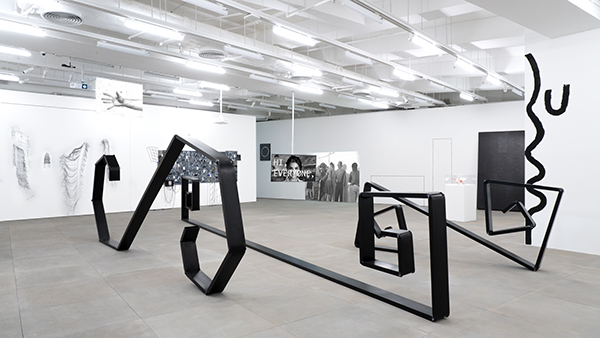
Serakai Studio opens first contemporary Salon, GOLD, with group exhibition CERTAINLY
South Ho Siu Nam, Tith Kanitha, Lousy, Shinro Ohtake, Pak Sheung Chuen, Peter Robinson, Richard Serra, Santiago Sierra, Maria Taniguchi, Weng Io Wong, Young-Hae Chang Heavy Industries /CERTAINLY /Mar 20 – May 3, 2026 / GOLD by Serakai StudioG/F Remex Centre42 Wong Chuk Hang RoadHong KongWe – Su 12pm – 6pm Special opening hours:Sat, Mar 21 – Sun, Mar 29, 2026 / 10am – 6pm dailyTue, Mar 24, 2026 / 10am – 11pm serakai.studio “Draw a straight line and follow it.” This single directive in the artist-composer La Monte Young’s 1960 instructional work Composition 1960 # 10 is the source of inspiration for CERTAINLY, the opening exhibition of GOLD, a new Salon in Hong Kong by Serakai Studio. What appears deceptively simple quickly reveals itself as more complicated—the line wavers, resists, and deviates, exposing the friction and instability within even the clearest instruction. La Monte Young—like his contemporaries John Cage, Nam June Paik, and Yoko Ono—blurred the boundaries between art, music, and daily life in the 1950s and 1960s, radically redefining what artistic practice could be. Their instruction-based works proposed …
