Latest Posts

Au Hoi Lam & Chang Hoi Wood at 1a space

Au Hoi Lam 區凱琳, Chang Hoi Wood 張海活
If there is a garden, where would I be? 如果有個庭園,我會在哪裏?
Aug 24 – Sep 14, 2025

1a space
Unit 14, Cattle Depot Artist Village
63 Ma Tau Kok Road
To Kwa Wan, Kowloon, Hong Kong
Tuesday – Sunday, 11am – 6pm
T +852 2529 0087

oneaspace.org.hk

If there is a garden, where would I be? is a visual and spatial art project in which a “garden” is created for viewers to stay, explore and enjoy.

Though gardens relate to the nature, all gardens are indeed artificial. Nature within the garden is a human projection with layers of mediation. This Garden consists of two areas: “In the Shade” and “In the Garden”. Allowing one to be temporarily isolated from daily life, this Garden is on one hand a physical space where one could stroll, stay and spend time in, with tangible artefacts as elements positioned within; and also a mental landscape which connects us with the intangible— the light, the shadow, the air, the trajectory of the moon, the disappearance of things. Composed of multiple materials, this Garden is an oeuvre that blurs the distinction between subject and background. Within this Garden, viewers are free to open up their sensibility to see and to feel, so as to consciously recalibrate the self in this space of otium.

This collaborative project is conceived and constructed by Au Hoi Lam and Chang Hoi Wood. Their dispositions and aesthetic values are merged into this Garden. Au uses handicraft to express ideas and emotions, embodying the relationship between the individual and the world. Chang focuses on the exploration of the emotional power of space through the articulation of geometry, and the innermost sentiments evolved and encountered in such experience. In this project, they explore further the themes of being as an individual: retrospection, contemplation, otium, vigilance, soothing and cultivation. Gardens allow viewers to stroll, introspect and reorganise oneself. Gardens connect the individuals to the world. Gardens craft landscapes on earth and in mind.

Artist talk, guided tours, workshops and reading group will be held during the exhibition period. All activities below will be conducted in Cantonese. Limited quota: please register online in advance.

Artist Talk
Aug 30, Saturday, 3pm – 4.30pm

Guided Tour (8 sessions)
Aug 31, Sunday  Sep 13, Saturday
2pm – 2.30pm; 2.30pm – 3pm
3pm – 3.30pm; 3.30pm – 4pm

Workshop
Poetry and Symbol (Day)
Sep 6, Saturday, 10.30am – 12pm
Full Moon and Night Garden
Sep 7, Sunday, 8pm – 9.30pm
Poetry and Symbol (Night)
Sep 12, Friday, 7pm – 8.30pm

Garden, A Reading Group
Sep 14, Sunday, 2pm – 3.30pm


https://zohopublic.com/zohocampaigns/746661000013730004_zc_v10_1678758926086_blindspot_gallery_logo_fi.jpg

Salvatore Emblema 薩爾瓦托雷・恩布勒馬

Born in Terzigno, near Naples, Salvatore Emblema (1929-2006) initially pursued a rather traditional artistic education, going to art school, training as a cameo jewellery carver (a practice that has a distinct Neapolitan declension, in the Torre del Greco school, which specialised in corals) and then enrolling in a degree in Fine Arts at the University of Naples. He didn’t finish university but instead dedicated time to travelling – going to France, the UK, and the Netherlands, and to New York for a year – after which he returned to Italy and started his career as an artist. In the 1950s, he worked for the Cinecittà movie studios in Rome, the largest in Europe, where he collaborated with Federico Fellini on films like La Strada (The Road, 1953-54), making the sets.

His artistic practice bears little resemblance to old-school academic training involving even meticulous jewellery-making skills: the modernity of his approach to painting and sculpture is striking even more than half a century later. In his hands, the unprimed jute and sackcloth canvases he uses have become objects, which he stripped of their threads until they revealed a three-dimensional vulnerability, producing ineffable and profoundly moving works, as if Emblema wanted to put us in the presence of total bareness, exposed in front of our eyes without any protection. On this manipulated, de-threaded, revealed and undressed jute and sackcloth canvas, he applied pigments produced by grinding stones and volcanic sand that he collected from the nearby Mount Vesuvius. Colour is spread on the semi-transparent surfaces in matt layers that add a feeling of earthly stillness and evoke the way in which paint adheres to a wall.

Untitled by Salvatore Emblema, Raw pigments on jute canvas, 200 x 150 cm, 1980.
© Salvatore Emblema. Photo: © White Cube (Kitmin Lee).

Maybe his time spent as a cameo carver awoke a desire to explore the layers underlying every surface. Maybe the 2,000-year-old Pompeian frescoes, just four kilometres from Emblema’s birthplace, instilled a sensitivity for the way in which colour embraces the rough surface of a wall. And maybe a sense of theatricality might have been fostered by his time spent producing film sets in Rome. But even if we want to look for possible sparks that inspired Emblema’s work, the way in which he stripped down the canvases, exposing their vulnerability and physicality, is deeply original and very powerful: troubling, in a gentle but impudent way. Something unexpectedly sensual, even sexual, is aroused by these distressed, exposed threads, stirring up in the viewer a potent bond with his works, as if we are watching a lover taking off their clothes, exposing themselves in their most vulnerable state. Or as if we were watching ourselves, peeling off our external layers to reveal what we are underneath it all. In an autobiographical note, Emblema even quotes Leonardo da Vinci saying that “to get to the essence of things, you must remove, not add”.

The works on display at White Cube, all untitled, offer a panoramic view of Emblema’s trajectory, curated in a way that brings us from the most openly sensual works to his tall, metallic, open net sculptures – where his guiding statement on his own art, “I belong to the light”, seems to be taken to its furthest limit – to a return to painting.

A red, threadbare canvas from 1975, with four bands where the jute’s threads have been painstakingly removed, so as to produce small overtures in the areas where both weft and warp have been de-threaded, feels strangely intimate, as if we were looking at a pair of nylon stockings with an accidental ladder, an unexpected transparency that evokes close connection with partially clothed bodies. Elsewhere, the pink-bordered, doubly de-threaded lines (Untitled, 1970) interrogate us from the frame like a strange, lingering equation.

Untitled by Salvatore Emblema, Raw pigments on overlaid and de-threaded jute canvases, 200 x 150 cm, 1980. © Salvatore Emblema. Photo: © White Cube (Kitmin Lee).

But this is not a loud, in-your-face sensuality. Rather, it is a pull of which we become slowly aware, as if taken aback by the possibility that a material as rough as jute could evoke such tender emotions. As his choice of the Leonardo quote reveals, Emblema’s pursuit of nakedness and of a stripped-down materiality has been a lifelong quest. This is confirmed by Emanuele Leone Emblema, grandson of the artist and director of the Museum Emblema in Terzigno:

“His canvases were denuded, de-woven. The transparency you see is not a precondition of the material, of the fabric, but a signature practice that differentiates his work from that of others: the transparency, the veiling and unveiling of the canvas itself.”

The subversion of the canvas-as-surface becomes even more pronounced in works such as Untitled/Diagonal (1975), where the jute has been de-threaded so thoroughly as to make it completely transparent, allowing us to see a diagonal blue band of jute attached to the back of the canvas. Through this transparency, the wall on which the work is hung also becomes part of the painting.

“Emblema’s canvases become an interruption in the spatial continuum, and the transparencies play with the wall behind them: it is the painting that becomes a wall, relating itself with the other wall, the one made with bricks that is visible behind it,” says Emanuele Leone Emblema.

Untitled by Salvatore Emblema, Raw pigments on de-threaded jute canvas, 100 x 120 cm, 1980.
© Salvatore Emblema. Photo: © White Cube (Kitmin Lee).

Through this structural decomposition, the canvas is both space and object, conveying a static atmosphere with architectural echoes – something that would emerge further in his sculptures. Here, too, materiality has been totally stripped of its substance, revealing a pared-down essence. An untitled structure from this period (1972) is made of a series of metallic nets, of the type used to reinforce concrete, coated in organic pigments – mostly blue, red and white – and left, as naked as the de-threaded canvases, hanging from a suspended cord. Emblema’s lifelong concern and search for light, which he said he was “chasing like a lover”, finds in his sculptures a total material subversion, making the essence of reinforced concrete as see-through and weightless as minimalist embroidery.

After this exploration, Emblema returned to painting. “Having erased everything and having placed sculpture into the landscape, he goes back to painting, this time imitating the movement of the landscape itself – through very stylised and abstract landscapes, [but] still recognisable as such,” says his grandson. “The colours he uses are earth pigments taken from Pozzuoli [a small port city near Naples and Vesuvius], meaning he chooses to paint the landscape with the landscape itself.”

The Pozzuoli pigments, when left undyed, have a red-earth hue, linking his works even more solidly with the land of his birth, as this is the same colour we can see in the many Neapolitan noble palazzos that used Pozzuoli’s earth for their surface painting, creating what is known as Neapolitan red. One example from these years is a beautiful untitled canvas from 1980, where the jute is not de-threaded, even if this type of fabric is not as compact as a primed cotton canvas. On it, an abstract mountain, maybe a volcano, sits behind a large black and blue-green form, suggestive of a hill with houses in the middle. The black pigment comes from volcanic lava, while the turquoise green is copper oxide, used in local agriculture to stimulate plant growth and as a pesticide. The canvas is no longer stripped of its materiality yet the search for light and transparency remains anchored in the large patches of colour, evocative of the materiality of a landscape seen in memory or in a heartfelt longing.

Thus, the arc of Emblema’s art goes from the revelation, near impudicity, of an undressed canvas, through the search for the most transparent essence of what is contained inside concrete to a place where we once again long for what we can’t hold in our hands. A memory. A light. The sight of our vulnerability.


薩爾瓦托雷・恩布勒馬(1929年-2006年)出生於那不勒斯附近的泰爾齊尼奧(Terzigno),他最初接受的是頗為傳統的藝術教育。他先就讀藝術學校,學習成為浮雕珠寶雕刻師(該技術帶有獨特的那不勒斯風格,屬於專攻珊瑚雕刻的Torre del Greco流派),之後在那不勒斯大學修讀美術學位。他沒有完成大學學業,反而選擇了到處旅遊——他去了法國、英國和荷蘭,並在紐約待了一年——之後回到意大利,展開他的藝術生涯。在 1950年代,他在位於羅馬、歐洲最大的電影製片廠奇內奇塔(Cinecittà)工作,與費德里柯・費里尼合作為《大路》(1953年-54年)等電影製作佈景。

他的藝術實踐跟牽涉細緻珠寶製作技藝的傳統學院派截然不同:即使過了半個多世紀,他對繪畫和雕塑的現代化詮釋依然令人震驚。他把原生黃麻畫布和粗紡麻布變成作品中的元素。他拆去畫布上的線頭讓它們展現出立體的脆弱性,創作出讓人深深震憾的作品,彷彿想要向我們赤裸裸毫無保留地展示自己。在經過處理、拆去線頭、原始的黃麻和麻布畫布上,恩布勒馬塗抹上從附近的維蘇威火山收集到的石頭和火山砂製成的顏料。霧面的顏料一層層地被塗抹在半透明的畫布上,增添了一種塵世的寧靜感,並讓人聯想到油漆在牆上的感覺。

Salvatore Emblema, Exhibition view at White Cube Hong Kong, May 28 – Jul 5, 2025.
© Museo Emblema and Emblema Estate Archive.
Photo: © White Cube (Kitmin Lee).

或許他作為浮雕雕刻師的經歷激發了他探索表層之下的層次的渴望,或許是有二千年歷史、 距離恩布勒馬出生地僅四公里的龐貝壁畫讓他對塗抹了色彩的粗糙牆面更為敏感,又或許是他在羅馬製作電影場景的經歷培養了他的戲劇藝術感。即使我們想尋找恩布勒馬創作的靈感來源,他拆卸畫布以展現其脆弱和結構的方式也極具原創性和力量:是一種溫柔卻又肆意的混亂。這些紛亂暴露的線意外地喚起了一種感性,甚至性慾,在觀者心中勾起了與作品的強烈聯結,彷彿我們正看著戀人脫去衣服,展露出自己最脆弱的一面。又彷彿我們正看著自己,剝去層層外衣展現出埋藏其中的真我。在一篇自傳中,恩布勒馬甚至引用了達文西的話:「要了解事物的本質,你必須去除,而不是添加」。

白立方畫廊展出的作品均無標題,為觀眾呈現了恩布勒馬的全方位創作軌跡。展覽的策展方式帶領我們從最感性開放的作品,到高大的金屬網狀雕塑——這些雕塑極致地體現了他對於自己的作品的引導性宣言「我屬於光明」——然後再回到繪畫。

在一幅創作於1975年的紅色拆線畫布上,四道帶狀的黃麻線被仔細拆除,被拆除的區域形成細小疏落的孔洞,給人一種奇異的親密感,彷彿看著一雙不意勾紗的尼龍絲襪,出乎意料的透明感讓人聯想到半裸的身體。此外,另一幅有粉紅色邊框和兩道被拆線的寬帶的作品(《無題》,1970年)就像一道奇怪而又未完成的公式,從畫框中向我們發出質問。

但是這並非一種強烈、直面的感官感受。相反,我們會慢慢感受到其中的情緒,並訝異於黃麻這樣粗糙的材料也能喚起溫柔的情感。正如他所引用的達文西名言所言,赤裸和極簡物質是恩布勒馬的畢生追求。恩布勒馬的孫子、泰爾齊尼奧的恩布勒馬美術館的館長Emanuele Leone Emblema的證實了這一點。

「他的畫布被剝開、被拆線。你所看到的透明感並不是材料或布料本身的狀態,而是他的作品的一種標誌,使他的作品不同於其他人的作品:透明度,畫布本身的編織與拆解。」

在《無題/對角線》(1975年)等作品中,以畫布為主體的運用更為明顯。黃麻布被徹底拆解以達至完全透明,讓我們能夠看到畫布背面的那條對角藍色黃麻帶。這種透明感令懸掛作品的牆壁也成為了作品的一部分。

Emanuele Leone Emblema說:「恩布勒馬的畫布打斷了空間的連續性,作品的透明感又與背後的牆壁互動:繪畫本身是一面牆,而且與背後那另一面磚牆相聯繫。」

透過這種結構的拆解,畫布既是空間也是物品,營造出帶有建築性的靜態氛圍——這種特質更體現在他的雕塑中。在這裡,物品的物質性也被徹底剝離,展現出簡約的本質。這段時期(1972年)創作的一件無題作品是由一系列金屬網構成,這些金屬網常用於加固混凝土,塗有有機顏料——主要為藍、紅和白色——然後作品被懸掛在半空中的一條繩子上,像被拆線的畫布段赤裸。恩布勒馬用畢生關注並追尋著光,他曾說自己「像追逐情人一樣追逐著光」。他的雕塑作品徹底顛覆了材質,使鋼筋混凝土如同極簡主義刺繡般透明、輕盈。

經歷過這些探索後,恩布勒馬回歸繪畫。他的孫子說;「他在抹去一切,將雕塑放置在風景中之後,又回歸繪畫。這次他透過非常個人的風格和抽象的風景來模仿風景本身的律動,但仍然能辨認出其原本的樣子。」他續指:「他使用的顏料是從波佐利(那不勒斯和維蘇威火山附近的一個小港口城市)採集的土質顏料,他選擇用風景本身來描繪風景。」


波佐利顏料未經染色時呈現紅土色調,讓他的作品與其出生地更加緊密地聯繫在一起,因為在許多那不勒斯貴族宮殿中,我們都可以看到同樣的顏色。他們使用波佐利的泥土繪畫牆壁,創造出所謂的那不勒斯紅。其中一個例子就是 1980 年的一幅美麗的無題畫,其中的黃麻布沒有被拆線,即使這種布料不像塗過底漆的棉質畫布那樣緊實。這幅畫中有一座抽象的山,也許是一座火山,坐落在一塊巨大的黑色和藍綠色色塊後面,這片色塊也許是一座中間有房子的小山坡。黑色顏料來自火山熔岩,而綠松石色是氧化銅,在當地農業中用於刺激植物生長和用作殺蟲劑。畫布不再被拆解,但他對光與透明感的探索依然隱藏在大片的色塊之中,令人聯想到記憶中或理想中的風景地貌。

因此,恩布勒馬的藝術生涯從對未經修飾的畫布肆意拆卸開始,通過探索實體中最透明的本質,最終到達了一個有我們想要的卻又無法緊握在手中的地方。一段回憶。一道光。目睹我們的脆弱。

Hong Kong Artists Group Exhibition: Imprints of Time at Tang Contemporary Art  

Peter Hong-Tsun Chan, Kila Cheung, Chow Chun Fai, Kwong Man Chun, Lewis Lee, Ling Wai Shan, Jade Ching-yuk Ng, Pak Sheung Chuen, Tam Kwan Yuen, Angela Yuen
Hong Kong Artists Group Exhibition: Imprints of Time
Aug 16 – Sep 23, 2025 
Opening: Saturday, Aug 16, 4pm – 7pm

Unit 2003-08
20/F, Landmark South
39 Yip Kan Street
Wong Chuk Hang
T (852) 3703 9246
Tu-Sa 11am – 7pm

tangcontemporary.com

Imprints of Time is an ongoing dialogue that transcends temporal boundaries, intertwining memory and the future within the city of Hong Kong. This exhibition features 10 Hong Kong artists from the post-1980s generation to Gen-Z. Their works provide insights into personal and urban identity, reflecting deeply on Hong Kong’s unique culture, history, and the passage of time.

In the rapidly changing landscape of Hong Kong, the city serves as a wellspring of inspiration. Each artwork acts as a temporal marker, bearing witness to past and present, and capturing fleeting moments of beauty. Through drawing, oil painting, sculpture, and installation, the artists depict the cultural fusion of the city.


https://zohopublic.com/zohocampaigns/746661000013675004_zc_v10_1678758926086_blindspot_gallery_logo_fi.jpg

Oscar Chan Yik Long 陳翊朗

To Sleep and Wake Unafraid /
PF25 cultural projects /
Basel, Switzerland /
Jun 14–22, 2025 /

For his solo exhibition in Basel, Switzerland, Oscar Chan Yik Long created an environment of ink drawings. 

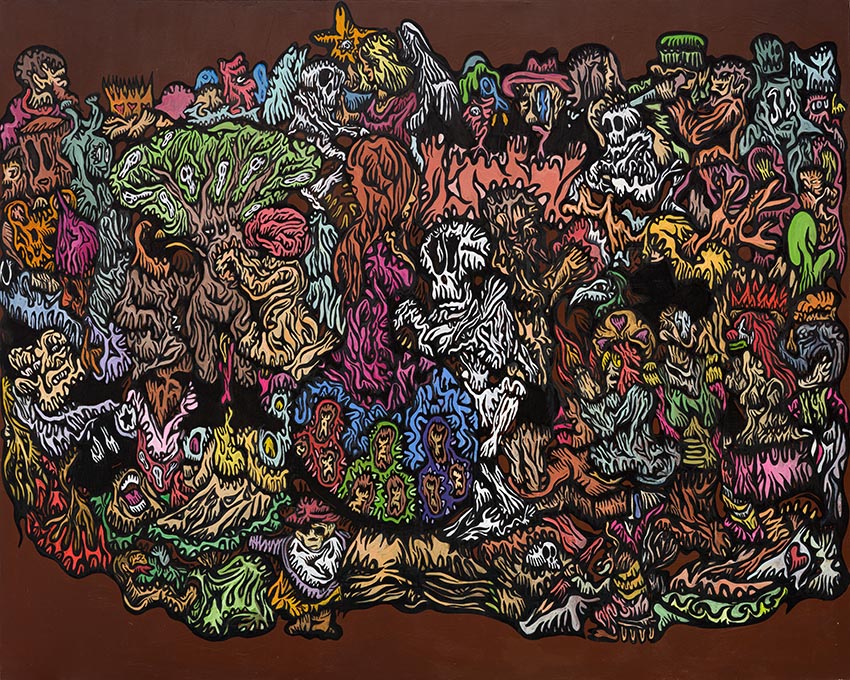
Entering the space feels like entering a body, the inner skin of which is covered with images. They are wild and tender, haunting and peaceful, bleeding from memories and experiences, as bodies always carry the traces of our traumas and happy moments. Bleached out in black and white, they are like repercussions of moments lived through: monsters and guardians at the same time. There is no limit, there are no boundaries, only flow, like associations of the mind and bodily fluids, sour and sweet at once. 

Exhibition view of To Sleep and Wake Unafraid by Oscar Chan Yik Long at PF25 cultural projects, Basel, June 14 – 22, 2025. Photo: Julian Salinas. Courtesy the artist and PF25 cultural projects.

The space where this happens is a living room in a 16th-century building at the heart of medieval Basel. The walls are structured by painted panels and the ceiling is held up by mighty wooden beams, which together already create the atmosphere of a cosy cave, where time takes a breath and the heartbeat can slow. This most private of rooms is given to artists from time to time by curator Angelika Li and her partner Donald Mak, as part of their platform PF25 cultural projects.

This time it was Oscar Chan Yik Long’s turn. The Hong Kong-born artist, currently based in Helsinki, was a PF25 artist in residence in Basel in 2022, when he also featured in the group exhibition Homeland in Transit: Carried by the Wind. This resulted in his stupendous body of work about the Hong Kong filmmaker Wong Kar-wai, especially from the two films As Tears Go By (1988) and Days of Being Wild (1990), with Chan drawing scenes featuring characters smoking and underlining them with his own thoughts about missing Hong Kong and the situation there.

Exhibition view of To Sleep and Wake Unafraid by Oscar Chan Yik Long at PF25 cultural projects, Basel, June 14 – 22, 2025. Photo: Julian Salinas. Courtesy the artist and PF25 cultural projects.

For this year’s solo exhibition, he chose to immerse viewers in global mythology, with an installation developed out of the characteristics of the space. Three small, elongated ink drawings were enlarged and printed on three panels of flag fabric that stretched across the ceiling. They showed monstrous figures from different cultures, such as Chronos from Greek mythology, who is known for devouring his children, as well as manga characters. Morpheus is killing his siblings; there are numerous skulls and eyeballs; the Three Fates represent past, present and future; and there are classical features like the mountains and seas of traditional Chinese painting. 

The title of the exhibition, To Sleep and Wake Unafraid, is taken from Ingmar Bergman’s 1968 movie Hour of the Wolf and refers to the present global situation, with wars and manifold uncertainties. But it also has a personal dimension: “Ninety-five percent of the dreams I remember are nightmares,” says Chan, while walking me through the exhibition. “And I love watching animations and horror movies from the 50s to the 90s where there is no CGI yet and you can still see how the atmosphere is created.” So it is no surprise the central panel shows a fight between a god of dreams and a monster. “It is a privilege to live without fear,” Chan says, pointing out that fear is a nearly universal feeling today but a rare subject in art. He uses fear to ask existential questions about how we deal with and even play with it, how we are watched and controlled by digital technologies, how our beliefs help us to deal with it and how we live our lives up till death.

As in his other enormous wall works in Freiburg, Germany and London, Chan develops compelling imagery that lets the visitor float in a timeless universe of associations that is nevertheless calm. The monsters from a previous series, A Horror to the Eyes of All Men Seeking Faith (2023), shimmer from the walls as demons and guardians at the same time. Decadence is the topic of these fallen angels. That Chan uses ink for his work even when painting directly on the walls heightens this impression by allowing a flow that can be soft in one corner and harsh at the next moment. If his imaginative associations were linked to philosophy, Plato’s cave would be the place.

Exhibition view of To Sleep and Wake Unafraid by Oscar Chan Yik Long at PF25 cultural projects, Basel, June 14 – 22, 2025. Photo: Julian Salinas. Courtesy the artist and PF25 cultural projects.

The latest and smallest piece in the exhibition resumes the theme of the cigarette and links it to the body: on a small tray in a corner of the room rests a pack of cigarettes protected by a Plexiglas box. Chan removed the tobacco by hand and painted ink drawings of monsters on the paper. It was a pack of Marlboros, the sort of cigarettes that are culturally connected with stout masculinity. In the piece The most misplaced worry 2, they are without the brand imagery, have lost their power of seduction and stand for an act of self-salvation. “My former partner, like my dad, was a heavy smoker of Marlboros, and as a child I was in fear about the health of myself and my family,” says Chan. Fear: here it is again. Even the smallest object can hint at this personal, and currently also cultural, monster defining our lives. This compelling exhibition connects private life and global concerns.

Chan’s artist book My Body Is a Reincarnated Population was launched in Basel along with the exhibition. The show will have a second chapter, They Always Look from the Imagined Above, at the Radvila Palace Museum of Art in Vilnius, Lithuania this November.


To Sleep and Wake Unafraid
PF25文化項目
瑞士巴塞爾
2025年6月14日至22日

在瑞士巴塞爾的個展中,陳翊朗構建了一個水墨世界。

步入展廳,彷彿進入了一個身體,肌膚內壁上佈滿圖像。圖像既狂野又溫柔,擾人心神又撫慰心靈,像是從記憶與經歷中滲透出的血痕,正如我們的身體總承載著創傷與幸福的印記。它們褪去色彩,化為黑白,彷彿是那些親歷時刻的回響:既是怪物,也是守護者。這裡沒有邊際,沒有界限,唯有流動,如同思想的交織與體液的流動,酸澀與甘甜並存。

展覽地點在巴塞爾中世紀老城區中心一棟十六世紀建築的客廳內。牆面由彩繪畫板構成,天花板被粗大的木樑撐起 ,兩者營造出一種溫馨洞窟的氣氛。在這裡,時間徬佛能稍作喘息,心跳也隨之放緩。這間極其私密的空間由策展人李安琪和其拍檔麥乘彬不定期提供給藝術家們使用,作為他們PF25 文化項目平台的一部分。

此次輪到陳翊朗。這位出生於香港、現居赫爾辛基的藝術家,曾於 2022 年作為PF25駐地藝術家在巴塞爾進行創作,並參與群展「Homeland in Transit: Carried by the Wind」。期間他創作了一系列以香港導演王家衛為主題的精彩作品,尤其是聚焦電影《旺角卡門》(1988年)和《阿飛正傳》(1990年)——陳氏描繪了片中人物吸煙的場面,並在其中注入自己對香港的思念之情及當地現狀的思考。

在今年的個展中,他選擇讓觀者沈浸於全球神話的敘事中,依託空間特質創作了一個裝置作品。三幅細長的小幅水墨畫被放大後印制在三塊旗布上,橫跨整個天花板鋪開。畫面中呈現來自不同文化的怪物形象:如希臘神話里以吞噬子嗣而聞名的克洛諾斯,還有日本漫畫角色;描繪摩爾甫斯正在殺害兄弟姐妹的場面;數不盡的頭骨和眼球;象徵著過去、現在與未來的命運三女神;此外還有中國傳統畫中典型的山海元素。

是次展覽名「To Sleep and Wake Unafraid」取自英瑪·褒曼1968年的電影《午夜魔踪》,既影射當下戰爭頻發、充滿不確定性的環球局勢,也暗含藝術家的個人體驗。「在我能記得的夢中,95%都是噩夢,」陳氏在導覽時坦言,「我愛看50至90年代的動畫與恐怖片,那時還沒有電腦特效,你能看到氛圍是如何被營造出來的。」因此,展廳中央懸掛的旗布上呈現著夢神與怪物搏鬥的場景,也就不足為奇。陳翊朗指出:「能無所畏懼地活著是一種特權。」他指出,如今恐懼幾乎是一種普世情緒,卻極少成為藝術創作的主題。他借助恐懼叩問生存問題:我們如何應對乃至把玩恐懼?數碼科技如何監視與控制我們?信仰如何幫助我們對抗恐懼?以及,我們該如何渡過向死而生的一生?

如同陳氏在德國弗萊堡和倫敦創作的那些大型牆體作品一樣,他構建出極具感染力的意象,讓觀者漂浮在一個永恆而寧靜的聯想宇宙中。 過往系列作品《A Horror to the Eyes of All Men Seeking Faith》(2023年)中的怪物形象,正從牆面中隱現,既是惡魔,也是守護者。這些墮落天使指向 「頹廢」的主題。即便直接在牆面作畫時,陳氏仍堅持使用水墨,這更強化了觀感印象:水墨流動時,可在一隅柔和暈染,轉瞬又成凌厲筆觸。若要為他這些天馬行空的聯想找到哲學關聯,柏拉圖的洞穴隱喻或許是最佳注腳。

展覽中最新且最小型的作品重拾了香煙主題,並與身體意象相連:展廳角落的小托盤上,放著一包用有機玻璃罩保護起來的萬寶路香煙。陳氏親手剔除煙絲,並在卷煙紙上繪制了水墨怪物圖。這原本是一包萬寶路,這種香煙在文化中常與男子氣概掛鈎。而在這件名為《The most misplaced worry 2》的作品中,香煙去除了品牌標識,失去了誘惑力,轉而成為自我救贖的載體。「我的前任伴侶和我父親一樣,都是萬寶路『煙剷』,小時候的我總為家人和自己的健康憂心忡忡,」陳氏說道。恐懼——這個命題在此再度出現。即使最微小的物件,也能揭示這一定義著我們的生活、兼具個人性和當代文化性的怪物。這場引人入勝的展覽,將個體生活與全球議題縝密關聯。

陳翊朗的藝術家手書《轉世成身》與該展覽一同時間在巴塞爾出版。是次展覽的第二篇章「They Always Look from the Imagined Above」,將於今年11月在立陶宛維爾紐斯的Radvila Palace博物館舉行。

Ha Bik Chuen 夏碧泉

Reframing Strangeness /
Para Site /
Hong Kong /
May 10 – August 10, 2025 /

Typhoon season in Hong Kong is brutal. Tree limbs snap and fall. Ships are damaged or even run aground. Roads flood or, worse yet, cave in.

But the rain gave Ha Bik Chuen inspiration. Specifically, he saw how the shoes of pedestrians left imprints on newsprint that lay stuck to the ground after it dried, the paper moulded with new bumps and contours, traces left by the people who had walked through as they sought cover from the deluge. 

Installation view of Reframing Strangeness: Ha Bik Chuen’s Motherboards and Collagraphs, Para Site, Hong Kong, 2025. Photo: Felix SC Wong.

The artist decided to dedicate part of his practice to making paper artworks with pronounced bumps and grooves. Ha needed a way to shape the sheets, so he made more than 100 collagraph plates, which he called “motherboards”, between 1974 and 1995. The process surely drew upon the woodworking skills that he acquired as a teenage apprentice in a construction and decoration workshop in Jiangmen. With these print matrixes, Ha created an estimated 3,000 collagraphs, each with about six layers of paper and pigment applied. This element of Ha’s practice is the focus of Reframing Strangeness, an exhibition at Para Site.

The artist expressed a range of influences in his motherboards, drawing from ancient Chinese history as well as the environs around his home and studio in To Kwa Wan. He incorporated natural materials, mainly dried leaves, that he collected from various locations, including Macau. 

From Ancient to Modern by Ha Bik Chuen, 61 x 78.7 cm, 1983. Courtesy the Ha Family.

From Ancient to Modern (1983) features Ha’s interpretation of an oracle bone, with leaves and rattan embedded on the board and “Hong Kong” carved into the surface in both English and Chinese. There’s more engraved script that is stylistically similar to jiaguwen, the earliest known form of Chinese writing, which was preserved on tortoise shells and bones. This is familiar imagery for almost anyone educated in Hong Kong and mainland China – the oracle bones are proof that establish the existence of the Shang dynasty (circa 1600-1046 BCE), and children are taught about these artefacts and the writings they bear to acknowledge their Chinese cultural heritage.

Ha’s motherboards were cast as not only tools to make art but also artworks in their own right – mosaics, relief, collage. This was most evident in the imagery of Sacred (1975), featuring a monolithic, complex composition. The arrangement involves what appears to be a geometric tower, starting with a trapezoidal base and a rectangular trunk that extends upwards. At the top, a rhombus houses triangles, squares and finally a circle at its centre. The pieces forming this board embody a range of textures – 13 in all – giving them a wider variety of natural grain than other artworks in the show.

The motherboards are presented at Para Site so that their backs can be viewed as well, telling another part of Ha’s story. These normally hidden sides reveal how Ha used wooden pallets and crates that were likely found in To Kwa Wan and that also served as his ledger pages to track the collagraph editions that he had produced and sold. 

Look closely to find a few names that appear multiple times, across different motherboards’ records. “Nigel”, for instance, was almost certainly the late South China Morning Post art critic Nigel Cameron, who wrote for the daily between 1972 and 1994. There are records of Ha making collagraphs for exhibitions in Poland, West Germany and local presentations in Hong Kong.

One object in Reframing Strangeness is easy to miss – a low table borrowed from Ha’s Thinking Studio in To Kwa Wan. It was on its modest surface that Ha did some of his artistic work. It isn’t difficult to imagine him seated by it, stamping, pounding, painting, laboriously adding layers of paper and pigment, gradually shaping a collagraph to his own satisfaction. Possibly this table was also where Ha and his guests would convene, perhaps to discuss a new concept or reference that Ha mined from one of the many publications that packed his studio’s shelves.

Installation view of Reframing Strangeness: Ha Bik Chuen’s Motherboards and Collagraphs, Para Site, Hong Kong, 2025. Photo: Felix SC Wong.

The exhibition at Para Site primarily presents Ha’s motherboards, collagraphs and a few gouache drawings, but it embodies much more. Reframing Strangeness is the first time in 31 years that his artworks have been presented in a solo exhibition, according to the artist’s daughter. It is a show that reaches back into Ha’s artistic practice, the output of which lay dormant in his packed studio, which remained largely untouched for years after his death in October 2009.

Ha is now primarily known as an important figure who compiled an encyclopedic personal archive, including comprehensive photo documentation of exhibitions and candid moments involving cultural figures. He started taking these photographs in the early 1980s, when he bought his first camera, and continued doing this until his death in 2009, adding layers of attestation and references to the city’s art scene, much like his meticulous work to create every collagraph. Reframing Strangeness provides a refreshed look at his diverse practice, recalling how a self-taught artist was able to assemble a wide-ranging body of work and unique records of Hong Kong’s art scene for decades.


重置陌像
Para Site藝術空間
香港
2025年5月10日至8月10日

香港的颱風季來勢洶洶:樹枝斷裂墜落,船隻損毀或擱淺,路面被淹甚至塌陷。

但暴雨卻給了夏碧泉創作靈感——他注意到行人匆匆避雨時,鞋底在地面濕報紙上留下的印記。待地面乾透後,這些紙張形成了新的凹凸輪廓,記錄下人們躲雨時走過的痕跡。

藝術家決定將部分創作實踐集中於製作具有明顯凹凸紋理的紙質作品。為塑造紙張形態,他在1974至1995年間製作了100多塊拼貼版畫的印版,並稱之為「母版」。這一製作過程無疑得益於他少年時在江門建築裝飾作坊當學徒時掌握的木工技藝。利用這些母版,他創作了約3000幅拼貼版畫,每幅作品需疊加六層紙張與顏料。Para Site藝術空間當前展出的「重置陌像」展覽,正是聚焦夏氏藝術實踐中的這一創作要素。

夏氏在「母版」中表達了多元藝術影響,既汲取了中國古代歷史元素,也就地取材於土瓜灣住所及工作室周邊的環境。他在作品中加入了從澳門等多個地點採集的天然材料,其中多以枯葉為主。

夏氏的作品《從古至今》(1983年)展現了其對甲骨文的藝術詮釋。作品中,枯葉與藤蔓被嵌入版面,並以中英雙語刻下「香港」字樣。版面上還鐫刻著風格近似甲骨文的文字——這一已知最古老的漢字形態,最初鐫刻於龜甲獸骨之上。此意象對於幾乎所有在香港和中國大陸接受過教育的人來說都感到熟悉:甲骨文是商朝(約公元前1600-1046年)存在的實證,孩子們從小就被教導瞭解這些文物及其上所刻的文字,以此來認同自己的中華文化根源。

夏碧泉的「母版」不僅被視作藝術創作的工具,其本身就是獨立的藝術作品——兼具馬賽克、浮雕與拼貼的特質。這一特性在《神聖》(1975年)中體現得尤為顯著:該作品呈現出龐大而複雜的構圖。佈局包含一個看似幾何塔的結構:從梯形的基座開始,向上延伸出矩形的軀幹。頂部有一個菱形,內部包含三角形、正方形,最中心是一個圓形。構成這塊母版的各個部件呈現出13種不同紋理,其自然材質的多樣性遠超展覽中的其他作品。

是次Para Site的展覽中,這些母版的背面也得到了展示,從而揭示夏碧泉藝術故事的另一面。這些通常被隱藏的背面清晰展現了夏碧泉如何運用那些很可能來自土瓜灣的木制托盤和板條箱——這些材料不僅作為創作載體,更被他用作記錄製作和銷售拼貼版畫的賬本。

仔細觀察,你會發現一些名字反覆出現在不同母版的記錄中。如,「Nigel」幾乎可以肯定是已故《南華早報》藝術評論家Nigel Cameron,他曾在1972年到1994年期間為該報撰寫評論。記錄中還顯示,夏氏曾為波蘭、西德以及香港本地的展覽製作過版畫。

展覽中有件極易被忽視的展品——一張從夏碧泉土瓜灣「思考工作室」借用的矮桌。藝術家在這張簡樸的桌子上完成部分創作。不難想象他坐在桌旁工作的場景:時而鈐印,時而捶打,時而繪制,不厭其煩地疊加層層紙料與顏料,直至拼貼版畫漸次成形,合於心意。這張桌子或許也是夏氏與來訪者交流的地方,一同探討他從工作室滿架出版物中汲取的新理念或文獻參考。

是次Para Site的展覽主要呈現了夏碧泉的母版、拼貼版畫和一些水粉畫,但其意義遠不止於此。根據藝術家女兒的所述,「重置陌像」是夏碧泉作品在31年來的首次個展。這個展覽回溯了夏碧泉的藝術實踐,這些作品一直存放在他堆滿物品的工作室中,自2009年10月他去世後,多年來幾乎塵封未動。

如今,夏碧泉主要作為一位重要檔案編纂者而聞名,他建立了百科全書式的個人檔案庫,其中包含詳盡的展覽影像記錄和文化人物的紀實瞬間。自1980年代初購置首台相機開始,直至2009年逝世,他持續進行著攝影記錄工作,如同其精心創作的每幅拼貼版畫一般,為香港藝術生態加入了多層次的文獻證據和參照體系。展覽「重置陌像」通過重新審視其多元藝術實踐,完整呈現了這位自學成才的藝術家如何在數十年間建立起廣泛的作品體系,並留存了香港藝術界的獨特記錄。

Chak Chung 翟宗浩

A graduate of the Department of Fine Arts at The Chinese University of Hong Kong in the early 1980s, Chak Chung was deeply influenced by the renowned artist Liu Kuo-sung. Over the past four decades, he has engaged in an extensive exploration of diverse painting traditions, from Chinese landscape to modernism. Shortly after completing his undergraduate studies, Chak relocated to Tokyo to further his artistic education, subsequently moving to New York, where he resided and worked until 2009. Upon returning to Hong Kong, he established his studio in Fotan, where he continues to investigate the possibilities of painting as a medium, striving to grasp the elusive beauty and inherent chaos of the natural elements and the human condition.

Summer of the Jubilee Reservoir by Chak Chung, 30 x 40 cm, 2024. Courtesy the artist.

Caroline Ha Thuc: Most of your artworks are landscape paintings and portraits of Hong Kong. They express the pull and push between elements and are generally free from people. Chak Chung: Socialising is one of my major weaknesses. I find people’s behaviours intimidating, and interacting with strangers drains my energy. Maybe that is why I am drawn to painting landscapes rather than focusing on mankind. I find solace in observing the sea, the sky and the ocean. These natural elements calm me and provide a sense of peace. The push-and-pull dynamics represent the endless turbulence of introspection.

CHT: Is painting the landscape of Hong Kong an attempt to revisit Chinese classical painting? CC: I have been in this field for too long. It seems that no one has made any significant breakthroughs in classical Chinese painting for quite a while. As I am near the end of my journey, I would like to make one last attempt at pursuing this quest. I’m not certain if I can achieve the goal but it’s worth a try.

CHT: What could the relevance of this classical approach to painting be when thinking about our current relationship with nature? CC: In the past, one of the mainstream schools of thought was to be “one in harmony” with Mother Earth. Similarly, the ancient Chinese philosophical ideology of 天人合一 [unity of nature and humanity] reflects this concept. Since then, our tie with nature has evolved and is now quite different.

Personally, neither exactly sits right with me. For instance, nature has presented itself as a reckless, ruthless entity. It has always acted on its accord and has no intention to be benevolent and all-loving towards mankind. The human species is merely one small fraction of the vast ecosystem, while nature encompasses the totality of the universe. Such is the overarching theme of all my paintings.

CHT: Why is it important for you to work in dialogue with this heritage? CC: Heidegger once mentioned that the common norms of society, whether spoken or not, are unanimous everywhere. Their governing power has long existed before you and I were born. Such benchmarks teach us all matters in life, from the books we read or are prohibited to the ways we assess our surrounding environment. At the end, we are moulded into a so-called “normal person”. Our identity or self-searching has little to do with originality and thus emancipation. We are who we are, which is a cross-section of time and history: the result of a long line of heritage.

CHT: You were aboard for almost 30 years; what motivated you to come back? CC: My return was triggered by two unexpected incidents.

The first involves Franz Dahlem, a friend and former gallery owner from Germany. One day, he asked me, as an Asian, what I was bringing to the art scene in New York. I felt ashamed.

The second event harks back to my years living in downtown New York City, which coincided with the tragic occurrence of 9/11 and the collapse of the Twin Towers. In the aftermath of that disaster, the neighbourhood was heavily secured by armed personnel and food supplies dwindled significantly. I managed to survive for two weeks. This experience led me to explore two fundamental questions – a: who am I? And b: what is the meaning of life?

Send in the Clowns by Chak Chung, 122 x 183 cm, 2023. Courtesy the artist.

CHT: What do you think of your identity now? CC: I believe that no one can completely master their self. Based on Chinese philosophy, my goal is akin to that of ancient Greek masters: namely, why can’t humans be as infinite as mountains? This puzzle guides us toward the ultimate. “Where do I come from and where am I going?”

When I began painting Hong Kong shan shui (山水), it symbolised a sense of eternity. However, over the years, my artistic expression has evolved. What once was a pure homage to nature has gradually incorporated subtle references to my emotional connection with my homeland, Hong Kong. For example, in The Whistle Blower (2025), I depict a form resembling a windpipe or whistle in the lower right corner. The white vapour emanating from it serves as a warning signal – a call for friends to flee.

CHT: In the 17th-century painter Shitao’s famous treatise about painting, Sayings on Painting from Bitter Gourd Monk, he says that there should be no rule, or rather a rule saying that there is no rule: would you agree? CC: I wholeheartedly agree with Shitao’s viewpoint. In my artistic practice, I strive for unpredictability. This approach serves as a time-recording mechanism through which I convey my perspective of “no beginning or end”. Embracing a free spirit, my art becomes an expression that contrasts against rigid structures and constraints. Rules establish a basis for predictability. Therefore, I believe the real challenge lies in how we can anticipate the dynamics of nature without falling into monotony.

CHT: In his treatise, he describes the sea and mountains as interconnected, which is also what we see in your landscapes. CC: To me, the sky, the ocean and the mountains form a vast and interconnected unity. In Lacan’s words, these elements represent a mirror image, indifferent to one another. The philosopher introduced such a mirror to illustrate the concept of self-alienation. But what is the self without the influence of the outside world? I once perceived the sunset as a vibrant red circle descending and eventually being enveloped by the sea. C’est la vie! The so-called fireball will, as always, rise again from the east tomorrow. Fire, water, wood, metal and earth are intricately intertwined.

The Nonconformists by Chak Chung, 30 x 40 cm, 2024. Courtesy the artist.

CHT: You told me that you tried to empty your mind before painting but that then you were “going crazy”. Can you elaborate on that? CC: Achieving a state of total relaxation and mindfulness is more akin to meditating than to going crazy. In truth, the mind cannot become entirely blank. Instead, I attempt to eliminate all secular distractions and concentrate solely on the canvas. At that moment, a multitude of possibilities and ideas emerge. One could say that the endorphins start to take control, marking the commencement of the creative journey.

CHT: In some cases, it really feels you are bringing forth the chaos on the canvas. In After the Black Rain (2024), for instance, one can observe a struggle between the black lines that traverse the composition and the broad areas of white that appear to collapse in on themselves. How can you manage to give birth to new forms from such catastrophic chaos? CC: Energy is always an encounter of the static against the mobile, cold struggling with warm, finite versus endless.

The interpretation of this fine drawing can be divided into two layers. On the physical level, the black and grey represent landmasses. They interlock and juxtapose to exist, just as we entwine with nature. The vertical and horizontal lines form the spinal framework, the structure, to balance, neutralise and harmonise such a meltdown. This wonderful marriage creates stability and miraculously enhances the composition.

On a metaphysical level, one can distinguish five individual droplets that emerge from the lower left corner. They symbolise little people like myself. These good fellows are dear friends who are leaving Hong Kong.

CHT: Chinese painters have usually not painted on site but rather constructed imaginary scenes in their studio. On the contrary, you take your paper and pencils when hiking and draw outside. CC: The human brain is extraordinary. Our subconscious is adept at processing and filtering specific elements. When we visit a new environment or encounter novel situations, fleeting thoughts may arise. These ideas can be positive or negative but how we react largely reflects our inner self. The outcome represents the reality or true essence of that particular scene or moment. In short, as artists, there is a choice: either we utilise [the objects through our gaze] as a medium to cultivate back in the studio; or, through our creations, we strive to enact, symbolise and sublimate such experiences.

Back in the studio, with the bases from the sketches laid down on the canvas, transformation begins. According to Alain [philosopher Émile-Auguste Chartier], within the process, a superb artist will revamp the raw material, including the original drawings, into something that even amazes her or himself. That is sublimation.

Typhoon Approaching Hong Kong by Chak Chung, 122 x 266 cm, 2020. Courtesy the artist.

CHT: In your painting, a large white mass features both the sea and clouds, sometimes simultaneously. Traditionally, they stand for the void, something from which everything can emerge. Yet if we look at paintings such as They All Line Up and Leave (2023), they offer a rather dense surface. CC: I’m truly glad you brought this up. The portrayal of the blank space as a representation of the infinite has become somewhat cliched, akin to the fable of the Emperor’s new clothes. To mitigate this risk, I have sought to redefine the true meaning of the void by visually incorporating rich elements beneath layers. The large white and occasionally blue planes in my paintings strive to reveal intricate details, allowing colours to subtly emerge. In this way, I confine the beautiful hues in a delicate sanctuary instead of abandoning them entirely.

Over time, I have developed a strong aversion to large white areas or blank colour fields. As a countermeasure, I strive to incorporate various colours that subtly seep through the lighter top layer to enrich the surface of the canvas. These light tones play a very crucial role in creating definition for the islands, peninsulas, land formations and other structural elements within my work, all of which are essential to my artistic vision.

CHT: In your work, there is no perspective but rather a sense of gravity that leads to a strong dynamic, not necessarily pushing things downwards but taking them in a circular or revolving movement. Are these the dynamics of creation? CC: The sheer power of nature is always fascinating. Documentaries about hurricanes, tsunamis, avalanches and floods capture my attention. Back when I was still living in New York, I frequently travelled upstate to worship Niagara Falls. I often envisioned qi as the invincible flow of perpetually moving air masses. When it surges, the vacuum gets replenished, thus creating a vast, invisible current. Imagine if we look at it from afar, this circulation will initiate a huge, dynamic, circular swirl.

CHT: At the same time, there are many geometrical lines that structure your paintings: the horizontal ones, marking the marine horizon that is always present around Hong Kong, but also many others that seem rather to hold the whole composition. How do you integrate these elements? Do they serve as a kind of backbone to your painting? CC: People oftentimes ask why I choose oil paint and a western medium to induce the Chinese spirit in my art. This choice reflects my upbringing during the period of colonialism. I find myself neither fully aligned with the east nor the west. Similarly, Hong Kong is a city that is full of concrete. Therefore, parts of the wilderness left undeveloped have transformed into an objet petit a [an unattainable object of desire, in Lancanian theory] for modern men like myself. In my paintings, the level lines mostly signify the ocean’s horizons, while the vertical strokes likely symbolise architectural structures. These geometric elements are introduced to contrast with the hills, islands, trees, waves and other organic elements.

The Jubilee Reservoir by Chak Chung, 26 x 35 cm, 2015. Courtesy the artist.

CHT: You also decompose natural elements. For example, in Tolo Harbour (2024), the landscape depicted is deconstructed, as if bands have shifted both horizontally and diagonally, pushed by the effects of tectonic plate dynamics. CC: [Philosopher] Nelson Goodman once cited a butterfly as an example. When we see it in the field, that colourful Tinkerbell is an insect. After taxidermy, it becomes a sample of its species.

To be honest, I can come up with plenty of deconstructivist dogmas or dissect them with the logic of postmodernism’s fragmentation theories. They may be mechanisms in my subconscious, but none of that matters.

Feeling happy and enchanted while laying down the strokes: I simply need that music. Lusting for beauty and yearning for the aesthetic is a sincere response to my inner longing. The unpredictability and creativity of art bring forth excitement. I enjoy every moment in the midst of it. 

CHT: Tell me more about your self-portrait as an octopus. CC: In my youth, I often felt unfocused. This led my mother to refer to me as an octopus, due to its many tentacles reaching in various directions. This imagery has subsequently been integrated into some of my works.

CHT: At the back of your drawings and sketches, I can also see lots of writing. How do words interact with your act of painting? CC: Ideas are like bubbles in wine; they emerge and dissipate while I contemplate. These thoughts and emotions evolve over time. Writing serves as a memorandum. I frequently revisit and transform previous works without hesitation. Jotting down notes serves a dual purpose: it reminds me of the original concept, denoting a specific idea, and inspires further development.

CHT: You add layer after layer, revisiting the same painting many times, sometimes over several years. Some paintings bear different dates, for example An Uncanny Gay Day (2021-23). How is your gaze changing over the time? CC: Inside the studio, I am an absolute tyrant. When revisiting old pieces and finding them shallow or not up to par, I never hesitate to give them a surgical facelift. “The world has more than enough masterpieces” is my motto. It means there is no room for another mediocre “Chak”. The various dates on An Uncanny Gay Day denote a marking, cautioning that perfection is still beyond my reach.

CHT: Beauty seems paramount for you, or at least a sense of balance and harmony. When do you feel satisfied? CC: That’s right. My art revolves around the unachievable goal of aesthetic pleasure and poetry. Consequently, I find myself continually striving for a level of enchantment that often feels elusive.

[Poet, playwright and novelist] Théophile Gautier once pondered what life would entail if flowers ceased to exist. Beauty, including music, is essential for humans. To me, nature is full of beauty and wonder. Through creation, artists transcend material reality and challenge the very essence of nature.

The Whistle Blower by Chak Chung, 100 x 147cm. Courtesy the artist.

CHT: Are there any writers, philosophers or artists who have influenced you? You’ve mentioned philosopher Martin Buber and art critic Robert Pincus-Witten. CC: Robert and Gabriel Laderman were my mentors at Queens College, CUNY [City University of New York]. So were Liu Kuo-sung and James Watt, who accompanied my growing up at The Chinese University of Hong Kong. They remind me of the presence of extraordinarily knowledgeable individuals.

Philosophers from diverse cultures offer valuable insights, making it challenging to pinpoint just one influence. For instance, I appreciate Wittgenstein’s assertion that “the limit of my language is the end of my world”. Additionally, Ch’ien Mu, in his work Ten Lectures on Life, pointed out that a learned individual does not retire. Instead, they uphold their morality until the end, ultimately laying down peacefully without regret.

CHT: Beyond the search for the essence of the forces that shape the world, you told me that painting is above all about life. What did you mean? CC: In ancient Greece, “alive” was defined as an “animal/being that is speaking”. Life and force or energy can be considered two sides of the same coin. Both point to the very essence of existence. Once involved with existence for the moment, we are under the short-sighted, trivial, materialistic, narrow-minded, confusing spell of phenomenology. 

A lot of people disfavour Heidegger and label him a Nazi supporter. On the other hand, his dissertation on life has made a strong impact. He explained that existence is everywhere. It shines through tiny flowers in the field or the cloud above us. Even though we feel it immensely, no one can verify existence. As a result, existence is an everlasting enigma. 

Flowers bloom to let us know they have survived. What about humans? We labour and the end product becomes the affirmation. Distinguishing masterpieces and actions of heroes accumulate, which shape the world. Artists work hard to create a painting, a sculpture, an installation. The totality reflects who they are. Through searching for the truth, the process and its reminder become the alibi. That is culture and civilisation.


翟宗浩於1980年代初畢業於香港中文大學藝術系,他深受著名藝術家劉國松的影響。在過去四十年,他廣泛探索中國山水畫到現代主義等多種繪畫方式。從本科畢業後不久,翟宗浩便移居東京繼續深造藝術,之後再移居紐約,並在紐約居住和工作至2009年。回到香港後,他在火炭設立了工作室,繼續探索繪畫作為媒介的可能性,用以捕捉大自然和人類生態之間虛幻的美與固有的混亂。

Caroline Ha Thuc: 你的作品大部分都是香港的風景畫和寫實畫像,描述了不同元素之間的推拉,而且通常不受人類的影響。翟宗浩:社交是我最大的弱點之一。我害怕他人的行動,而且與陌生人交流亦會耗盡我的能量。或許因此我更傾向繪畫風景而不是人。觀看大海、天空和海洋可以撫慰我的心情。這些大自然的元素讓我平靜,為我帶來平和的感覺。推拉的動態變化象徵著人類之間沒完沒了的動盪。

CHT: 你是不是試圖通過繪畫香港風景再次探索中國古典畫?翟宗浩:我在這個領域已經太久了。似乎在這段時間裡沒有人能在中國古典畫領域中取得任何重大突破。我的旅程已近尾聲,所以我想最後一次放手一搏嘗試追求這個境界。我不知道自己能否實現這個目標,但值得一試。

CHT: 這種古典繪畫方法與我們現時與大自然的關係有何關聯?翟宗浩:以往的其中一種主流思想是與地球「和諧共存」。中國古代哲學思想「天人合一」也反映了這個理念。我們與大自然的關係隨著時間發生了變化,如今已截然不同。

就我個人而言,以上的兩種說法我皆不盡然同意。大自然一直都是一個危險且無情的存在。它總是隨心所欲,從未對人類展示過仁愛與寬容。人類只是這個浩瀚的生態中的一小部分,而大自然則擁有整個宇宙。這正是我所有畫作的核心主題。

CHT: 為什麼與大自然對話對你來說如此重要?翟宗浩:海德格曾說過,無論是否曾明示,社會的共同規範在任何地方都是一樣的。它們的影響力在你我出生之前早已存在。這些規範教導我們生活中的一切,從我們閱讀過的或被禁的書籍,到我們如何認識周圍的環境。最終,我們會被塑造成所謂的「正常人」。我們的身份或自我探索並非原創,更談不上解放。我們就是我們,是時間和歷史的其中的個橫切面:是漫長的傳承的結晶。

CHT: 你在國外生活了將近30年,是什麼促使你回來?翟宗浩:我會回來是因為兩件出乎意料的事。

第一件事與Franz Dahlem有關。他是我的朋友,曾在德國經營畫廊。有一天,他問我身為一個亞洲人為紐約的藝術界帶來什麼。我感到很羞愧。

第二件事是我回想起曾住在紐約市中心的那幾年。那時候碰上了911事件和雙子塔倒塌的悲劇。災難後,社區戒備森嚴,到處都是武裝人員,食物的供應也大幅減少。我勉強撐了兩個星期。這段經歷讓我思考兩個基本問題──一:我是誰? 二:生命的意義是什麼?

CHT: 你現在如何看待自己的身份?翟宗浩:我相信沒有人能夠完全了解自己。我的想法建基於中國哲學,與古希臘大師的看法相似:人類為何不能像山一樣無限?這個謎題引導我們走向最終的問題。「我從哪裡來,又要到哪裡去?」

當我開始畫香港的山水時,它象徵著一種永恆。然而經過這麼多年,我的藝術表達方式亦有所改變。曾經對大自然純粹的敬慕如今逐漸微妙地融入了我對家鄉香港的感情。例如,在《Whistle Blower》(2025年)中,我在畫的右下角描繪了一個類似氣管或哨子的圖案。其中噴出的白色蒸汽就像是一種警示--呼喚朋友逃離。

CHT: 十七世紀畫家石濤在其著名的繪畫理論著作《苦瓜和尚畫語錄》中寫道,繪畫不應有規則,或者說,應該有一條規則說明沒有規則:你同意嗎?翟宗浩:我完全同意石濤的觀點。在我的藝術實踐中,我追求不可預測性。這種方法如同一種時間記錄機制,我藉此傳達自己「無始亦無終」的理念。我的藝術擁抱自由精神,與僵硬的結構和限制形成對比。規則為可預測性建立了基礎。因此,我認為真正的挑戰是如何在不掉入單調不變的陷阱的情況下預測大自然的動態變化。

CHT: 在他的理論著作中,他將海洋與高山描述為相互聯繫,而我們在你的山水畫中也看到了這一點。翟宗浩:對我來說,天空、海洋和高山是一個廣闊並相互聯繫的整體。用Lacan的話來說,這幾樣元素就像鏡中影像,對彼此漠不關心。這位哲學家利用鏡子來闡明自我異化的概念。但是,沒有了外在影響的自我又是什麼呢?我曾經將夕陽看作一個鮮豔的紅色圓圈逐漸下降,最後被大海所籠罩。這就是生命!這個所謂的火球,明天仍將如常從東方升起。火、水、木、金、土,錯綜複雜地糾纏在一起。

CHT: 你告訴過我,你在繪畫前嘗試清空思緒,但之後卻「瘋起來」。請問你能詳細說說嗎?翟宗浩:想做到完全放鬆和正念狀態的話,與其說是發瘋,不如說更像是冥想。事實上,我的腦袋不可能完全放空。相反,我嘗試排除一切世俗的干擾,並專注於畫布。那一刻,無數的可能性和想法湧現。可以說,內啡肽開始佔據主導地位, 並開始了我的創意之旅。

CHT: 在某些時候,你會覺得自己正在畫布上創造混亂。例如,在《After the Black Rain》(2024年)中,觀者可以看到貫穿全圖的黑色線條與看似自己崩塌的寬闊白色區域之間的掙扎對比。你是如何從如此災難性的混亂中孕育出新形態的?翟宗浩:能量總是在靜態與動態的碰撞、冷與熱的掙扎、有限與無限的對抗之中產生。

這幅畫作可分為兩個層次解讀。在物理層面上,黑色和灰色代表陸地。它們互相糾纏著並存,就像我們與大自然交織在一起一樣。垂直和水平的線條是作品的脊椎,形成結構以平衡、中和及協調這種混亂。這種奇妙的結合營造了穩定性,並神奇地昇華了構圖。

在比喻的角度上,人們可以看到左下角冒出的五個分開的水滴。它們象徵著像我這樣的小人物。這些人即將離開香港。

CHT: 中國畫家通常不在現場作畫,而是在工作室裡描繪想像的場景。與他們相反,你會在行山時帶備紙筆在戶外作畫。翟宗浩:人類的大腦非常奇妙。我們的潛意識很擅長處理和過濾特定的元素。當我們置身於一個陌生的環​​境或遇到新的境遇時,腦海中會閃過一些想法。這些想法可能是正面的,也可能是負面的,但是我們的反應很大程度上反映了我們的內心。最終的結果代表了特定場景或時刻的真實或本質。簡而言之,我們身為藝術家有一個選擇:要麼利用我們看到的事物作為創作媒介,並在工作室裡進行創作;要麼透過創作具體化、象徵化和昇華自己的經歷。

回到工作室,以草圖為基礎,畫布由此蛻變。根據Alain(哲學家Émile-Auguste Chartier)的說法,在這個過程中,一位優秀的藝術家會將原始素材,包括原本的畫,改造成令她自己都驚嘆的作品。這就是昇華。

CHT: 在你的畫作中,一大片的白色既是海洋,也是雲海,有時同時是兩者。傳統上,它們象徵虛空,萬物皆可在其中出現。可是,當我們觀賞像《They All Line Up and Leave》(2023年)這樣的作品時會發現它們的表面頗厚重。翟宗浩:我很高興你提到了這一點。利用空白代表無限已經有些過於普遍,就像皇帝的新衣的寓言般。為了避免這種情況,我嘗試透過在層次之下加入豐富的視覺元素來重新定義虛空。我的作品中大片的白色和偶爾出現的藍色展現了錯綜複雜的細節,讓色彩巧妙地顯現。透過這種方式,我將美麗的色彩保護在一個精緻的框架中,而不是完全放棄它們。

隨著時間發展,我越來越討厭大片的白色或空白。為了對抗這種趨勢,我把各種顏色巧妙地滲透到較淺的表層以豐富畫布的表面。這些淺色調在定義我作品中的島嶼、半島、地形和其他結構元素方面發揮了重要的作用,而這些亦是我的藝術理念中必需的元素。

CHT: 你的作品中沒有透視感,反而有帶著強烈動感的引力感。不一定是將物件向下推,而是將它們帶向圓弧或旋轉的軌跡。這就是創作的變革嗎?翟宗浩:大自然絕對的力量總是令人著迷。我深受關於颶風、海嘯、雪崩和洪水的紀錄片吸引。當我還住在紐約的時候,我經常去北部觀賞尼亞加拉大瀑布。我常常將「氣」想像成永恆催動的無敵空氣流動。當它上升時,真空的部分會被補充,從而形成一股強大、看不見的氣流。想像一下,如果我們從遠處看,這種循環會帶來一個巨大、動態的圓形漩渦。

CHT: 同時,你的作品中也有很多以幾何線條構成的結構:水平線條代表著香港周圍一直存在的海平線,但似乎也有許多其他線條支撐著整個構圖。你是如何整合這些元素的?它們是否你的畫中的某種支柱?翟宗浩:人們常常問我為什麼選擇在油畫和西方媒介中融入我的中國藝術精神。這個選擇反映了我在殖民時期的成長經歷。我發現自己既不完全認同東方價值觀,也不完全認同西方價值觀。同樣地,香港是一個處處都是混凝土的城市,因此部分未開發的郊野,對於像我這樣的現代人來說,是「objet petit a」(Lancan理論中意指無法實現的慾望)。在我的畫中,水平線大多象徵海平線,而垂直線條則多數象徵建築結構。加入這些幾何元素是為了與山丘、島嶼、樹木、海浪和其他有機元素形成對比。

CHT: 你也會分解自然元素。例如在《Tolo Harbour》(2024年)中解構景觀,線條彷彿在板塊動力學的影響下橫向和斜向移動。翟宗浩:[哲學家] Nelson Goodman曾以蝴蝶為例。當我們在田野間看到它時,那隻色彩繽紛的小精靈是一隻昆蟲。經過標本剝制處理後,它就變成了蝴蝶標本。

說實話,我可以想出很多解構主義的學說,或是用後現代主義的碎片化理論邏輯來解釋。它們或許是我潛意識裡的想法,但這些都不重要。

在下筆的時候我感到快樂和享受:我只是需要那種音樂。對美麗的渴望和對美學的嚮往,是對我內心所追求的真誠回應。藝術的變幻莫測和創意令我興奮。我享受其中的每一刻。

CHT: 請跟我詳細說說你的八爪魚自畫像。翟宗浩:我小時候常常注意力不集中,所以媽媽把我比喻成八爪魚,因為它的觸手會伸向不同方向。後來,我的一些作品中也會融入這個意像。

CHT: 在你的畫作和素描背後,我能看到很多文字。文字與你畫畫有何關聯?翟宗浩:想法就像葡萄酒中的氣泡,它們會浮現但在我沉思時又會消散。這些想法和情感隨著時間變化。文字就像一份備忘錄。我經常回看並毫不猶豫地修改之前的作品。記筆記有兩個作用:它讓我想起最初的概念,表達一個特定的想法,並激發進一步的創作。

CHT: 你一層又一層地添加,多次重畫同一幅畫,有時甚至會持續數年。有些畫有多個創作日期,例如《An Uncanny Gay Day》(2021-23年)。你的看法如何隨著時間改變?翟宗浩:在工作室裡,我完全是一個暴君。當我重看舊作,發現它們顯得膚淺或不達標時,我會毫不猶豫地為它們整容。 「世界上有多不勝數的傑作」是我的座右銘。這意味著沒有空間容納一個平庸的「翟先生」。 《An Uncanny Gay Day》上的多個日期是標記,提醒我完美仍然遙不可及的。

CHT: 美對你來說似乎非常重要,或者至少要達到平衡與和諧的感覺。你什麼時候會感到滿足?翟宗浩:沒錯。我的藝術追求對美學的欣賞和詩意這一遙遠的目標。因此,我發現自己不斷地追求一種常常感覺虛幻的魅力。

[詩人、劇作家和小說家] Théophile Gautier曾經思考過如果花不復存在,生活將會變成怎樣。美,包括音樂,是人類的必需品。對我來說,大自然充滿了美麗和奇蹟。透過創作,藝術家超越物質現實,挑戰大自然的本質。

CHT: 有沒有哪位作家、哲學家或藝術家對你產生過影響?你提到了哲學家Martin Buber和藝術評論家Robert Pincus-Witten。翟宗浩:Robert和Gabriel Laderman是我在紐約市立大學皇后學院的導師。劉國松和James Watt也是我的導師,他們陪伴我在香港中文大學成長。他們讓我想起了那些才華洋溢的傑出人物。

來自不同文化的哲學家們都提供了寶貴的見解,因此很難只選出一位曾對我造成過影響的人物。例如,我很欣賞Wittgenstein的名言:「我的語言限制就是我的世界的盡頭」。此外,錢穆在他的《人生十論》中指出,博學的人不會退休,他們會堅守自己的道德準則直至最後,無悔地離開世界。

CHT: 你曾說畫畫除了探索塑造世界的力量本質之外,最重要的是它與生命息息相關。你這是什麼意思?翟宗浩:在古希臘,「活著」被定義為「在說話的動物/存在」。生命與力量或能量可以被視之為一體兩面。兩者都指向存在的本質。一旦我們成為存在的一部分,就會陷入短視、瑣碎、唯物主義、狹隘和混亂的現象學魔咒之中。

很多人不喜歡Heidegger,標籤他為納粹支持者。可是在另一面,他關於生命的論述卻帶來了巨大的影響。他指出存在無所不在。它在田野裡的小花或我們頭頂的雲朵之間閃耀。縱使我們強烈地感受到它,但無人能證實其存在。因此,存在本身是一個永遠的謎團。

花朵以綻放讓我們知道它們存在。那麼人類呢?我們勞作,而最終的成果就是我們存在的證明。優異的作品和英雄的行動不斷累積並塑造著世界。藝術家們辛勤創作一幅畫作、一件雕塑、一件裝置藝術作品。這些作品的整體反映了他們是誰。在探求真理時,過程及其痕跡成為了證據。這就是文化和文明。

Oscar Chan Yik Long at PF25 cultural projects Basel

Oscar Chan Yik Long /
Jun 14 – 22, 2025 /
Opening: Friday, Jun 13, 5pm – 8pm /

PF25 cultural projects
Pfeffergässlein 25
Entrance via Nadelberg 33 to Pfeffergässlein 25
4051 Basel, Switzerland
T +41 61 209 92 59
By appointment only
Exhibition viewing request link

pf25.org

PF25 cultural projects is delighted to present To Sleep and Wake Unafraid, Oscar Chan Yik Long’s first solo exhibition in Switzerland and the opening chapter of his two-part solo series unfolding in 2025. Part of PF25’s Spring Programme and the Art Basel VIP Programme, this site-specific presentation takes place in a 16th-century building in the heart of Basel’s Old Town.

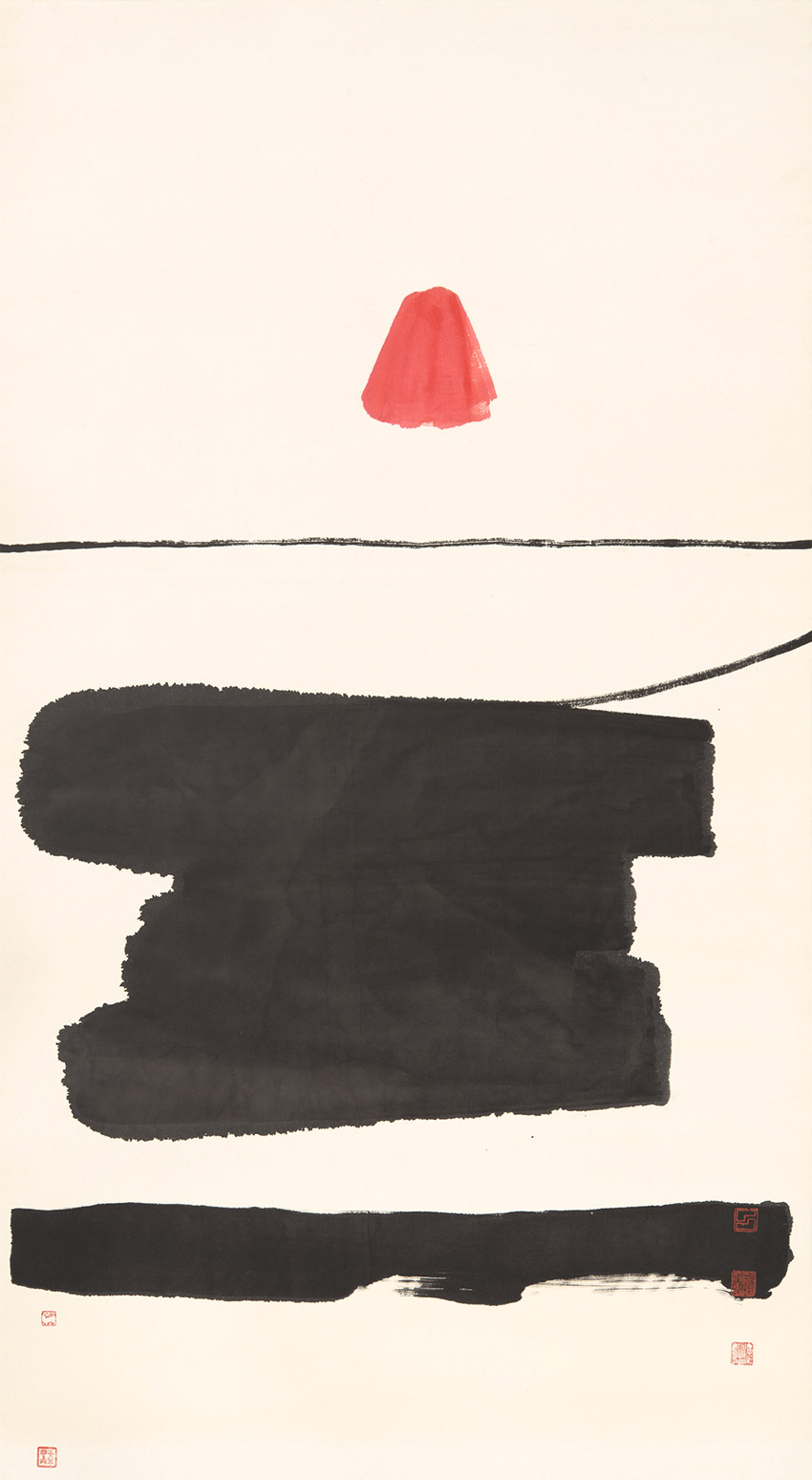
Known for his ink paintings and large-scale ephemeral murals, Chan’s practice draws from East Asian philosophy, mythology, and spiritual traditions, interwoven with Western classical and symbolist influences. Horror cinema and global pop culture further shape his visual language, bridging ancestral memory with contemporary experience. In recent years, he has focused on the holistic links between the human body and emotions in Chinese tradition—particularly how fear, anger, anxiety, sadness, and joy correspond to internal organs.

Titled after a line from Ingmar Bergman’s 1968 film Hour of the Wolf, the exhibition reflects on the liminal hours before dawn—when the conscious and unconscious intermingle. For Chan, these early hours resonate with those navigating complexity and difference in their lived experience, while also expressing a universal longing—and right—for self-understanding, healing, and renewal.

The exhibition examines how daily gestures shape the body and mind, and how these, in turn, transform one another. Drawing on Traditional Chinese Medicine, Chan explores the interplay between physical and emotional states through repetition, ritual, and vulnerability.

A new cycle of paintings and an installation, also titled To Sleep and Wake Unafraid, introduces phantasmagorical figures from Chan’s evolving personal mythology. At its centre is The fight between dream and nightmare (2025), where two protagonists clash amidst a constellation of hybrid beings, mythic figures, and wandering souls. The two may evoke Morpheus and Phobetor—mythical personifications of dream and nightmare—yet are reimagined through Chan’s own cosmology, shaped by Eastern mythology and personal iconography.

These motifs extend into the overhead textile installation, To Sleep and Wake Unafraid(2025), where Chronos grips a clock in the East; skeletal armies gather in the South; a protective flower deity rises in the West; and in the North, a hybrid bestiary emerges—echoing the ancient Classic of Mountains and Seas. Overhead, the Three Fates perform a choreography of time, drawing viewers into a shifting cosmology of motion and transformation.

Also presented in Switzerland for the first time is A Horror to the Eyes of All Men Seeking Faith (2023), its title drawn from The Exorcist III. This earlier series reflects on fear, decadence, and spiritual collapse through fallen angels. Chan links their descent to human greed and disconnection from nature. In Fallen Angels: Eve, a figure extracts a creature from her body and silences her voice. In Fallen Angels: Adam, a blindfolded figure holds an eyeball in his mouth—still seeing, but unable to speak. These gestures echo the fragility of belief and the existential question: Who am I? For Chan, this question becomes a compass against disorientation—a way through the polarity of illumination and descent. Reflecting on his state of mind while painting the fallen angels, Chan described the glow surrounding them as a reflection of the light he carried in his heart — a quiet manifestation of protection, inner strength, and conflicted grace. Their presence hovers between illumination and descent, offering not only a portrayal of spiritual collapse but also a gesture of resilience in the face of fear and uncertainty.

Emerging from these reflections is The most misplaced worry 2 (2025), a new work that transforms anxiety through quiet ritual. A transparent cigarette box holds twenty tobacco-less paper cylinders, each painted with microscopic worlds inhabited by fantastical beings. The work recalls Chan’s 2022 collaboration with PF25 in Homeland in Transit: Carried by the Wind, inspired by smoking protagonists from Wong Kar Wai’s films. Here, the cigarette becomes a site of personal inscription, where worry is stripped of function and gently reimagined.

The exhibition continues in November with its second chapter, They Always Look from the Imagined Above, at the Radvila Palace Museum of Art in Vilnius, curated by Anders Kreuger, Director of Kunsthalle Kohta, Helsinki.

Featured image: The Fight between Dream and Nightmare (2025) by Oscar Chan Yik Long, Chinese ink on paper, 44.5 x 43.5 cm. Courtesy the artist and PF25. 


https://zohopublic.com/zohocampaigns/731810210/inkcanva_746661000001513433.png

Wing Po So 蘇詠寶

Take Turns 
Para Site
Hong Kong
Mar 15 – May 25, 2025

Wing Po So’s new installation presents itself as a constellation of three sculptural compositions – or “islands”, as the artist refers to them – constructed from old drawers once used in traditional Chinese medicine shops. These drawers, stacked and assembled in varying configurations, give rise to angular structures that appear simultaneously orderly and illogical. Some are positioned vertically, others inverted, open or shut, interlocked with precarious balance, ultimately producing a sense of organised chaos. Within the cold, stark environment of the gallery, the installation emerges as a living enclave – warm wood tones, the subtle scent of earth or dried herbs and a nearly recognisable soundscape evoking rhythmic breaths or pulses, all contributing to a multisensory experience.

So seeks to recreate the dynamic choreography characteristic of traditional Chinese pharmacies. Having grown up in her parents’ shop, she experienced the daily rituals first-hand: opening and closing drawers, climbing stools to reach higher levels, bending towards lower compartments, crushing dried plants, grinding powders and blending ingredients. In this installation, the drawers seem nearly animate, as if poised to resume their habitual motions. Each sculptural unit contains a video depicting hands working against a black background – grinding preparations with a mortar, sifting powders and sorting plant specimens. These are the hands of the artist’s father and mother, as well as her own, filmed by her brother.

Installation view of Wing Po So’s Take Turns at Para Site, Hong Kong, 2025. Photo: Felix SC Wong.

The inclusion of drawers from her family’s pharmacy – originally acquired over 80 years ago by her grandparents – imbues the work with the qualities of a familial portrait. Additional drawers, however, were collected from other Hong Kong pharmacies forced to close, and they too carry the identity and history of their respective establishments. For So, these objects also mark a pivotal moment in her artistic trajectory: the transition from drawing to installation. While she was completing her master’s degree, her parents decided to retire but were reluctant to part with the furniture from their store. As a result, the drawers were stored in the family’s small apartment. This intimate cohabitation likely served as the catalyst for So’s shift toward installation art, inspiring her to incorporate personal and culturally resonant materials into her practice.

Beyond its evocation of cultural heritage, So’s work engages with the epistemological question of how we organise and classify reality. The human impulse to categorise the world around us has long been a defining feature of knowledge production, with each discipline constructing its own taxonomies. Within the compartments of the installation’s drawers, we find an eclectic assemblage: seeds, stones, projected images and small plastic objects produced through 3D printing. In this way, elements of the natural world, technological artefacts and human-made objects coexist and intermingle. Identification is not always straightforward: imprints of seeds are fossilised in plastic sheets; real coral sits alongside its artificial replica; stems resemble anatomical organs. Moreover, some items protrude from their compartments or straddle multiple drawers, disrupting expectations of containment. The system of storage here clearly follows a logic unique to the artist.

Installation view of Wing Po So’s Take Turns at Para Site, Hong Kong, 2025. Photo: Felix SC Wong.

Inspired by the principles of Game of Life, which started life as a board game and is now also available online, So proposes an open, modular system capable of recombination and the generation of new configurations. In contrast to the rigid structures typical of classification systems, her installation offers a dynamic mode of understanding – one that embraces provisionality and transformation. Still, the artist grounds her practice in the mechanics of the living and in scientific observation. She frequently incorporates physical laws into her work, for example embedding magnets into the drawers and using small mechanisms to activate or stabilise components. This is how her oyster shells open and shut with a sharp sound, as if alive. As such, each drawer functions as a surprise container, also evoking notions of secrecy or mystery, as some may conceal hidden compartments or false bottoms.

Overall, there is a communicative joy in So’s engagement with the living world – a sense of wonder at its diverse properties and potentialities. Like an apprentice alchemist, she draws inspiration from cellular reproduction to replicate or reconfigure life forms. For instance, she creates artificial seeds and explores the material potential of her surroundings. How can we learn from nature, she asks. How might we approach it with an awareness of its ongoing evolution, its perpetual transformations and the invisible networks that animate it?

Installation view of Wing Po So’s Take Turns at Para Site, Hong Kong, 2025. Photo: Felix SC Wong.

The disorder she introduces is not merely aesthetic – it is generative. It opens up alternative approaches to the living, emphasising symbiosis and mutual interaction over control and closure.


迭步
Para Site藝術空間
2025年3月15日至5月25日

蘇詠寶的全新裝置作品由一組三件的雕塑組成,她形容這些雕塑為「島嶼」。作品由藥材舖的舊百子櫃組成,經過堆疊與重組,透過不同的配置形成有角的結構,既有系統又雜亂無常。有些百子櫃豎立而放,有些則上下顛倒;有些開著,有些關上。它們交錯連接,微妙平衡,營造出一種「亂中有序」感。在簡潔冰冷的畫廊空間中,裝置成為了富有生命力的集中地。暖色調的木材、微微的泥土和藥材氣味,加上彷似呼吸和脈搏的聲景,構建出一場多感官體驗。

蘇詠寶希望透過作品,重現藥材舖的動態。她自小在父母的藥材舖中長大,親身經歷店舖的日常運作:開關百子櫃、爬上小櫈拿取高處的藥材、彎身取藥、搗藥、磨粉、調配藥方等。在這個裝置中,百子櫃好比有生命,隨時準備重拾例行的日常。每個雕塑單元都內嵌一段錄像,在黑色的背景下,手部動作模擬中藥製作過程的「搗、篩、揀」。這些手來自藝術家的父母和她本人,錄像由她的兄長拍攝。

作品中部分百子櫃來自其家族的藥材舖在,約八十年前由她的祖父母購入,為整件作品增添濃厚的家族色彩。其他百子櫃則是從香港其他倒閉藥材舖收集所得,同樣承載各間店舖的身份與歷史。對蘇詠寶而言,這些物件亦標誌著她在創作路上由繪畫轉向裝置藝術的轉捩點。在她攻讀碩士期間,父母決定退休,然而由於他們對店內家具難以割捨,最終將百子櫃搬回狹小的家中收藏。這種與舊物的相處很可能就是驅使她創作轉型的原因,令她開始將個人及文化記憶融入作品之中。

蘇詠寶的作品探討的不止文化傳承,更關乎我們如何整理與分類現實這一類知識論的命題。人類對世界進行分類的衝動,自古以來都是知識建構的基礎,而每個領域都有其獨特的分類系統。百子櫃內放有形形式式的物件:種子、石頭、影像投影、以及以3D打印的小型塑膠物。如此編排,自然物、科技產物與人造物混合共存。辨識這些物件的種類並非直接了當:封存於膠片的種子、與人造珊瑚並列的真珊瑚、形似人體器官的植物根莖。此外,部分物件從百子櫃伸出,甚至橫跨多格,挑戰觀眾對「容納」的理解,構建出一個完全根據藝術家個人邏輯而建的儲物系統。

蘇詠寶的靈感源自於原為桌上遊戲、現可於網上互動的「生命遊戲」,她嘗試提出一種開放、可組合、可再組織的系統,與傳統分類系統的嚴格結構形成對比,呈現一種圍繞暫時性與變化的動態理解方式。儘管如此,她的創作植根於對生命現象與科學觀察的關注,經常將物理定律融入作品當中。例如她會將磁石嵌入百子櫃中,設計小型機械裝置啟動和穩定某些部分。作品中的鮑魚殼亦因此可以發出清脆聲響,自動開合,猶如活生生。每個百子櫃如同一個寶盒,有時更暗藏機關和假底,喚起觀眾對秘密和神秘的想像。

整體而言,蘇詠寶的作品展現出一種與生命世界對話的喜悅,一種對萬物特性與可能性的驚嘆。她如同一位煉金術學徒,從細胞再生中獲得啟發,重新複製和配置出生命形態,透過她創造的人造種子,探索身邊物料的變化可能。她提出我們可以如何向大自然學習,又該如何應對它的持續進化與推動它的無形網絡的疑問。作品的混亂並非單純美學,而是愆生性的混亂,展開對生命的另類理解,強調共生與互動,而非控制與封閉。

Hong Kong Baptist University Presents “GeeLee GooLoo” AVA BA Graduation Show 2025

香港浸會大學視覺藝術院本科畢業展 2025 /
HKBU AVA BA GRAD SHOW 2025 /
GeeLee GooLoo 嘰哩咕嚕 /
May 31 – Jun 22, 20255 /
月31日至6月22日

Kai Tak Campus
51 Kwun Tong Road 
Kowloon, Hong Kong (Choi Hung MTR Station Exit A2)  
Mon – Sun, 11am – 7pm

avagradshowhkbu.com

The Academy of Visual Arts (AVA), School of Creative Arts, Hong Kong Baptist University is proud to present the 18th AVA Bachelor of Arts (Hons) in Visual Arts Graduation Show from May 31 to June 22, 2025. This vibrant exhibition will feature the honours project artworks of 133 graduating students at the AVA Kai Tak Campus.

GeeLeeGooLoo 嘰哩咕嚕 encapsulates the sounds generated during the immersive art-making process and lively discussions. Each student transforms their thoughts into unique artworks, creating a symphony of expression. The graduation show is a testament to the perseverance of artists who convey their ideas through their creations. Throughout their studies, graduates took every opportunity to construct and develop their paths within a shared space. Their works not only showcase their individuality and independence but also demonstrate the unity of a community. Inspiration flows as an abstract sound, sometimes overlooked in everyday life, yet here, it resonates vividly as each graduate contributes their unique voice to the collective dialogue.  
This year, graduates will present their captivating artworks in the former Royal Air Force Officers’ Mess–now a Grade I historic building. AVA’s Kai Tak campus serves as a dynamic backdrop where history, contemporary arts, time, and space intersect. 

AVA Fest
Sat, Jun 14, 2025
12am – 7pm

As part of the BA Grad Show, AVA Fest will continue this year as part of the BA Grad Show’s newly established annual art festival. The Graduation Show 2025 Committee invites the audience to experience the artistic atmosphere of AVA and enjoy an unforgettable experience integrating art and community.

At AVA Fest, various art stalls will showcase a wide range of unique art-related products, offering a platform for local artists to showcase their remarkable creations. 

The festival will also host screen-printing and cyanotype workshops, allowing participants to explore these special art mediums and learn more about the creative process. Games and live DJ performances will also be held during AVA Fest. Join us for this delightful festival to build connections and celebrate the joy of art as a shared experience.

Registration: Please click here to register.
For general enquiries and guided tour booking, please emailavabagradshow@hkbu.edu.hk.

Latest News & Event Registration: 
To stay updated on the latest news and event registration, please visit the Graduation Show’s Facebook, Instagram, or avagradshowhkbu.com.

Featured image: eyes, deer, and swans by Cheng Yiu Lam, Set of three installations, multi-channel video, sound, interactive installation, duration variable, dimensions variable. Courtesy the artist and AVA, School of Creative Arts, Hong Kong Baptist University.


Wong Hau Kwei at Sunway Art Space

Wong Hau Kwei /
Sui Generis | Ink Art /
Jun 6 – Jul 5, 2025 /
Opening: Saturday, Jun 7, 3pm 
Symposium: 3.30pm – 4.45pm, Liao Hsin Tien, Pan Fan, Yuan Chin Tea, Pai Shih Ming 
Tea & Conversation: 4.45pm

Sunway Art Space 
1F, No 134, Xingshan Road Neihu District, Taipei City 11469, Taiwan 
Tuesday – Sunday 9am – 6pm
T +886 2 5582 8000 #611
RSVP: nicolas.hou@sunwayexpress.net


https://zohopublic.com/zohocampaigns/731810210/inkcanva_746661000001513433.png