Author: Ilaria Maria Sala

Ulana Switucha

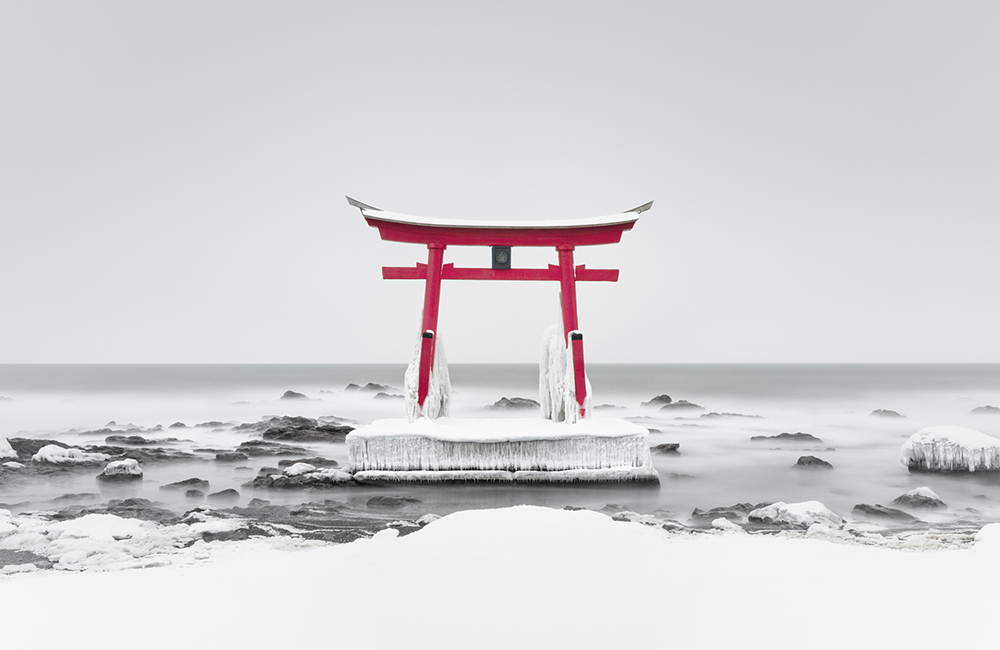
Torii /Blue Lotus Gallery /Hong Kong /Nov 15 – Dec 14, 2025 / The new body of work by Hong Kong-based Canadian photographer Ulana Switucha, presented at Blue Lotus Gallery in Sheung Wan, is like a very slow-paced meditation that constantly returns to the same shape, showing how many different forms and angles it can take. The shape in question is the torii, the mystical Japanese gate that marks the entrance to sacred spaces – whether built structures such as temples and shrines or parts of a natural landscape that have been turned into divine spots, because of either something unusual about them or the legends attached to them. They have been a fixture of Japanese religious practice for more than a thousand years and, with their delicate yet imposing presence, they announce that from that point onwards, one enters the realm of the kami, the Japanese Shinto gods – although a level of syncretism means that some Buddhist temples, too, are graced by toriis a short distance from the main entrance. They are a …

Palace Museum 故宮文化博物館

Wonders of Imperial Carpets: Masterpieces from the Museum of Islamic Art, Doha /Palace Museum /Hong Kong /Jun 6 – Oct 6, 2025 / A carpet exhibition might sound like something reserved for a niche audience, but the extraordinary Wonders of Imperial Carpets: Masterpieces from the Museum of Islamic Art, Doha at the Palace Museum is so full of surprises and so well curated that it’s one of the most stimulating shows Hong Kong has seen in a while. The stars of the exhibition are, as the title implies, carpets from Safavid Iran, Ottoman Türkiye and Mughal Hindustan, the three Islamic empires of the early modern period. They’re accompanied by ceramics, metalwork, glasswork, maps, illuminated copies of the Quran and jades, spanning eight centuries, mostly from modern-day Pakistan, Afghanistan, India, China, Iran and Türkiye. A number of ceramics from Central Asia are also on show, on loan from Doha, mostly from the Timurid period (1370-1507). The aesthetic and cultural dialogue in this vast region was extensive and fertile. Chinese blue and white porcelain, for example, was …

Tsuyoshi Maekawa, Tetsuo Mizù, Julie & Jesse, Kohei Kyomori 前川強、水島哲雄、Julie & Jesse、京森康平

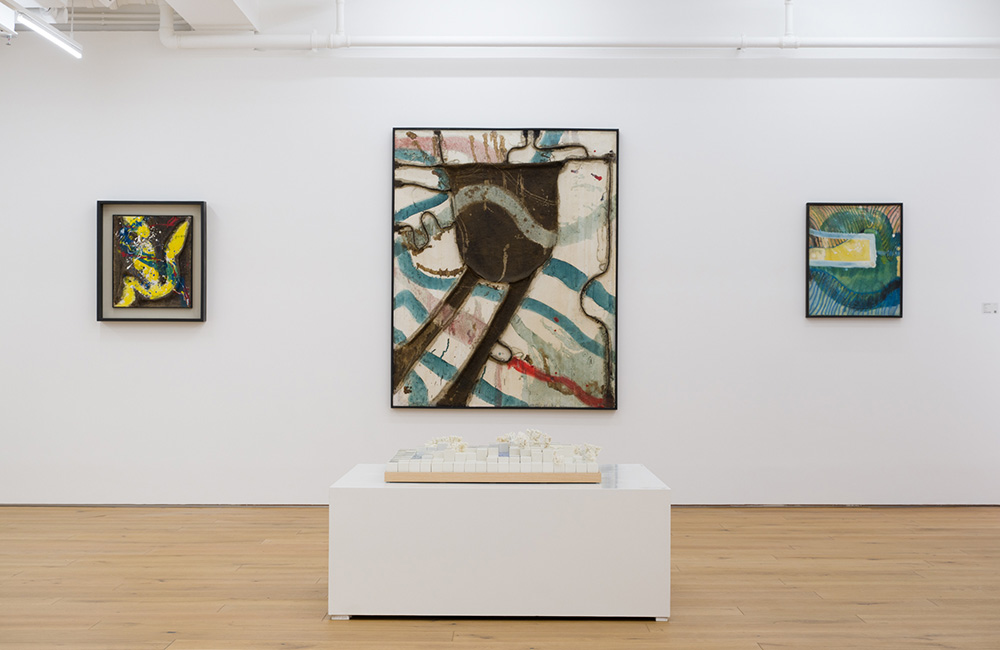
Contours of Expression /Whitestone Gallery /Hong Kong /Aug 9 – Sep 20, 2025 /Ilaria Maria Sala / The Hong Kong branch of the Japanese-owned Whitestone Gallery has inaugurated its new Hong Kong space in Wong Chuk Hang with a group show, Contours of Expression. It features four artists: Tsuyoshi Maekawa, a member of the avant-garde Gutai Art Association group, which was active from 1954 to 1972; abstract painter Tetsuo Mizu, who passed away this January, at 80 years of age; Kohei Kyomori, born in 1985; and the Hong Kong and Jingdezhen-based ceramic artist duo Julie & Jesse – Swiss designer Julie Progin and American artist Jesse Mc Lin. Maekawa’s works date from the early 1960s to 2015 and are all variations of his signature jute/burlap cloth on canvas: using adhesive and paint, he shapes the cloth on the canvas so as to create a three-dimensional element. He adds paint either before shaping the cloth or after, creating abstract works that immediately recall the Gutai approach, with its bright colours and devotion to a process that …

Salvatore Emblema 薩爾瓦托雷・恩布勒馬

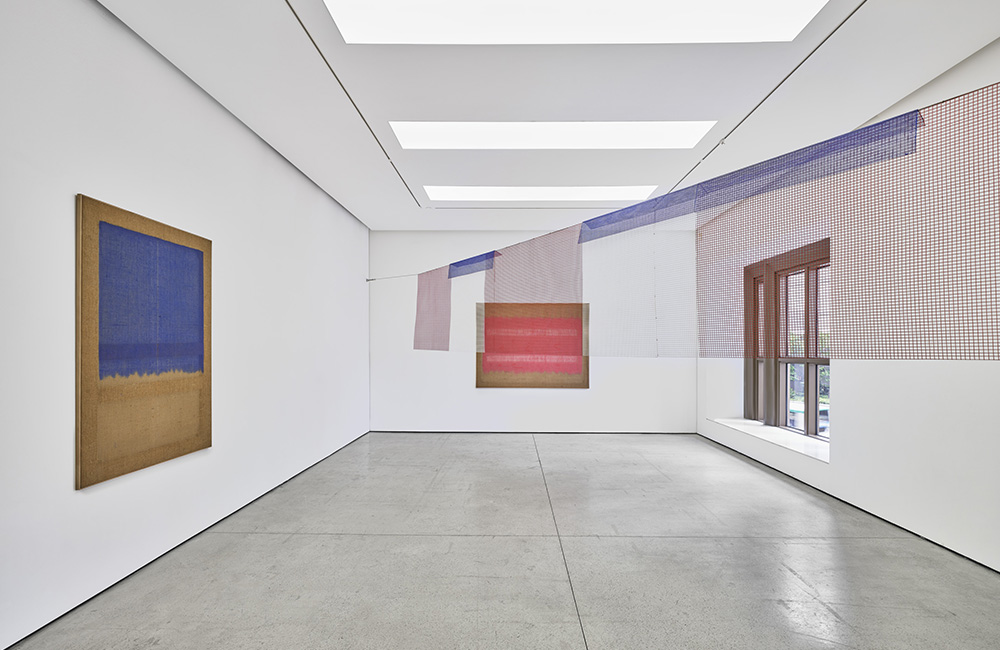
Born in Terzigno, near Naples, Salvatore Emblema (1929-2006) initially pursued a rather traditional artistic education, going to art school, training as a cameo jewellery carver (a practice that has a distinct Neapolitan declension, in the Torre del Greco school, which specialised in corals) and then enrolling in a degree in Fine Arts at the University of Naples. He didn’t finish university but instead dedicated time to travelling – going to France, the UK, and the Netherlands, and to New York for a year – after which he returned to Italy and started his career as an artist. In the 1950s, he worked for the Cinecittà movie studios in Rome, the largest in Europe, where he collaborated with Federico Fellini on films like La Strada (The Road, 1953-54), making the sets. His artistic practice bears little resemblance to old-school academic training involving even meticulous jewellery-making skills: the modernity of his approach to painting and sculpture is striking even more than half a century later. In his hands, the unprimed jute and sackcloth canvases he uses have …

Lynne Drexler 琳恩‧德雷克斯勒

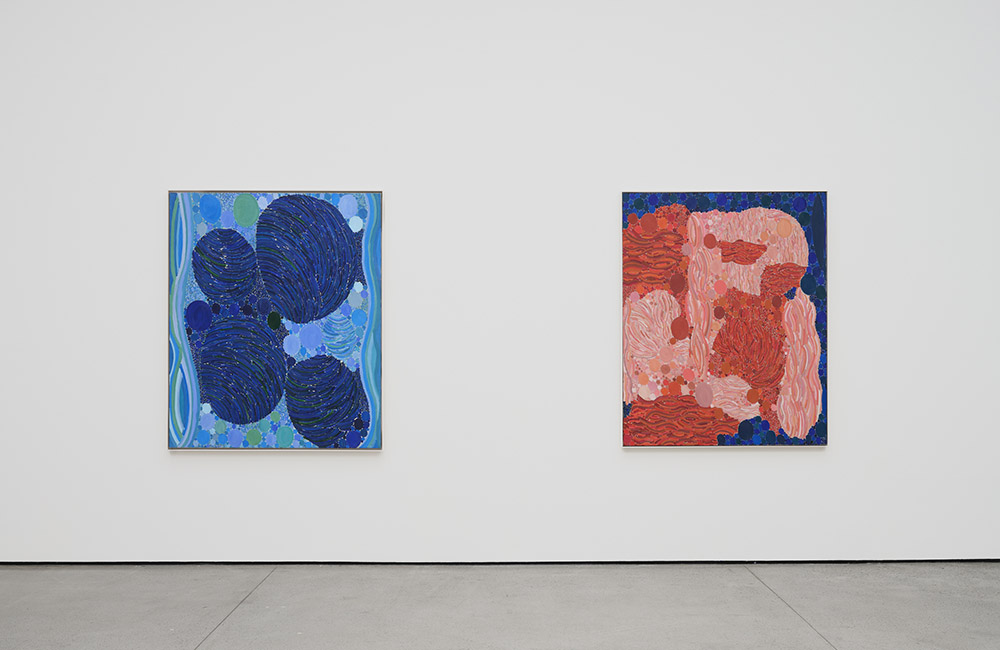
The Seventies /White Cube /Hong Kong /Mar 26 – May 17, 2025 / Few things can prepare you for what a chromatic explosion on canvas is really like. You might have seen pictures of Lynne Drexler works on a screen and thought that she uses colour in an extraordinary way, but her work is one of the many demonstrations that nothing compares to being able to stand in front of a painting and stare into it for as long as possible.  Drexler (1928-1999) is often described as an abstract expressionist and, later, a representational landscape and still life painter, who kept on applying her distinctive way with colour to render backgrounds – walls, skies, mountains or seas – creating something between abstraction and representation. Drexler herself used to say that she was a “colourist”, something she started developing during her years in college, in New York, where she was taught by Hans Hofmann – who had already developed his “push and pull” theory of colour, in which he would put together contrasting blocks of colour to …

Ruth Asawa 魯斯·阿薩瓦 Scott Kahn 斯科特·卡恩

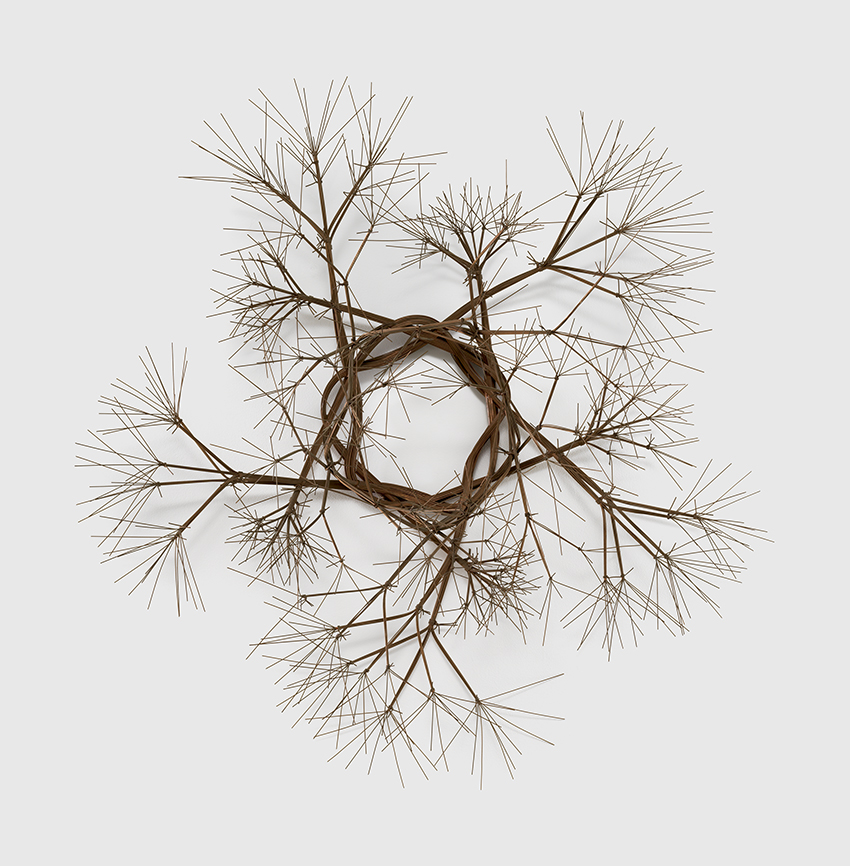
Doing Is Living /Once in a Blue Moon /David Zwirner /Hong Kong /Nov 19, 2024 – Feb 22, 2025 / David Zwirner Hong Kong’s double show, with ethereal sculptures by Ruth Asawa (1926-2013) on the lower floor and the moon paintings of Scott Kahn (b. 1946) on the upper one, pairs two very different artists, allowing the viewer to find unexpected connections between their works. In Asawa’s first solo show in Greater China, Doing is Living, her mesmerisingly beautiful sculptures float in the air with magical, perfectly mathematical rhythms. Born in California, Asawa created these, as she has said in a past interview, “by observing plants” and then taking  “a wire line and [going] into the air and [defining] the air without stealing it from anyone”. In this show, complementing the sculptures hanging from the ceiling, we can also admire a series of lesser-seen preparatory works, mostly watercolours of roses and irises but also meticulous renderings of leaves and their veins, and initial transpositions of these into patterns of lines and curves, both in ink: geometrical …

Lain Singh Bangdel

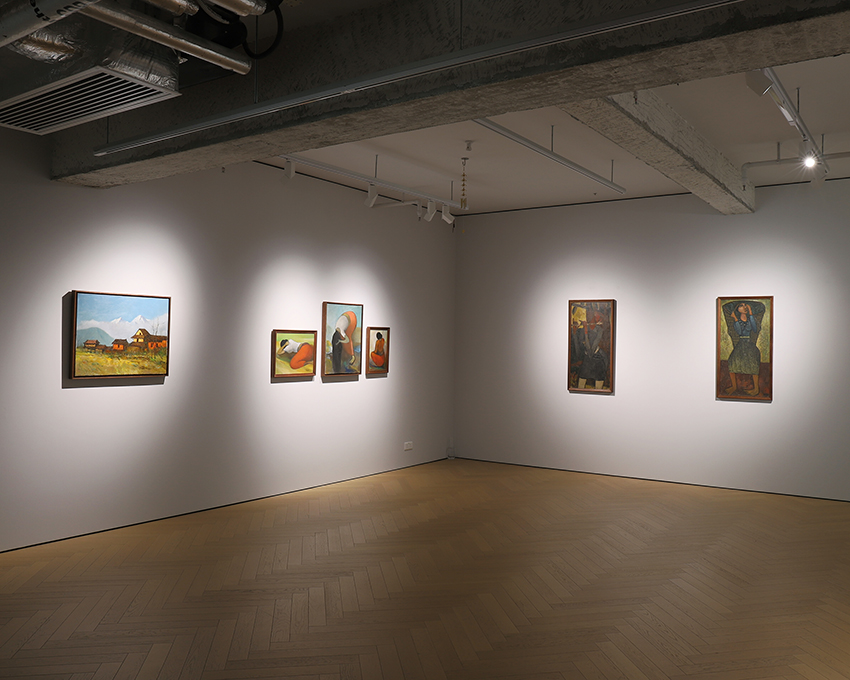
Rossi & Rossi /Wong Chuk Hang, Hong Kong /Sep 28 – Nov 14, 2024 / The adjective that you will most often see associated with Nepali artist, preservationist, novelist and scholar Lain Singh Bangdel (1919–2002) is “iconic”. He is the man who single-handedly brought contemporary art into the Himalayan country, while at the same time being the most dedicated scholar of Nepal’s artistic past, painstakingly and doggedly compiling catalogues of looted or lost art, and making a remarkable contribution to our understanding of Nepal’s history and artistic heritage. A pioneer and the first truly international Nepali artist, Bangdel kept his deep interest in his country’s ancient art rather separate from his own artistic practice, which mainly consists of very modernist oil paintings, with clear influences from his contemporaries from all around the world. A recent show at Rossi & Rossi Wong Chuk Hang’s gallery was a very rare chance for people in Hong Kong to get a glimpse of the work of this household name in Nepal – a small but still quite comprehensive overview …

Chow Chun Fai 周俊輝

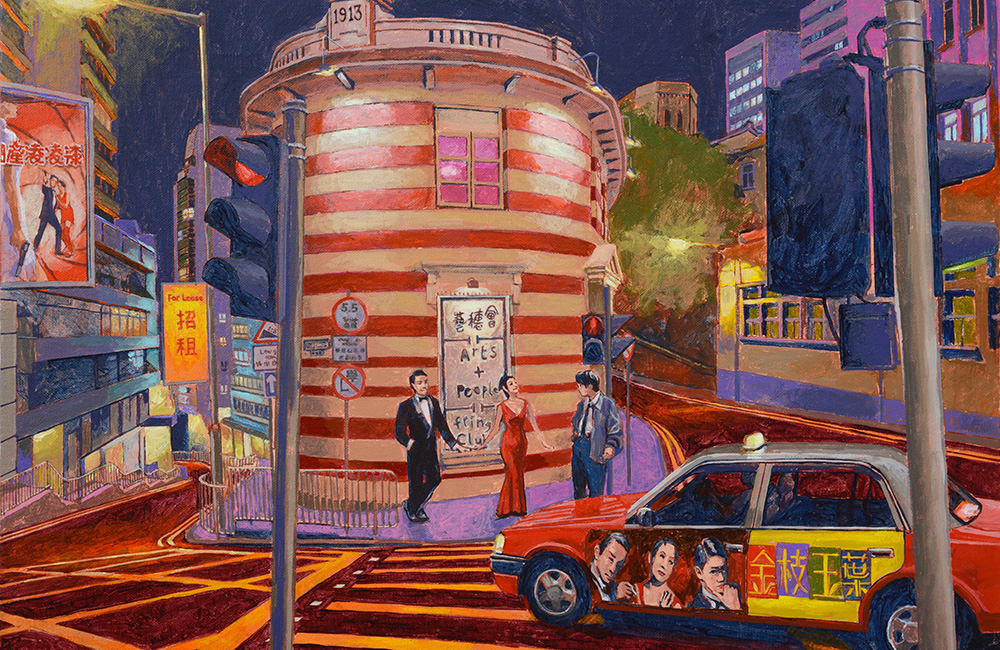
Map of Amnesia /Tang Contemporary Art /Hong Kong /Sep 13 – Oct 15, 2024 / The latest solo exhibition of Chow Chun Fai’s works at Tang Contemporary Art, Map of Amnesia, is a return to some of the artist’s favourite themes – Hong Kong city scenes, streets, taxis (Chow was a taxi driver for a few years), Hong Kong movies and nostalgia – which are explored on 14 canvases in a bright palette, slightly acidic, recalling the neon signs that used to fill the urban landscape. For these acrylic paintings, Chow used some of the images he has collected during more than 20 years of street photography. They show partially distorted buildings and streets, as if they were taken using an ultra-wide-angle lens. The result is akin to those vivid dreams in which familiar places appear not quite as they are in reality, yet perfectly recognisable, a kind of retinal memory that becomes entangled in meanings hidden in our subconsious. And to further complicate the picture, Chow has inserted some of the most iconic Hong …

Lee Jin Woo 李鎮雨

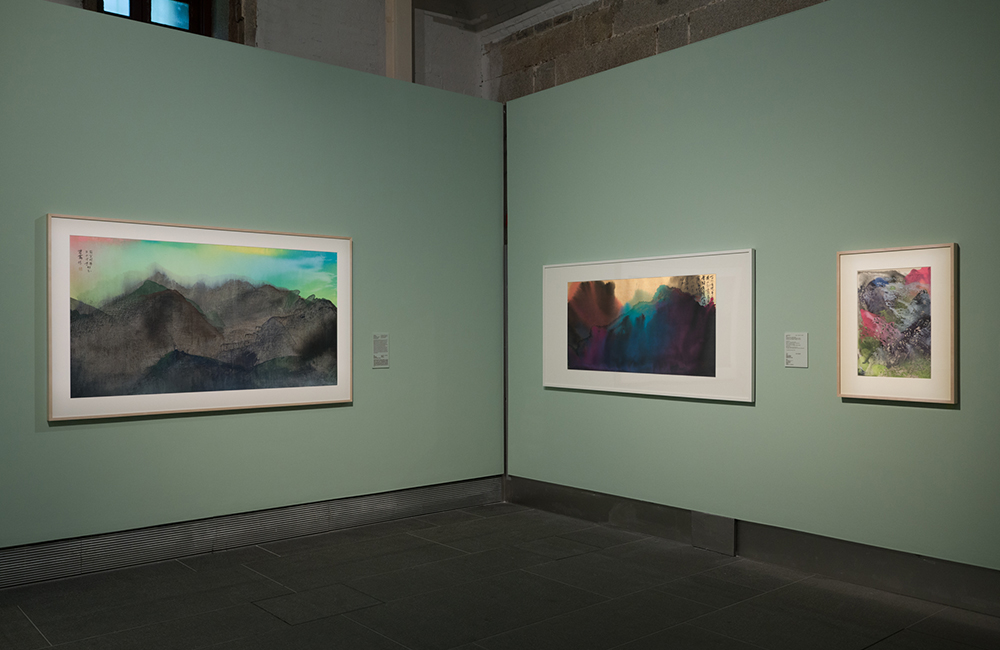
Inside the White Cube: Lee Jin Woo /White Cube /Hong Kong /Jun 1 – Sep 7, 2024 / Lee Jin Woo’s solo exhibition at Hong Kong’s White Cube Gallery, provides a rather distinctive, nearly spiritual experience, as we stare at his semi-sculptural, abstract paintings, created through the methodical, slow manipulation of paper and charcoal. Some of his works are in various shades of light blue, while others are in grey-black monochrome. They have been arranged at White Cube with the gallery’s signature spaciousness, leaving a whole wall for each work and fully drawing in the viewer. The paintings, with their monochrome stillness and the dynamic jagged surfaces, created by the way in which Lee manipulates paper and charcoal to create texture, seem to change constantly: if we look at the overall effect, we see an imaginary geological landscape, darker at the bottom, where the ground would be, gradually becoming more ethereal as we look at a dreamlike, sometimes ominous looking sky, pale blue or pale grey. Lee, born in Seoul in 1959, moved to Paris in …

Debe Sham 岑愷怡

Park Solo /Hong Kong Visual Arts Centre /Mar 13 – Sep 16, 2024 / Debe Sham’s exhibition Park Solo, at the Hong Kong Visual Arts Centre, is spread throughout all five floors of this singularly shaped venue, and is best viewed by going down the stairs from the fifth floor all the way to the first – which opens onto Hong Kong Park’s children games precinct, a charming echo of some of the sculptures on display. The first works the visitor encounters on entering the building are Windmills (xx),a series of gold-plated, spiky, stainless-steel circles. “My inspiration for these comes from the colourful paper windmills people buy at temples during Lunar New Year for good fortune, called fongche. I find that this is a traditional Hong Kong shape that is quite overlooked. They are very characteristic and very beautiful,” says Sham. Like windmills, these golden, minimalistic fongche spin when touched or when the wind coming through the door is strong enough. As this first encounter makes clear, Sham’s practice is highly informed by play and …