Sarah Meyohas, William Mapan, Emi Kusano, ThankYouX, Philipp Frank, Fahad Karim, Justin Aversano, Adam Martinakis, Sofia Crespo, Rebecca Allen, Ivona Tau, Defaced, Jang Yeonjeong (Forside), Aiminath Sulthana, Irem Bugdayci, Nicolas Sassoon, Mario Klingemann, Sasha Stiles, Genesis Kai, Krista Kim, Niceaunties, Vladinsky, Claire Silver, Chiara Passa, Erick Calderon (Snowfro), Operator, Botto, Stanza, Quayola, Mia Forrest, Stephan Breuer, Miguel Ripoll
Digital Art Awards 2026 Awards Ceremony: Mar 24, 2026 Private Sale Exhibition: Mar 25 – 28, 2026
Phillips Asia Headquarters GF, WKCDA Tower West Kowloon Cultural District 8 Austin Road West, Kowloon
HOFA Announces the Second Edition of the Digital Art Awards, in Collaboration with Exhibition Partner PhillipsX in Hong Kong, proudly backed by Lightyear.
Celebrating a new generation of digital artists working across generative systems, AI, immersive media and experimental formats, with winners selected by a panel of leading experts and exhibited at Phillips’ Asia headquarters in the West Kowloon Cultural District during Hong Kong Art Basel Week 2026.
The awards ceremony will take place on 24 March 2026, featuring the four key categories of Still Image, Moving Image, Innovation and Experiential and followed by a private sale exhibition hosted by Phillips in Hong Kong, from 25–28 March 2026.
As a highlight of Hong Kong’s spring art calendar, the awards celebrate the growing cultural significance of digital art and spotlights the visionary artists redefining visual culture through cutting-edge technologies.
Thirty two international finalists will be selected for their work pushing the boundaries of digital creativity. Each of the four category winners will receive a $10,000 USDC commission towards a new artwork.
The thirty two finalists include several prominent figures in digital and generative art, such as Erick Calderon (Snowfro) Founder of Art Blocks, Botto, Sarah Meyohas, William Mapan, Sasha Stiles and Mario Klingemann – underscoring the calibre of talent the awards are already attracting with over two hundred applications across more than fifty countries.
Refik Anadol is nominated for the Honorary Career Award for Sense of Healing, an AI Data Sculpture that emerges from Refik Anadol Studio’s long-term research into creating meditative art based on neurological data.
Finalists and winners will be selected by a panel of leading experts in art, hospitality and technology, including Irini Mirena Papadimitriou, Exhibitions Director at Diriyah Art Futures, Thomas Heyne, Co-Founder and CEO at Scorpios, Dorothy di Stefano, Art Curator and Creative Strategist at Molten Immersive Art, Danielle So, Hong Kong Head of Auction, Modern & Contemporary Art, Phillips, Sebastien Borget, Co-Founder & Global of The Sandbox, SANDchain, President of Blockchain Game Alliance and Co-Founder of Artverse, Jean-Michel Pailhon, Co-Founder and Chief Investment Officer at Grailcapital, Simonida Pavicevic, Co-Founder and Curator at HOFA, Justin Gilanyi, Founder of WhereArt.Works and Curator at SILK, and Matt Zhang, Founder and Managing Partner at Hivemind Capital.
The Digital Art Awards are proudly backed by Lightyear, a subsidiary of Hivemind Digital Group. A full-stack digital culture partner, Lightyear provides infrastructure, liquidity and market expertise, and hands-on delivery for digital ownership and engagement across physical and digital experiences. Lightyear is committed to championing artists and organisations pushing the boundaries of digital culture.
Caravaggio / Hong Kong Arts Festival / March 7 – 9 2026 / Grand Cultural Theatre, Hong Kong Cultural Centre /
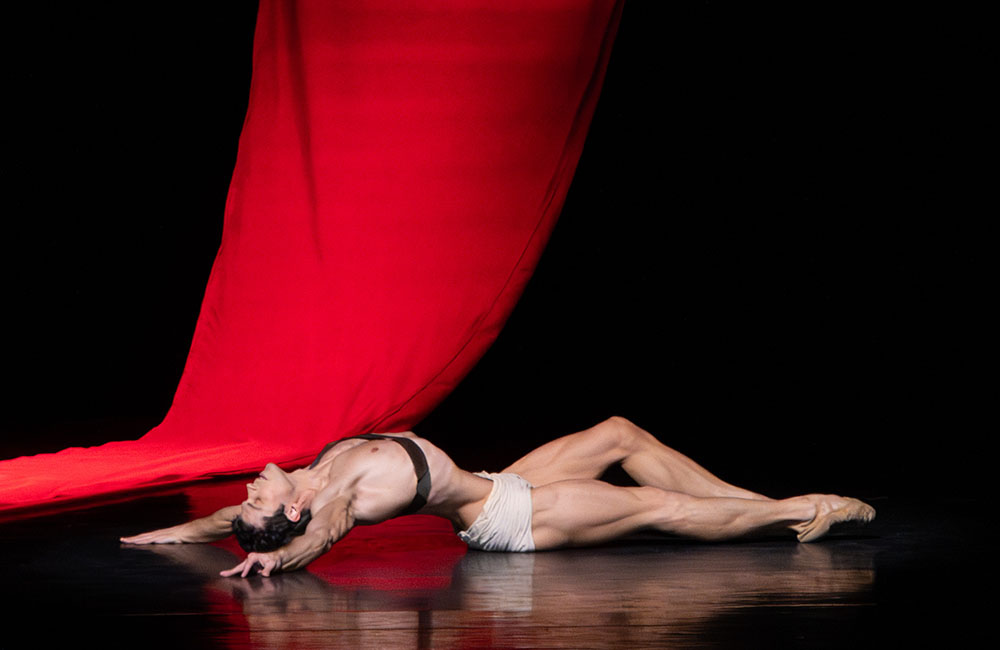
Roberto Bolle shows no signs of slowing down. The widely celebrated Italian ballet maestro has a packed schedule this year, from performing McGregor / Maillot / Naharin at Milan’s La Scala Theatre to showcasing his contemporary ballet fusion Roberto Bolle and Friends at Verona’s iconic Arena, where he just performed as a part of the Winter Olympics closing ceremony. Next up, he’s coming to Hong Kong, where local audiences will see him essaying the titular role of the Baroque Master in Mauro Bigonzetti’s Caravaggio.
Roberto Bolle. Courtesy Hong Kong Arts Festival.
Growing up in Italy, Bolle was no stranger to Caravaggio’s art. “He’s always been one of my favourite painters and I was always fascinated and moved by his work,” says the dancer. He adds that he was particularly amazed by the three paintings on display in Rome’s Church of St Louis of the French, The Calling of Saint Matthew (1599-1600), The Inspiration of Saint Matthew (1602) and The Martyrdom of Saint Matthew (1599-1600).
Bolle was particularly fascinated by the artist’s legacy. “He influenced everyone who painted after him, and his use of light to create shadows and beauty changed the course of art history.” Caravaggio’s mark is unmistakable; the canvases reflect his patented diagonal composition, use of chiaroscuro– further pronounced through tenebrism, creating a spotlit effect– and powerful sense of drama.
The signifiers of Caravaggio’s paintings become the supporting characters in Bigonzetti’s eponymous ballet, with the roles of Light, Dark and Beauty performed by Maria Khoreva, Anastasia Matvienko and Ekaterine Surmava respectively. For Bigonzetti, the canvas spills out onto stage; Caravaggio’s theatricality is visible in the show’s sets and production, courtesy of Carlo Cerri, who is responsible for the lighting and sceneography. A large wooden frame hangs in the background, while the lighting is used not only to highlight the dancers but also to replicate the impact of Caravaggio’s paintings.
The Italian painter was also known for his tormented, at times grotesque depiction of saintly figures and heavenly beings, conveying humanity’s darker side. Bolle saw one such example at Rome’s Palazzo Barberini last year, in an exhibition featuring 24 of the baroque legend’s masterpieces. In Caravaggio’s iconic Judith Beheading Holofernes (1599), the artist paints a scene from the biblical story of Judith, who seduced and beheaded the Assyrian general Holofernes in order to save her people. While the story has been interpreted by many masters throughout art history, from Botticelli to Gentileschi, Caravaggio’s version is unusual, in that he fixated on the beheading. He astutely captures the moment when the protagonist’s knife slashes the general’s throat, blood visibly gushes out of his neck and his face squirms with anguish.
Roberto Bolle. Courtesy Hong Kong Arts Festival.
Caravaggio’s own life was as turbulent as his paintings: he was notorious for over-indulgence, anger and violence. In a particularly scandalous encounter, he apparently murdered one Ranuccio Tommasoni over a dispute and had to escape Rome in order to avoid a death sentence.
For Bolle, it was refreshing to enact a part that harnessed such violence. “There aren’t many roles that allow you to access the darkest part of yourself. Usually [I’m] always portraying very positive characters, so it’s been both interesting and challenging to play a character like him, especially because he’s so different from me.”
He adds that more than any other factor, it’s the choreography that reveals the darkest facets of the character. The tension-filled textures of his paintings, made visible by furious gestures inflicted on the canvas, translate into powerful, expressive moves that also embody much of the torment, pain and angst Caravaggio seemed to hold.
Roberto Bolle. Courtesy Hong Kong Arts Festival.
Yet it’s the softer moments in the show that are the dancer’s favourites. The first is “a very calm, tender sequence” between Caravaggio and Beauty. The second part is a male duet between Caravaggio and a man who is possibly his lover. “It’s extremely intimate and sensual, an aspect of his life that’s lesser known,” Bolle says.
The score by Bruno Moretti complements the choreography’s theatrical crescendos and decrescendos. It also sonically recreates the baroque era, with Moretti adapting the melodies of composer Claudio Monteverdi, Caravaggio’s contemporary, including excerpts from his operas L’Orfeo and The Coronation of Poppea.
Through theatrical storytelling, heightened drama and visceral tension, Bigonzetti and Bollepromise to deliver a spectacle as captivating as the canvases their Italian predecessor produced almost five centuries ago.
Pavilion / New Taipei City Art Museum / Taipei / Sep 9, 2025 – Jan 4, 2026 /
György Ligeti’s Lux Aeterna, a piece for 16-part mixed choir, is notoriously difficult for musicians and vocalists to perform. Its rhythmic subdivisions and complexities melt away the performers’ sense of traditional bar lines. Entrances are subtle, so much so that listeners aren’t meant to consciously perceive them, which means members of the choir need to maintain perfect control over pitch at extremely soft levels, gradually finding their way into micropolyphonic composition. Each of the 16 singers has a unique part, so there’s no space for error in intonation, no room for someone else to pick up the slack.
The result is a piece of music that feels alien to ears more accustomed to conventional tastes. It’s downright hallucinatory. Most people know Lux Aeterna through Stanley Kubrick’s cinematic treatment of it in 2001: A Space Odyssey, in which the track sculpts an air of mystery around a monolith – a rectangular black slab of non-human origin.
Archive zone of THINK. Photo: Chu Chi-hung. Courtesy Kiang Malingue and NTCAM.
That’s precisely what walking into Samson Young’s Pavilion (2025) feels like. A new commission made by the artist for the New Taipei City Art Museum, Pavilion was a 28-minute-long, multi-channel sound and video installation that occupied a cavernous gallery. Young drew inspiration from Kubrick’s film as well as THINK, a multi-screen film produced by Charles and Ray Eames for IBM at the 1964-65 New York World’s Fair.
It’s easy to get lost in the spectacle of Pavilion. Seven massive screens overhead play a mishmash of news archive footage, clips from sports matches (maybe football, maybe something else) and automotive races, scenes from US President Lyndon B Johnson’s inauguration in 1965 and the 1964 Olympics, images of lenses, smart streetlamps and cabinets of curiosities, shots from the New York World’s Fair itself and more. All of this is heavily edited or generated using artificial intelligence tools, with glimpses of the Taipei Male Choir spliced in. The singers perform new choral arrangements devised by Young, who drew on classical requiems.
Installation view of Pavilion by Samson Young at New Taipei City Art Museum, 2025. Photo: Chu Chi-hung. Courtesy Kiang Malingue and NTCAM.
THINK was shown to the public at a time of techno-optimism. The Space Race, for instance, was in full swing, fuelling a sense of limitless human ingenuity that could take us to new frontiers. Here on Earth, Nobel laureate and AI pioneer Herbert A Simon declared in 1965 that “machines will be capable, in 20 years, of doing any work a man can do.” The Eameses’ film was a 10-minute production that captured similar themes. It needed 22 screens for its full presentation about how computers could be used to process information and solve problems. The purpose was to demystify this new piece of technology and make it feel accessible.
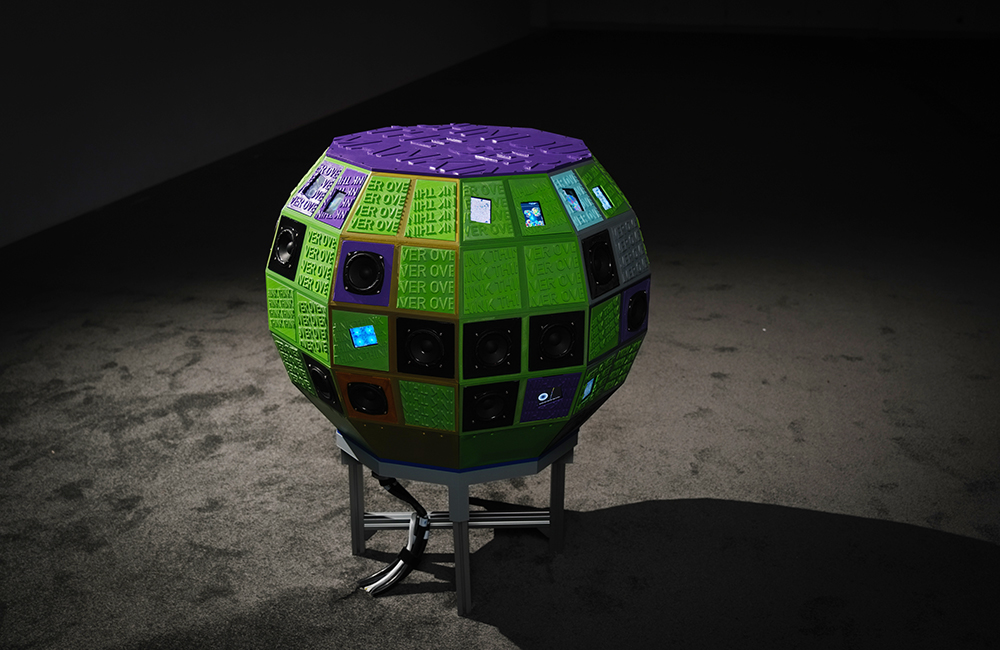
That’s hardly the mood in 2025. Pavilion is a gorgeous piece of work, never risking detours into the sloppish imagery that so many of us have developed an aversion to over the past year or two. Young’s use of AI-generated imagery makes his message cryptic but the result is instinctively coherent. Layer in the choir’s arrangement and the experience of Pavilion initially feels like something to be revered, even in awe of. The pair of spherical 3D-printed speakers that emit the choir’s skilful intoning – one in all black, the other a motley of purple, green and orange panels, both with tiny LCD screens embedded and running custom software – even become easy to miss amid the splendour.
Despite the veneer of sanctified beauty that envelops the viewer, contemporary techno-pessimism is a constant undercurrent. Archival footage only serves as a reminder that the bright future once envisioned by the Eameses and their patrons never came to fruition, and current developments point to inequality, loss of agency, even decline. Perhaps that’s what we’re meant to mourn in this requiem – a radiant vision shaped by brilliant minds that was never truly meant to be.
Installation view of Pavilion by Samson Young at New Taipei City Art Museum, 2025. Photo: Chu Chi-hung. Courtesy Kiang Malingue and NTCAM.
Young presented a second work in the show, with Variations of 96 Chords in Space (2023/25) reworked as a companion to Pavilion. Spread across six screens, the installation is an exploration in probability expressed in audiovisual form. Every “variation” is associated with a specific Pantone, its chord expressed through a viola, a self-playing piano, crotales – tuned metal discs – and the trickling and splashing of water from a small fountain within a Tibetan singing bowl. Some or all of these elements are activated in each clip, and a computer program arranges them to finally form the “colour chords”.
This work didn’t have the same currency or heft as Pavilion, and felt like an addendum or afterthought. But it was intricate, well-designed and again gorgeous. A few moments spent with Young’s colour chords might just be the right transition before we are dislodged back into New Taipei.
展亭 新北市美術館 台北 2025年9月9日至2026年1月4日
György Ligeti 的《Lux Aeterna》是一首由16聲部混聲合唱的作品,以其極高演奏難度聞名。其節奏的分節和複雜性打破了演奏者對傳統小節線的認知。聲部的進入時機非常微妙,讓聽眾難以察覺。這意味著合唱團成員必須在極為輕柔的音量下保持完美的音準,逐步融入這首多聲部作品。16位歌手有各自獨特的部分,因此表演不能有任何失誤,也沒有讓其他人可以挽救的空間。
這正是走進楊嘉輝的《展亭》(2025年)時的感覺。這件由楊嘉輝為新北市美術館創作的新作品《展亭》,是一個28分鐘的多頻道影像聲音裝置,放置在一個巨大的展廳中展出。楊嘉輝的創作靈感來自於寇比力克的電影,以及Charles Eames和Ray Eames為 IBM 在1964-65年紐約世界博覽會製作的多螢幕影像作品《THINK》。
《THINK》這部影片在科技樂觀主義盛行的時代面世。當時的太空競賽競爭激烈,激發了大眾對人類無窮創意的信心,相信我們可以突破極限。在1965年,諾貝爾獎得主、人工智能先驅Herbert A Simon曾說:「20年內,機器能做任何人類能夠做的工作。」Eames夫婦製作的這部10分鐘的影片也表達了相似的主旨。這部影片用了22個螢幕完整呈現電腦如何處理資訊和解決問題,目的是為撇開這種新技術的神秘感,使其更易於被大眾理解和使用。
How to draw a line across the sea? / Peng Chau Cinema / Hong Kong / Nov 15 – Dec 21, 2025 /
Yip Kai Chun’s solo exhibition occupies the lobby and former ticket office of the old Peng Chau Cinema, which has recently reopened to host art events. The building’s architecture is typical of the 1970s, featuring a concrete floor, broad columns and walls covered with small blue tiles reminiscent of swimming pool mosaics. The space is filled with natural light and has been thoughtfully used by Clarissa Lim, the curator, who has skilfully created a setting that resonates with Yip’s reflections on island life and his long-term experience as a resident of Peng Chau, where he has lived for the past eight years.
Peng Chau Cinema. Photo: Yip Kai Chun.
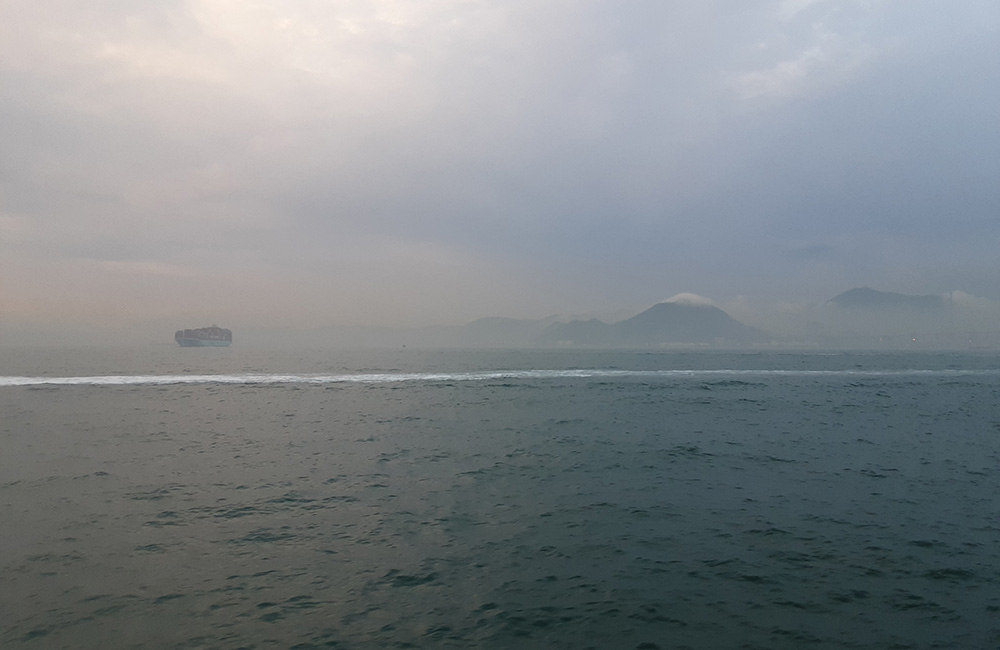
In this new series of works, Yip invites us to share his insular gaze and to consider the surrounding landscape from his vantage point, one shaped by observing his environment from the ferry he takes every day, a routine that has profoundly influenced and transformed his relationship with geography.
Scroll: Kowloon on the Right (2025), for instance, is an immense horizontal composition made up of overlapping photographs and videos. Placed end to end, these elements form a long horizon, visible upon entering the hall. The images retrace the artist’s sea journeys from Hong Kong Island to Peng Chau but they also unfold as a voyage through time: Yip incorporates archival material, juxtaposing past and present views. Like fissures in time and space, these historical fragments rupture the linear continuity and visual uniformity of the scroll. Among them is a striking image of the egrets that once settled on the West Kowloon reclamation site, during the construction of the M+ Museum. Along the way, sound recordings feature testimonies from Peng Chau residents, who share personal memories.
For Yip, each ferry ride plays out like a film, a sensation he translates through the form of a continuous scroll reminiscent of classical Chinese painting. Yet his seascape is far from regular or linear. Like an old film reel, it stutters and jumps, foregrounding the spatial and temporal discontinuities of a landscape shaped by subjective memory and collective imagination. These ruptures can be read as absences or, conversely, as spaces of freedom. And then, of course, there is the rolling motion of the waves, regularly lifting the horizon and continuously shifting the contours of a landscape as seen from a boat. Living on an island, the artist notes, means inhabiting the tension between isolation and continuity: the sea functions both as mediator – linking the islands into a single, connected space – and as the agent of their separation.
Only darkness and lights at night by Yip Kai Chun. Impression for Scroll I: Milky Way. Photo: Yip Kai Chun.
Scroll: The Milky Way (2025), installed in the former ticketing room, offers another panoramic vision of Peng Chau. This time, the work takes the form of a long, pixelated, black-and-white video in which the island’s contours appear like constellations of lights. Islanders, Yip explains, refer to these bright points as “stars”, familiar visual markers by which they orient themselves in darkness. These floating references recall the experiential way sailors navigate: guided not by maps but by sensory awareness and embodied knowledge. For an outsider, the work unfolds like a poetic tableau in which each light seems to signal to us, as if calling from afar. One might recall Kingsley Ng’s video installation Solitary Light (2011), which presented a panoramic view of Hong Kong at night, its city lights shimmering against drifting swarms of fireflies. Which lights should one follow in the darkness? How does one find orientation in a black night? Once again, Yip underscores how our relationship to landscape is woven from stories and personal landmarks – empirical knowledge that situates the body at the centre of our engagement with place. Seen from the boat, the world becomes dynamic and uncertain, inviting the viewer to embrace movement, discontinuity and subjective vision.
View of the ferry from Western Street and from Western Street of the ferry. Impressions for Couplet: Perfect Alignment, an Instance by Yip Kai Chun. Photo: Yip Kai Chun.
The installation Couplet: Perfect Alignment, an Instance (2025) extends this theme of connection and recognition. Two vertical video screens face each other across the gallery, forming a visual dialogue. During his daily crossings to Hong Kong Island, Yip noticed a unique perpendicular street, Sai Ying Pun’s Western Street, from which he could glimpse a mountain framed between urban buildings. He imagined someone standing above, waving to him from that fleeting line of sight. The first video is filmed from that viewpoint. A ferry slides discreetly into view, placing the spectator in the imagined position of this distant observer, whose gaze suddenly meets the sea. From Eastern Street, in the second video, the view is blocked by new construction. Hong Kong, once deeply rooted in its maritime culture, appears increasingly enclosed, turning its back on the sea that shaped it.
With Map: See You on the Flip Side (2025), Yip proposes an even more radical shift in perspective: seeing the world through the eyes of a Chinese white dolphin. The work was originally created for the 2025 exhibition Think Outside the Box at Lingnan University’s Leung Fong Oi Wan Art Gallery, curated by Duncan Yiu, which brought together artists and scientists in conversation. For this project, Yip collaborated with marine researcher Dr Scott Chui from the Science Unit of Lingnan University, who studies how infrastructure affects the habitat and behaviour of Chinese white dolphins in the Pearl River estuary. The artist’s map reveals the vast, borderless expanse through which dolphins travel, inviting viewers to explore their world and habits by flipping cards and charts. Yip translates aspects of the scientist’s method while taking on the challenge of conveying the dolphin’s unique relationship to space and territory.
Early iteration of Map: See you on the flip side! created in collaboration with Dr Scott Chui, Science Unit, Lingnan University. Photo: Yip Kai Chun.
The task is challenging, and many contemporary artists are experimenting with various media, often based on technologies such as virtual reality, to offer glimpses of non-human perception, for example seeing like a bat in Zheng Mahler’s What Is It Like to Be a Virtual Bat? (2022). How can we embody multidimensional, interwoven, dynamic conceptions of time and space that are foreign to our human categories of thought? In Yip’s work, the visual and textual language remains close to academic modes of representation, creating a certain distance between the audience and the subject, and keeping the work within a reflective sphere, almost abstract. One might have wished for another type of engagement that is, if not physical, then at least affective, to help viewers connect more easily with this alien, fish-like world vision. Still, the project has the merit of prompting us to rethink anthropocentric mapping conventions and to consider new ways of including living beings within our representations of the world.
Ultimately, Yip’s exhibition urges us to move beyond static, GPS-based modes of representation and to embrace instead forms that are mobile, embodied, decentred and subjective. At stake is the enrichment and broadening of our conception of space and territory, by rendering back its thickness and complexity. As anthropologist Tim Ingold reminds us in The Perception of the Environment (2000), “Places do not have locations but histories. Bound together by the itineraries of their inhabitants, places exist not in space but as nodes in a matrix of movement” – to which we must include the world of non-humans with whom we share our environment.
以「Scroll: Kowloon on the Right」(2025年)為例,此巨幅橫向作品由層疊的照片與錄像構成。這些素材首尾相連,在觀者步入展廳之際便鋪展為一道綿長的地平線。畫面追溯了藝術家從香港島至坪洲的海上旅程,同時也展開為一場穿越時間的航行:葉氏將檔案資料融入其中,讓過往與當下的景觀並置。這些歷史片段猶如時空裂隙,打破了捲軸線性的連貫性與視覺的整體性。其中一張攝於M +博物館興建期間、棲息在西九填海工地上的白鷺照片極為引人注目。沿途的錄音則收錄了坪洲居民口述,分享著他們的個人記憶。
在「地圖:此處不留豚」(2025年)中,葉氏提出了一個更為徹底的視角轉換:以中華白海豚之眼看世界。作品最初為嶺南大學梁方靄雲藝術廊2025年的展覽「Think Outside the Box」而創作,由策展人Duncan Yiu邀集藝術家與科學家對話促成。葉氏與嶺南大學科學教研部的海洋研究員崔驛選博士合作,後者研究珠江口基建隊中華白海豚的棲息地與行為模式的影響。藝術家繪制的地圖呈現了海豚游經的廣闊無邊水域,邀請觀者通過翻轉卡片與圖表,探索它們的世界與習性。葉氏在將科學家的研究方法轉化為藝術創作,同時亦接受挑戰,試圖傳達海豚與空間和疆域間獨特的關係。
Shaqúelle Whyte / Inside the White Cube | Shaqúelle Whyte; Nine nights; Strange fruit / Feb 6 – Mar 14, 2026 / Opening: Thursday, Feb 5 / Exhibition Tour: 5pm / Preview: 5pm – 8pm / No RSVP required /
White Cube Hong Kong 50 Connaught Road, Central Hong Kong +852 2592 2000 Tuesday – Saturday, 11am – 7pm
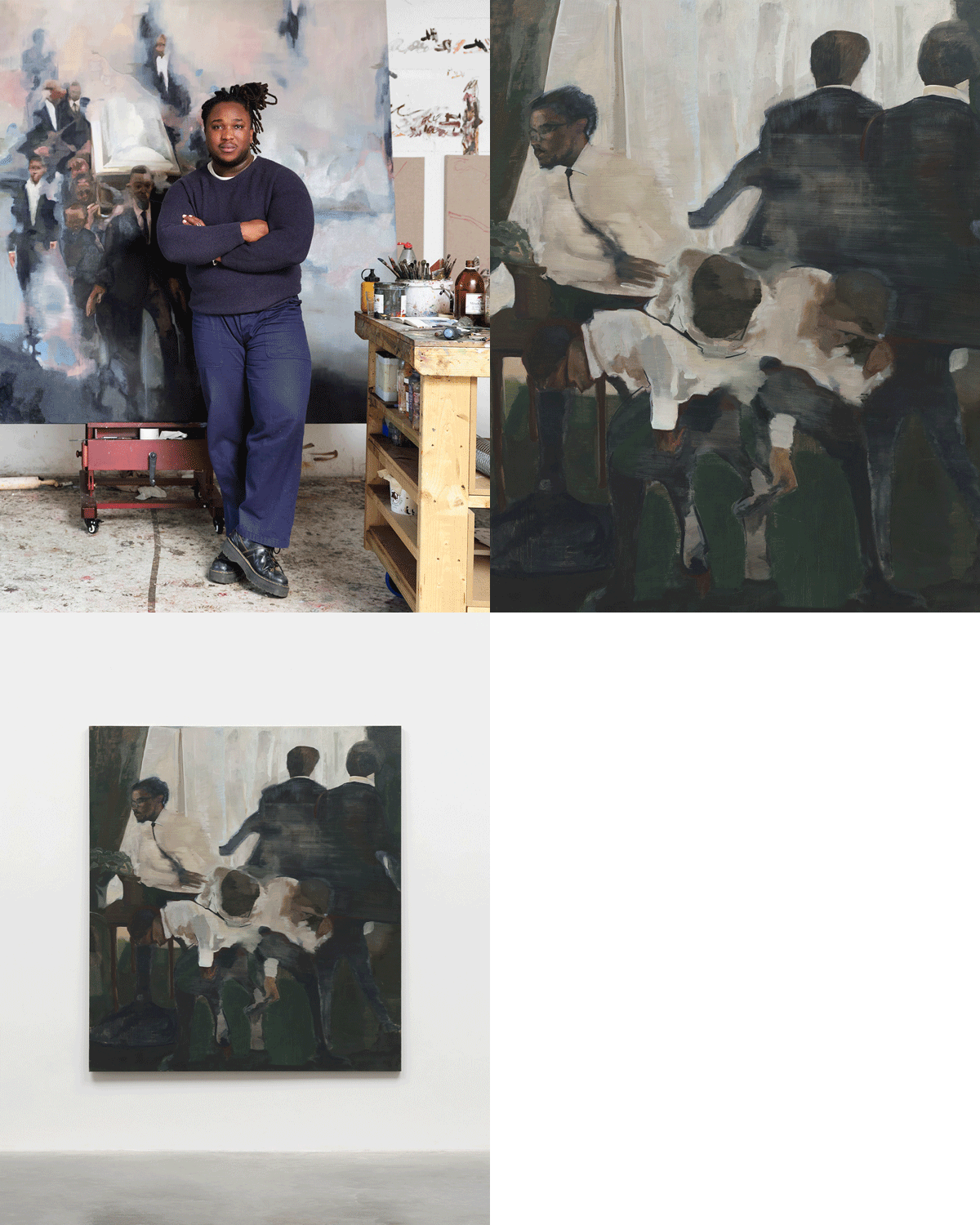
White Cube Hong Kong is pleased to present the first exhibition in Asia by London-based artist Shaqúelle Whyte (b. 2000, Wolverhampton, UK), featuring new large-scale paintings.
Exploring time, space and the subconscious, Whyte’s imagined environments evoke a sense of mystery and introspection, using loose brushstrokes and expansive compositions. Through a non-linear narrative, his recurring motifs and staged figures lend a theatrical quality, as if his canvases were scenes from an unfolding play. Though devoid of self-portraiture, Whyte’s paintings reflect his inner life, inviting viewers to interpret his surreal, dreamlike worlds as reflections of their own.
Van Cleef & Arpels Poetry of Time, Behind the scenes of watchmaking creation Jan 24 – Feb 8, 2026 11am – 8pm* *Last Admission: 30 minutes before closing * Closing time varies, please visit here to explore daily opening hours Advanced booking is recommended
Children workshop – Create your Poetry of Time Jan 31 – Feb 1, 2026 Feb 7 – 8, 2026
L’ÉCOLE Talk – Art Mechanics: A Bridge between Arts & Science Speakers:Mathilde Rondouin and Patricia Zika Thursday Feb 5, 7pm – 9.30pm 7pm welcome drinks followed by 45min talk from 7.30pm and private viewing of the exhibition.
Van Cleef & Arpels celebrates its watchmaking savoir faire with Poetry of Time, an exhibition that transforms the passage of time into an enchanting spectacle at Central Ferry Pier 4, Hong Kong. This curated journey of discovery invites dreams and wonder, immersing visitors into a world that fuses inventiveness and fantasy.
The exhibition gives a rare insight into the watchmaking philosophy of Van Cleef & Arpels, where craftmanship and storytelling are at the centre of every timepiece; each creation moving beyond traditional timekeeping to bring alive a vividly poetic world, and capture the magic of fleeting moments.
Exhibited in Hong Kong for the first time, the curated selection of highlights from Van Cleef & Arpels’ Narrative Timepieces and Objects, and Jewels That Tell Timecollections tell the story of the Maison like never before. Opening with a spectacular Patrimony Collection showcasing the rich heritage that breathes life into the Maison’s creations, the exhibition then moves into a Discovery Hall where the living heritage and technical expertise that defines the Maison’s art of watchmaking takes centre stage. Three work benches offer behind the scenes insight to Van Cleef & Arpels’ time-honored savoir-faire, Metiers d’Art and Mecanique d’Art, with focuses on enamel art, miniature painting, dial making and the movements of an Automaton and Poetic Complication timepiece. From here you can explore five universes reflecting the Maison’s emblematic sources of inspiration; Love Stories, Poetic Astronomy, Enchanting Nature, Ballerinas and Fairies and Jewels That Tell Time.
Amongst the highlights of the exhibition the magnificent 2025 Planétarium Automata stands out. The result of over 15,000 hours of meticulous work the Planétarium presents the Sun and the planets visible from the Earth, moving at their actual speed of celestial rotation. An on-demand animation allows the poetic scene to come to life at will; accompanied by a crystalline melody and a shooting star in rose gold, diamonds and Mystery Set rubies that emerges from a hatch and flies by to indicate the hours and minutes on a 24-hour dial.
The exquisite Lady Arpels Heures Florales Cerisier watch is another timepiece to look out for, inspired by Carl von Linné’s 18th-century concept of the flower clock (which proposed a garden that could tell time by the opening and closing of plants at specific moments during the day), the Heures Florales watch transforms the telling of time into a poetic spectacle that celebrates Nature’s spirit of joy and beauty. Every hour 166 elements animate to breathe life into the dial’s enchanting garden scene, the hours mysteriously represented by the number of flowers open on the dial.
Celebrating the Maison’s continued immortalization of those precious moments when love blooms, the Lady Arpels Bal des Amoureux Automate features a double retrograde automaton movement that brings two lovers together for a kiss at noon and midnight in the charming setting of a 19th Century Parisian guinguette – a Parisian dance-café. The tender lovers’ scene can be recreated at will with the push of a button, a romantic testament to the technical watchmaking and high-jewellery expertise that serves the Maison’s poetic vision of time.
Inspired by the Lady Arpels Bal des Amoureux Automate timepiece, the final space of the exhibition has been transformed into a guinguette, where visitors are invited to join the Maison for a taste of Paris with a Madeleine delight, an immersive digital game and a programme of experiences that further express Van Cleef & Arpels’ creative universe, details above.
apexart invites 500 word idea-based group exhibition proposals for our 2026-27 INTL Open Call from February 1 – March 1, 2026. Five winning proposals will each receive a $10k exhibition budget to become apexart exhibitions in their respective locations around the world as part of our 2026-27 exhibition season. Curators, artists, writers, and creative individuals, regardless of experience level or location, are invited to submit a proposal online.
The submission process Proposals should describe a focused, idea-driven, original group exhibition of 3 or more artists. No biographical info, CVs, links, or images will be accepted. Submissions cannot exceed 500 words and must be submitted in English. Jurors from 85 countries then jury the proposals based on their personal interest, cultural assessment, content and communication of the idea. See examples of winning proposals here.
The selection process Rather than a typical 5-person panel to review hundreds of ideas, apexart’s crowd-sourced system involves hundreds of jurors from more than 85 countries, reviewing proposals at their own schedule over one month. The jury is composed of up to individuals from a wide variety of professional backgrounds and international locations including students from 20 participating university classes who will rate the proposals. Proposals are anonymous and randomized to ensure each submission receives equal consideration, resulting in more than 30,000 votes on over 600 proposals. apexart staff does not influence the results of the jury in any way.
The results Each of the five winning proposals will receive an exhibition budget of $10,000; our exhibition brochure, printed and mailed to over six thousand international recipients; and be part of apexart’s 2026-2027 exhibition season. apexart provides full admin and logistics support, assisting curators to realize their original ideas into apexart exhibitions. Exhibition curators must work within the funding provided to transform their winning proposals into focused, noteworthy exhibitions.
To submit an exhibition proposal, visit apexart.org/opencalls.php between February 1 and March 1, 2026.
Michael Armitage, Cai Guo-Qiang, Enrico David, Theaster Gates, Mona Hatoum, Marguerite Humeau, Richard Hunt, Danica Lundy, Ibrahim Mahama, Park Seo-Bo, Shao Fan, Raqib Shaw
White Cube at Art SG Booth BC05 Jan 22 – 25, 2026 Marina Bay Sands, Singapore
White Cube returns to the 2026 edition of ART SG (Booth BC05), presenting works by artists including Michael Armitage, Cai Guo-Qiang, Enrico David, Theaster Gates, Mona Hatoum, Marguerite Humeau, Richard Hunt, Danica Lundy, Ibrahim Mahama, Park Seo-Bo, Shao Fan and Raqib Shaw, among others.
The Pragmatic Pessimist (2024) by Raqib Shaw will be featuring in the TVS Initiative for Indian and South Asian Contemporary Art at Art SG, a significant initiative that places a robust spotlight on contemporary art practices from India and South Asia.
Highlights from the booth include:
Park Seo-Bo’sEcriture No.090711 (2009), from the artist’s ‘Colour Ecriture’ series, which he began in the 2000s. Inspired by the exuberant autumn colours around Mount Bandai near Fukushima, the artist’s use of vivid tones marks a sharp transition from the neutral palette of earlier paintings.
Michael Armitage’s bronze sculpture 1: The Trial (2025) marks the artist’s foray into the medium. Referencing the Passion of Christ, in this work Armitage employs symbolism drawn from Kenya’s realities to question themes of innocence and power. Coinciding with the Venice Biennale, his solo exhibition at Palazzo Grassi is on view from 29 March 2026 until 10 January 2027.
Burnt to a crisp or bloody as hell (2025), a new painting by Danica Lundy. Exploring structures of power, the artist’s detail-laden, panoptical compositions draw on daily events, subjecting them to the scrutiny of an augmented lens.
Shao Fan’s Paired Rabbits 0725 (2025)presents two rabbits gently merged into a single form. In fusing Eastern and Western traditions, the painting becomes a contemplative reflection on harmony, impermanence and the fleeting nature of existence. The artist’s first solo exhibition with White Cube opens at the gallery’s Mason’s Yard location in London, from 22 May until 27 June 2026.
Ibrahim Mahama’s Meriga (2023–24), part of a body of work in which Mahama uses the leather excavated from the interior of the abandoned trains he has collected at his not-for-profit space, Red Clay in Tamale, Northern Ghana. The sheets are marked with place and personal names from the region, referencing a rural practice of inscribing names or birthplaces on the body in the absence of formal identification.
Horizontal Growing (2023) by Richard Hunt. Created in the final year of the artist’s life, the work exemplifies the sculptor’s mastery of welded bronze cultivated over seven decades of artistic practice.
Zhang Peili / DigiRadiance | Zhang Peili: A Day / Jan 21 – Feb 20, 2026 / Talk: Jan 20, 6pm – 7pm / Zhang Peili, Shuman Wang (curator), Dr Pi Li (Head of Art) /
F Hall Studio Tai Kwun 10 Hollywood Road Central, Hong Kong Mon – Sun, 11am – 7pm
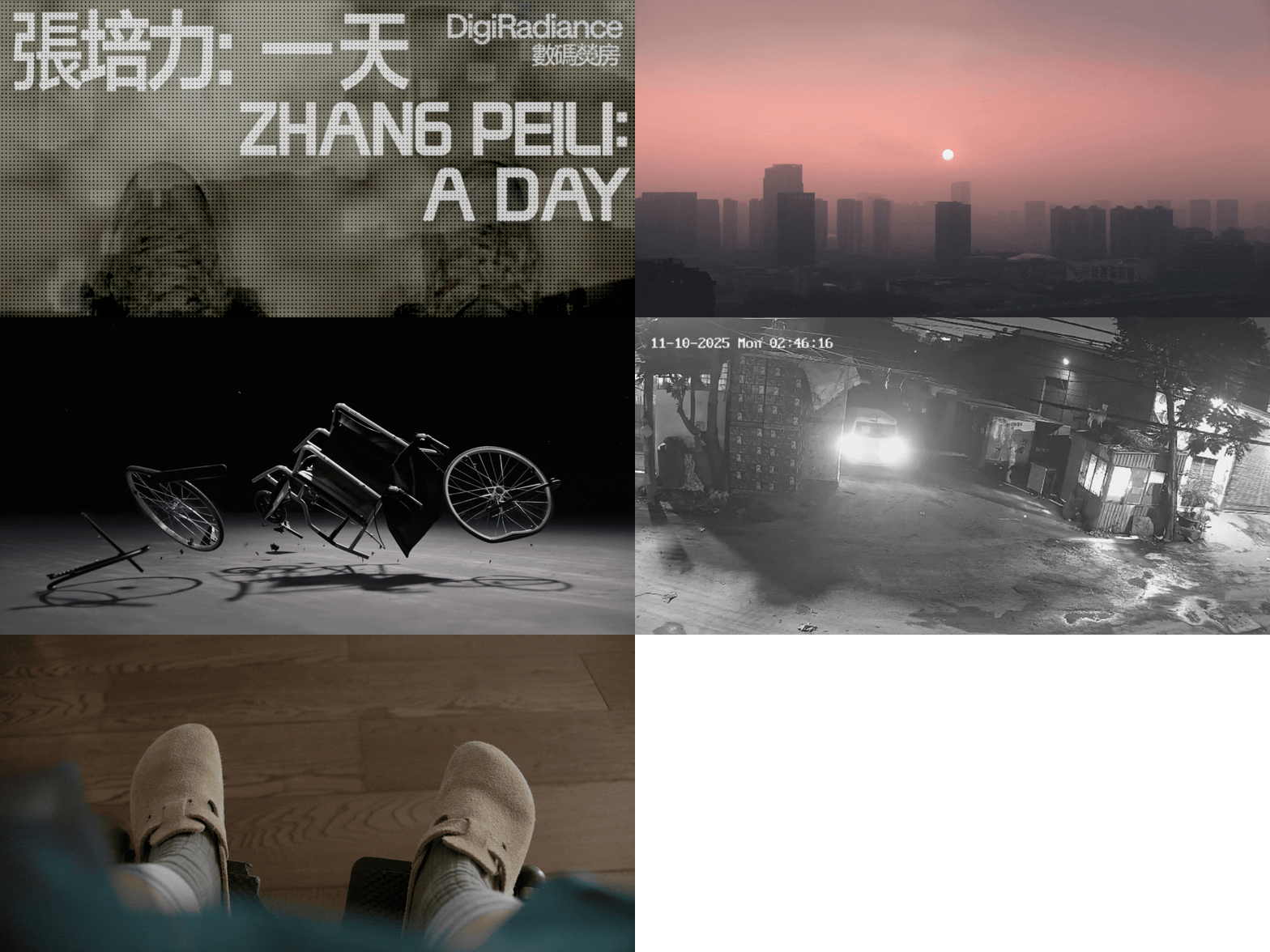
Tai Kwun Contemporary presents DigiRadiance | Zhang Peili: A Day, a new digital art exhibition from internationally acclaimed Chinese artist Zhang Peili, on view from 21 Jan to 20 Feb 2026 at F Hall Studio. Curated by Tai Kwun’s Associate Curator Shuman Wang, Zhang Peili: A Day features a newly commissioned eight-channel video installation that explores notions of temporality, illness, and the body. This exhibition creates a new experience of reality through different media technologies, guiding viewers through everyday public and private spaces that reveal an interwoven yet alienated sense of time and space.
In this exhibition, the newly commissioned installation A Day emphasises subjective visual experiences and consists of real-life footage captured from a first-person perspective, along with videos from news sources and surveillance cameras, medical imagery, and data-generated images. Interspersed are scenes of skin peeling, obstructed movements, and everyday observations, which repeatedly appear as flashbacks, giving an impression of futility and aimlessness. They play at constantly changing speeds and camera angles, then lose momentum, and ultimately the camera is dropped – which metaphorically reflects the deviations in psychological states and social norms experienced during an illness. Using the dual dimensions of vision and cognition to understand the concept of deviation, this work explores the passage of time, the limits of the body, and the social metaphors that the mind and body may aspire to reach. In A Day, Zhang mixes footage of everyday life with AI-generated images to create an alternative sense of reality, which resonates with the universal experience of navigating an era of uncertainty.
Regarding his concerns about the techniques of virtual reality, Zhang Peili said: “AI technologies and network technologies have brought a new issue to the image: they are producing a new kind of reality. This reality of the image runs almost parallel to the reality of the ‘real’ world in which we live. They unfold side by side. In my view, I prefer to take fragments of experience, or elements that come from the realm of fantasy, dreams, or the subconscious, and blur them together with shards of lived reality to construct a new reality.”
In recent years, Zhang Peili’s practice has shifted partly towards a contemplation of his surroundings and a reflection on himself, asking how one perceives the limitations of the body and life through the medium of video. This new work maintains his interest in illness and the body but places a greater emphasis on the collection of subjective visual experiences, which differs from earlier painting works that used gloves as a subtle representation of the body, as well as recent examinations of pathological reports and the materiality of organs and bones.
DigiRadiance: Conversation with Zhang Peili
Visitors are welcome to join the conversation between Zhang Peili, curator Shuman Wang, and Dr Pi Li, Head of Art, at Tai Kwun on 20 Jan 2026 from 6pm to 7pm. The three speakers will focus on Zhang Peili’s newly commissioned work and will engage in a discussion of his artistic concerns over the past 40 years. They will compare themes such as surveillance and data, temporality, illness and the body, and hygiene and cleanliness – which have consistently recurred throughout the artist’s long-standing practice – to understand the subtle changes in the artist’s language in recent years. The session is open to the public and is free of charge. Please register on the Tai Kwun website.