Latest Posts

Thresholds 閥限

Galuh Anindita, Arahmaiani, Christine Ay Tjoe, Nadiah Bamadhaj, Kei Imazu, Ines Katamso, I Gusti Ayu Kadek, Murniasih, Citra Sasmita, Jennifer Tee /

White Cube / Hong Kong / Oct 31, 2025 – Jan 24, 2026

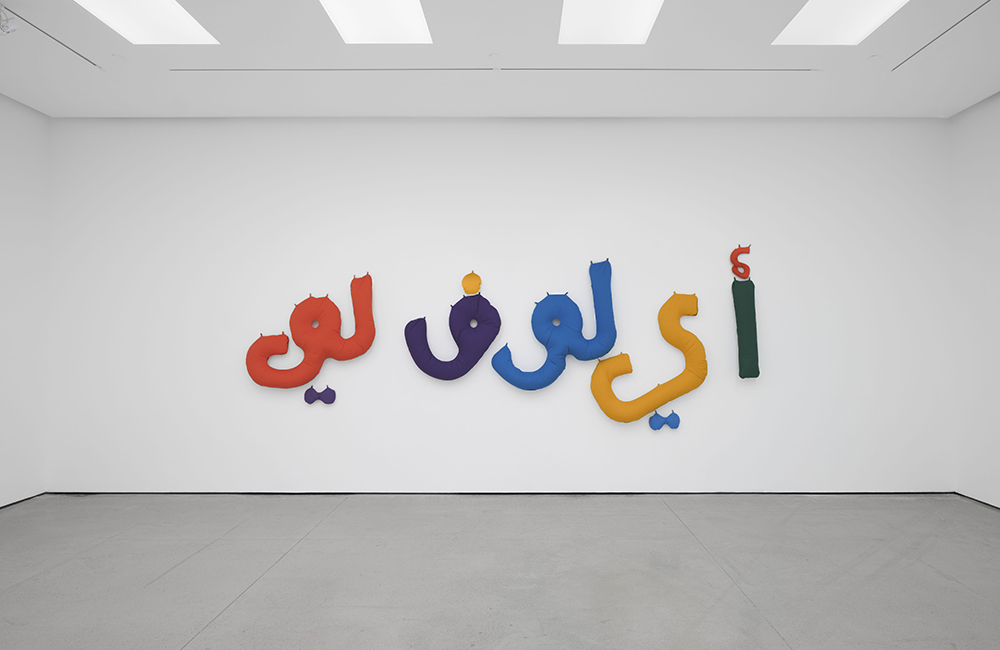
Chequered poleng cloths are ubiquitous in Bali. Often found wrapped around shrines, trees, statues or objects with spiritual and mystical connotations, these black and white textiles have a protective function and symbolise the coexistence of paradoxes: good and evil, order and chaos, light and dark – it’s literally woven into their materiality. For Galuh Sukardi, this coexistence of these polarised forces sparked the conceptual basis for Thresholds, an exhibition rooted in ideas of spiritual, political, physical and mythological means of transformation, largely informed by ancestral knowledge.

“Opposites don’t always have to be resolved; sometimes they are simply lived,” says Sukardi, emphasising that to allow for this co-existence, a kind of equilibrium is required. “They’re all held in a delicate balance and, within that balance, I sense a maternal energy, a presence that nurtures and guides.”

The exploration of this balance is a point of connection for nine female artists from or with deep ties to Indonesia, who Sukardi bought together for the exhibition at White Cube Hong Kong. Armed with a seamless curatorial framework that speaks to themes topical in the art world and culture at large – dissolving lines between craft and art, revival of the feminine divine and mythological narratives – Thresholds introduces local audiences to refreshing, process-driven practices and novel voices that reveal one of numerous dimensions of Indonesia’s divergent and evolving contemporary art scene.

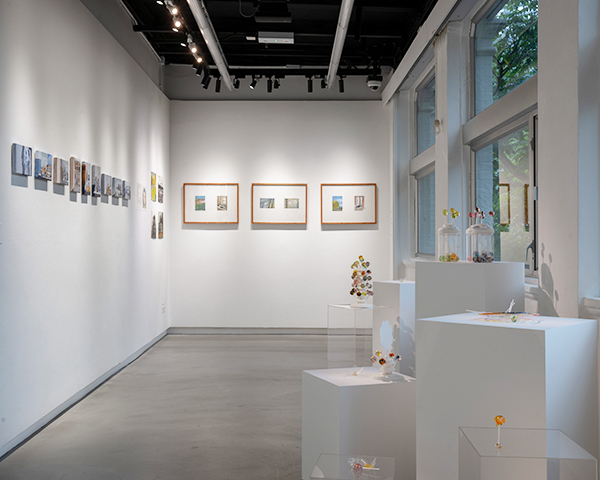
Installation view of Thresholds at White Cube Hong Kong, Oct 31, 2025 – Jan 26, 2026.
Curated by Galuh Sukardi. Photo: © White Cube (Kitmin Lee).


Ancient ritual, layered colonial histories and a personal diasporic narrative fuse in Rotterdam-based Dutch-Indonesian artist Jennifer Tee’s Tampan Ship of Souls, Oceanic Horizon (2025). Comprising dried tulips of varying shades and species, which the artist collects and dries in a painstaking process, her intricate collage yields recreated motifs typically found on traditional hand-dyed cotton tampan and palepai textiles. Used in rituals that mark transitional periods of life such as marriage and burials, these sacred cloths primarily bear images of figures, boats, birds and fish, evoking notions of passages, migration and colonisation. Here, Tee references both her cultural and personal heritage. Her father and grandparents migrated to the Netherlands, a former naval power, in the 1950s, and her maternal grandfather was a tulip farmer and exporter. Although a popular symbol of the Netherlands, tulips originated in Central Asia and were bought to Europe in the 16th century. In alluding to this history, the artist contends with the idea of origin and references her own diasporic background; she often sees herself “as as a soul in limbo between two geographies and cultures”, embodying a balance characterised by nuance and tension.

The idea of belonging and an identity in flux is taken further in artist Ines Katamso’s practice, which literally allows her to ground herself. “As a bicultural individual between Indonesia and France, and having moved repeatedly between these two contexts, working with soil allows me to establish a direct, rooted connection to lands and to the ecosystems I engage with,” she says.

Formed with soil and pigment of her own creation, Katamso’s Series Biolateral 1 (2025) creates an earthy ecological imprint, resembling an X-ray of a plant and other vegetation that highlights biological patterns of repetition and symmetry. The symbolic value of soil lies in its default role as a witness to displacement, extraction and ecological transformation, yet it also simultaneously sustains life. The patterns are generated from microscopic data collected from various species classified as weeds, which are often viewed as a nuisance because they have no economic value yet are essential to maintain ecological balance. The artist continues this visual effect in other materials, like recycled plastic in Post Strata 5 (2024), which appears to be a skeletal structure of an insect or other organism fossilised in marble.

Installation view of Thresholds at White Cube Hong Kong, Oct 31, 2025 – Jan 26, 2026.
Curated by Galuh Sukardi. Photo: © White Cube (Kitmin Lee).


In her process, Katamso directs the flow of the pigment downwards, a gesture she says “establishes a physical and symbolic connection” to Naga Antaboga, a telluric serpent deity, and his daughter Dewi Sri, the goddess of vegetation, significant in Balinese and Javanese mythology. “They articulate cycles of life, regeneration and transformation, and offer a powerful lens through which to question our contemporary relationship with ecosystems,” she says.

Next to Katamso’s presentation, Kei Imazu also paints an interpretation of nature’s regenerative cycles. Her Jantung Pisang (2025) is imbued with the rich magenta hue of its titular vegetable – the banana blossom, a commonly used ingredient in Southeast Asian cuisine, and is a take on an Indonesian creation myth. As the lore goes, a woman called Hainuwele was killed by villagers, and the earth and its bounty sprouted into existence from her buried body.

Installation view of Thresholds at White Cube Hong Kong, Oct 31, 2025 – Jan 26, 2026.
Curated by Galuh Sukardi. Photo: © White Cube (Kitmin Lee).


The feminine divine is further invoked in Nadiah Bamadhaj’s curious The Whip, Jimat, Solar Plexus (all 2023) and The Harvest (2023-24), which are made from goat hide, resin and brass. The braid in Whip and pelvic structure of Solar Plexus immediately bring to mind the female body, while Jimat functions like a talisman. Suspended from the ceiling, the various sculptures are a visual representation of balance itself, and are inspired by the Hindu deity Durga, whose Balinese interpretation is representational of a balance between destructive and protective forces that is intrinsic to maternal and feminine energies.

One of the more established artists in the exhibition, Citra Sasmita, began 2025 with the exhibition Into the Eternal Land at London’s Barbican, and she continues to explore themes of the ancestral memory, feminine power and the inseverable bond between humans and nature. A blend of Western Balinese embroidery techniques and Eastern Balinese Kamasan painting forms Sasmita’s textile-based works, which local craftswomen help create. Functioning as a catalyst in helping to preserve these old techniques, Sasmita puts the idea of harnessing feminine power into practice. “I think that’s how female artists and artisans work together; it’s an equal distribution of empowerment and nurturing,” she says.

Installation view of Thresholds at White Cube Hong Kong, Oct 31, 2025 – Jan 26, 2026.
Curated by Galuh Sukardi. Photo: © White Cube (Kitmin Lee).


Inspired by mythology, Sasmita’s iconography always relates to the human body and its connection to nature. In Our Rooted Lineage (2025), the Naga, or serpent deity, is depicted sprouting trees with heads, extending upwards, representing a divine connection to the skies.

Inspired by strong female deity from Javanese mythology, Kanjeng Ratu Kidul, also known as the Queen of the South Sea, jewellery designer Galuh Anindita addresses ideas of healing with The Body Is A Temple, The Memory Is The Sea (2025). Although the installation might appear to be a cabinet of curiosities, it is in fact a reference to a rong telu – a cabinet meant for souls between realms. Here again, a delicate balance between various contrasting forces is at play, most notably those of protection and surrender, as many items function as amulets but also have dark connotations.

Presenting her craft as art has enabled the artist to “return to the original impulse” of what compels her to create and further explore her interest in bloodlines, ancestral objects, family myths, superstition and how memory travels.

Interested in preserving age-old traditions and inheritance, Anindita references Javanese healing points “that understand the body as an energetic and ancestral map”, she explains. Each object is crafted from silver and corresponds to a body part, evokes a myth and functions as a sacred but functional object – everything is wearable.

The most intriguing item in the cabinet is a small detail on the back – a long, spiky, silver chain replicating a spine. Called the Mayangkara, the belt signifies the act of literally harnessing impulses, desires and temptations. The form and motif allude to an umbilical cord that represents female power of creation. Usually tied around the stomach, the belt also references the organ and ideas of nourishment and sustenance, evoking a gentler function that belies its edgy appearance.

For Anindita, the feminine balance lies between what is expressed and what is contained – “the things we don’t say out loud, how we hold our lineage in ways that aren’t always visible and how that becomes part of our identity, and how we live between what we see and what we inherit”. It’s often the intangible that holds more meaning and, for Thresholds, it seems that all the artists have endeavoured in some way to make the invisible visible and the intangible tangible.

Installation view of Thresholds at White Cube Hong Kong, Oct 31, 2025 – Jan 26, 2026.
Curated by Galuh Sukardi. Photo: © White Cube (Kitmin Lee).

白立方畫廊 / 香港 / 2025年10月31日 至2026年1月24日

在峇里,黑白格紋布「poleng」隨處可見,常被披掛於神壇、樹木、雕像或帶有靈性與神秘意涵的物件之上,具守護功能,同時象徵善與惡、秩序與混沌、光與暗等對立的共存,這種二元性被編織進布料本身的物質結構之中。這種對立力量的共存啟發了Galuh Sukardi「閥限」的策展概念,展覽圍繞靈性、政治、實體與神話的蛻變軌跡,其核心思想在很大程度上源自祖先傳承的知識與智慧。

Galuh Sukardi形容:「對立力量不一定需要化解,有時它們可以共存。」她強調,要實現這種共存,需要維持一種平衡。「在這種微妙的平衡裡,我感受到一種母性力量,提供滋養與指引。」

這種對平衡的探索,成為展覽九位女藝術家的連結。這些藝術家由Galuh Sukardi邀集於香港白立方畫廊展出,她們均來自印尼,或與印尼有深厚淵源。「閥限」以縝密流暢的策展脈絡回應當代藝術與文化語境中的議題,如工藝與藝術界線的消解、女神以及神話故事的復興,為本地觀眾帶來一系列充滿新鮮感和以創作過程主導的實踐與聲音,展現印尼當代藝術其中一個多元而不斷演變的面向。

印尼裔荷蘭藝術家詹妮弗‧狄居於鹿特丹,她的作品《Tampan Ship of Souls, Oceanic Horizon》(2025年)融合古老儀式、多重殖民歷史與個人移居背景,由不同品種和色調的乾鬱金香花瓣構成。藝術家以抽絲剝繭的方式親自採集與風乾花材,拼貼出仿似傳統手染棉布「tampan」與「palepai」紋樣的圖像。這些神聖布料常用於人生重要轉折的儀式,如婚禮與葬禮,多數描繪人物、船隻、雀鳥和魚類,意喻生命旅程、遷徙與殖民。詹妮弗‧狄同時在作品中回溯文化與個人背景,她的父親與祖父母於50年代移居昔日的海上強國荷蘭,而外祖父則是鬱金香農夫兼出口商。鬱金香雖然是荷蘭的象徵,但實際原產於中亞,並於16世紀才傳入歐洲。藝術家透過呼應這段歷史探討「起源」的概念,反思自身作為海外移民的背景。她常將自己視作「漂泊於兩種地理與文化之間的靈魂」,體現一種細膩而充滿張力的平衡狀態。

伊內斯‧卡塔姆索的作品將關於歸屬感與流動身份的議題推向更深層次,讓她落地生根。她表示:「作為一位多次於印尼與法國兩地之間往返的雙文化個體,接觸泥土讓我直接和深刻地與土地和生態系統建立連結。」

伊內斯‧卡塔姆索以泥土與自製顏料創作的《Series Biolateral 1》(2025年),呈現出植物X光影像般的生態痕跡,突顯重複與對稱的生物模式。泥土見證遷徒、開採與生態轉型,同時孕育生命。模式由收集自多種被歸類為「雜草」的植物的微觀數據產生而成。這些植物往往因缺乏經濟價值而被視為滋擾,卻於維持生態平衡中不可或缺。藝術家亦將這種視覺效果延伸至其他媒界,例如由回收塑膠製成的《Post Strata 5》(2024年),形態宛如處於大理石之中的昆蟲和其他生物骨骼結構化石。

在創作過程中,伊內斯‧卡塔姆索讓顏料向下流動,她形容這個動作建立了與蛇神那伽及其女兒米神戴維‧絲莉「身體與象徵層面的連結」,兩位女神在峇里與爪哇神話中非常重要。她表示:「她們呈現生命、重生與轉化的循環,以有力的視角,讓我們重新審視當代人類與生態系統的關係。」

在伊內斯‧卡塔姆索作品旁的是今津景的《Jantung Pisang》(2025年),作品同樣以繪畫回應大自然的再生循環。她以香蕉花濃烈的紫紅色為主調,香蕉花是一種東南亞飲食文化中常見的食材,而作品亦取材自印尼的創世神話。傳說中,名為海奴韋萊的女子遭村民殺害,但被埋葬的軀體卻孕育出大地與萬物。

女神的意象亦持續在娜迪婭‧巴瑪達傑的作品中出現。她的《The Whip》、《Jimat》、《Solar Plexus》(皆為2023年)及《The Harvest》(2023–24年)以山羊皮、樹脂與黃銅製成。《The Whip》的辮子與《Solar Plexus》的盆腔結構令人想起女性的身體,而《Jimat》則像個護身符一樣。這些懸吊於空間中的雕塑本身就是一種「平衡」的視覺呈現,靈感源自印度教女神難近母。在峇里的語境中,她象徵破壞與保護並存的力量,體現母性與女性的力量。

西特拉‧薩斯米塔是展覽其中一位較為資深的藝術家,曾於2025年初在倫敦巴比肯藝術中心舉辦個展「Into the Eternal Land」,探索祖先記憶、女性力量以及人與自然之間不可分割的關係。她的紡織作品融合西峇里的刺繡技術以及東峇里的卡馬桑繪畫方式,由當地女工匠協助完成。在保存傳統技藝的同時,西特拉‧薩斯米塔將女性力量融入於實踐之中。她說:「我認為這就是女藝術家與女工匠的合作方式,平等地分享權力和養份。」

One of the more established artists in 

西特拉‧薩斯米塔的作品受神話啟發,圍繞身體與大自然的連結。在《Our Rooted Lineage》(2025年)中,蛇神那伽的頭顱長出樹木並向上延展,象徵連結神聖的天界。

珠寶設計師加盧‧阿寧迪塔的作品《The Body Is A Temple, The Memory Is The Sea》(2025年)取材自爪哇神話中強大的南海女王,探討療癒的概念。乍看之下,這件裝置彷彿一個百寶櫃,但實際上是參考了用於安置遊走於不同界域之靈魂的聖櫃「rong telu」。作品亦呈現了多重對立力量的微妙平衡,尤其是保護與臣服的概念。許多物件既可用作護身符,但同時亦帶有陰暗的意涵。

將工藝作為藝術,使加盧‧阿寧迪塔獲得「原始動力」,讓她回歸創作,進一步探索血脈、家傳物件、家族神話、迷信與記憶流動的概念。

加盧‧阿寧迪塔致力保存古老傳統與傳承,她參考爪哇的療癒概念,將人體理解為一張由力量與祖先記憶構成的地圖。每件銀器皆對應身體某部位和某神話,既神聖又實用,所有作品皆可佩戴。

櫃中最引人入勝的細節,在於櫃內後方一條細長帶刺、脊椎形的銀鏈。這條腰帶名為「Mayangkara」,象徵對衝動、慾望與誘惑的控制。它的造型影射代表女性創造力的臍帶,通常繫於腹部位置,參考胃部形態並延伸出滋養與維生的象徵意涵,喚起一種溫柔的功能,與尖銳的外觀形成對比。

對加盧‧阿寧迪塔而言,女性的平衡存在於表達與內藏之間──「那些未被說出口的感受、我們如何以不可見的方式承載血脈並形塑身份,以及我們如何遊走於所見與繼承之間。」往往正是無形之物承載著更深層的意義,而在「閥限」中,所有藝術家似乎都以各自的方式,嘗試將不可見轉化為可見,將無形化為有形的實體。
Ulana Switucha

Torii /
Blue Lotus Gallery /
Hong Kong /
Nov 15 – Dec 14, 2025 /

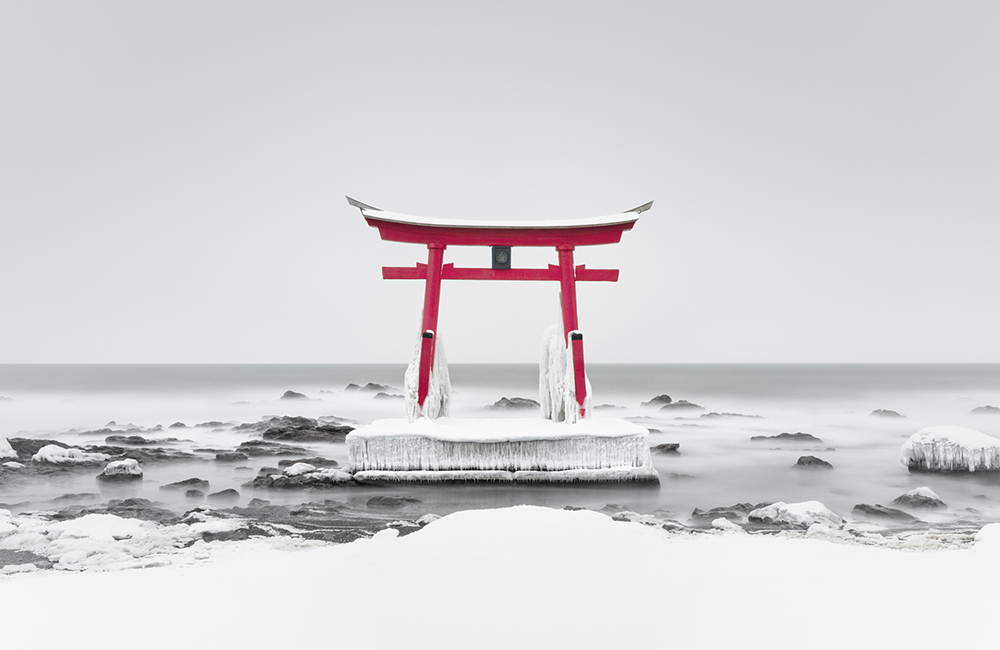
The new body of work by Hong Kong-based Canadian photographer Ulana Switucha, presented at Blue Lotus Gallery in Sheung Wan, is like a very slow-paced meditation that constantly returns to the same shape, showing how many different forms and angles it can take. The shape in question is the torii, the mystical Japanese gate that marks the entrance to sacred spaces – whether built structures such as temples and shrines or parts of a natural landscape that have been turned into divine spots, because of either something unusual about them or the legends attached to them. They have been a fixture of Japanese religious practice for more than a thousand years and, with their delicate yet imposing presence, they announce that from that point onwards, one enters the realm of the kami, the Japanese Shinto gods – although a level of syncretism means that some Buddhist temples, too, are graced by toriis a short distance from the main entrance.

They are a captivating form, most often composed of two close-spaced horizontal wooden bars at the top and two pillar-like vertical bars that sustain the upper ones, which are ever so slightly curved. Often, they are lacquered red, and some of Switucha’s photos contrast this bright colour with the whitest of snow or misty waters, creating very dreamy images like the photo simply titled Inari. Taken in Tohoku in 2020, it shows a Senbon Torii, a thousand of the gates, surrounded and covered in snow – an image of a tunnel of red torii emerging from the white coldness, erected one near the other, which meanders through the sacred grounds of the Inari temple, founded in 1701 and dedicated to the god of harvests.

Ariake by Ulana Switucha, Kyushu, Japan, 2019.
Courtesy the artist and Blue Lotus Gallery.

Ariake is another picture of a line of red torii, taken in Kyushu in 2019, at the Big Fish Shrine. Here, the gates are widely spaced and their bases are immersed in water, as, according to legend, a corrupt magistrate was saved at the last minute by a giant fish after he had been left stranded on a desert island by the villagers he was supposed to govern. In gratitude, the magistrate built this line of red toriis that extend into the sea, and returned to land – we don’t know if he mended his ways, though.

Fuji, taken in Hakone in 2023, on the other hand, is a more complex composition: a red torii partially immersed in a lake is visible on the right-hand side, while the undulating curves of two black hills divide the picture into two halves. Through the dip in the hills, we see the white, triangular shape of Mount Fuji, while grey waters and a grey sky frame these elements. This is a natural landscape, with a decisive human touch that complicates the narrative immensely. Is there a temple, behind or in front of the torii? Is this a pilgrimage spot, in one of those breathtaking sites that monks are so good at choosing for their retreats?

Ebisu and Daikokujima by Ulana Switucha, Aomori, Japan, 2020.
Courtesy the artist and Blue Lotus Gallery.

Switucha has been fascinated by the torii form for more than a decade, which she has spent travelling around Japan in search of the most poetic of these arches in out-of-the-way spots. Her lens shows how even a very simple frame, like the one drawn by a torii, can have infinite variations, if we can look attentively enough. A still from 2019, Ebisu and Daikoku, taken in Hokkaido, shows two extraordinarily shaped rocks emerging from the sea, their tops white with snow: one looks like a tree with a very full crown, while the other resembles an excessively rich pastry, well risen and covered in sugar. They are shintai rocks, inside which a deity is believed to reside; the slender one, Ebisu, is supposed to represent a fisherman, while the other, Daikoku, is a rice bale, crowned by a black torii. Together, they represent the gods of good fortune.

As far as we know, the first toriis were white – and at the show, the print Kotodama, of the Meoto Iwa rock at the Sakurai Shrine in Kyushu, taken in 2019, is the most traditional picture on view: the two rocks behind the torii are connected by a straw shimenawa rope, which is changed yearly, giving the photo an even more sacred look. It was taken with a very long exposure, turning the waves into a misty white blur that echoes the white of the torii.

Walking through the gallery, the different iterations of this simple, sacred form start to become slightly mesmerising, repetitive but never quite the same, like the different syllables of the same norito, or Shinto prayer.


Torii 鳥居
Blue Lotus Gallery
香港
2025年11月15日至12月14日

居港加拿大攝影師Ulana Switucha的全新作品在上環的Blue Lotus Gallery展出,展覽就像一場節奏緩慢的冥想,不斷回復為同一形狀,展現出鳥居的豐富形態和眾多角度。鳥居是神秘的日式大門,標誌通往神聖空間的入口——無論是寺廟、神社等人工建築,還是因獨特之處或傳說而被視為聖地的自然景觀。一千多年來,鳥居一直是日本宗教文化中不可或缺的一部分。它們精緻而莊嚴,穿過它們代表踏入神道教神靈的領域——儘管由於宗教融合,一些佛教寺廟也在正門附近建有鳥居。

鳥居的造型迷人,通常頂部有兩根間距較近、略微彎曲的橫木樑,由兩根的直立的柱子支撐。鳥居通常被塗成紅色,Switucha的一些照片將這種鮮豔的紅色與潔白的雪或朦朧的水面形成對比,營造出如夢似幻的畫面,例如名為《Inari》的照片。這張照片於2020年在日本東北地區拍攝,展示了千本鳥居。有一千座鳥居被白雪覆蓋包圍,宛如一條紅色的鳥居隧道從皚皚白雪中延伸而出,鳥居一個接一個,蜿蜒穿過的稻荷神廟的神聖之地。該座稻荷神廟建於1701年、供奉豐收之神。

另一張照片是於2019年在九州拍攝的《Ariake》,地點是大魚神社,照片展示了一排紅色的鳥居。這裡的鳥居間距很大,底部浸入水中。傳說中,一位貪官被他管轄的村民放逐到荒島上,幸得一條巨魚在最後一刻救了他。為了表達感謝,這位官吏建造了這排延伸至海中的紅色鳥居,然後又返回陸地——至於他有否改過自新,我們不得而知。

Fuji by Ulana Switucha, Hakone.
Courtesy the artist and Blue Lotus Gallery.

於2023年在箱根拍攝的《Fuji》構圖則更為複雜:照片的右邊有一座部分浸沒在湖中的紅色鳥居,兩座黑色山丘起伏的曲線將畫面一分為二。透過山丘的凹陷處,可以看到富士山白色的三角形輪廓,被灰色的湖和天空包圍。這是自然景觀,卻又有強烈的人文氣息點綴,豐富了畫面的敘事。鳥居的前後是否有寺廟?這裡是否是僧侶偏好選擇的靜修之地?

十多年來,Switucha一直對鳥居情有獨鍾,她走遍日本各地,尋找那些隱匿於偏僻角落、最具詩意的鳥居。她的鏡頭展現了即使是像鳥居這樣簡單的構圖,只要我們足夠細心,也可以帶來無限的變化。 在2019年拍攝於北海道的《Ebisu and Daikoku,》中,兩塊形狀奇特的石頭從海中崛起,它們頂部覆蓋著白雪:其中一塊像一棵枝葉繁茂的大樹,另一塊則像一塊蓬鬆飽滿、裹滿糖霜的糕點。它們是神颱石,人們相信神靈居於其中;纖細的惠比壽岩(Ebisu)被認為是漁夫的象徵,而大黑岩(Daikoku)則像一個稻穀,頂部架著一座黑色的鳥居。兩座鳥居象徵著帶來好運的神靈。

Kotodama by Ulana Switucha, Kyushu, Japan.
Courtesy the artist and Blue Lotus Gallery.

據我們所知,最早的鳥居是白色的——在本次展覽中,2019年拍攝的九州櫻井神社的夫婦岩照片《Kotodama》是最能代表傳統的作品:鳥居背後的兩塊岩石由一根每年更換、由稻草編織的注連繩連接,更增添了照片的神聖感。這張照片以超長曝光拍攝,將海浪暈染成朦朧的白色,與鳥居的白色相互呼應。

漫步於展廳,這種簡潔而神聖的形狀以不同的面貌出現,令人著迷。它們看似重複,卻又各有特色,如同一首祝詞(即神道教禱文)中的不同節段。


The Vancouver Art Gallery Receives Transformative Donation of Art from Hong Kong

The Vancouver Art Gallery is pleased to announce the landmark donation of Art Continuum Hong Kong (ACHK), a significant collection comprising 131 artworks by 78 artists. Representing the largest contribution of Hong Kong art in the Gallery’s history, this remarkable gift brings an unprecedented breadth of voices, practices and perspectives into the permanent collection, and marks a transformative expansion of the Gallery’s Asian art holdings.

Assembled over three decades, the ACHK collection reflects the extraordinary breadth of Hong Kong’s modern and contemporary art history. Beginning with a passion for photography that chronicled the city’s shifting ideological and natural landscape, the collection grew to encompass painting, sculpture, printmaking, film, installation and lens-based media by artists who have shaped Hong Kong’s cultural identity from the 1950s to today. 

To commemorate this landmark gift, the Vancouver Art Gallery will present a major exhibition of art from ACHK and the Gallery’s permanent collection in 2027. The exhibition coincides with the thirtieth anniversary of the transfer of Hong Kong sovereignty from the United Kingdom to China. As a marker of time, the Handover provides an opportunity to consider themes in the artwork and exhibition that reveal complex narratives surrounding Hong Kong emigration, cultural assimilation and national sovereignty.

Image: Spiritual Mountains by Wesley Tongson, Ink on xuan paper, 2011. Collection of the Vancouver Art Gallery. From the Art Continuum Hong Kong Collection. Photo: Vancouver Art Gallery.


https://zohopublic.com/zohocampaigns/731810210/inkcanva_746661000001513433.png

Tang Contemporary Art Hong Kong Celebrating 10th Anniversary

Decade One: Chronolect /
Dec 18, 2025 – Jan 31, 2026 /

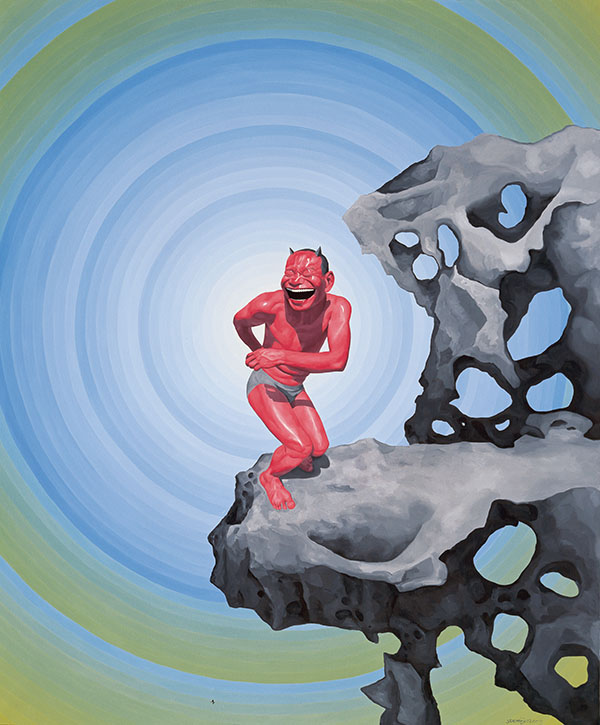
Jonas Burgert, Cai Lei, Heri Dono, Huang Yongping, Jigger Cruz, Leng Guangmin, Edgar Plans, Qin Qi, Wang Du, Xiyao Wang, Wu Yi, Yue Minjun, Yang Jiechang, Zhao Zhao, Zhu Jinshi
Opening: Thursday, Dec 18, 5pm – 7pm
Tang Contemporary Art Central
10/F, H Queen’s
80 Queen’s Road, Central
Tuesday – Saturday, 11am – 7pm
T +852 2682 8289

Etsu Egami, Hao Zecheng, Yoon Hyup, Kitti Narod, Jade Ching-yuk Ng, Alexander Skats, August Vilella, Meguru Yamaguchi, Yu Xuan, Nishi Yukari
Opening: Thursday, Dec 18, 4pm – 6pm
Tang Contemporary Art Wong Chuk Hang
Unit 2003-08
20/F, Landmark South
39 Yip Kan Street, Wong Chuk Hang
Tuesday – Saturday, 11am – 7pm
T +852 3703 9246

tangcontemporary.com

Tang Contemporary Art is proud to announce to celebrate the tenth anniversary of our Hong Kong space, we are presenting a large-scale group exhibition Decade One: Chronolect. The exhibition’s title, Chronolect – a lexicon of time – captures the distinct artistic language developed over this inaugural decade. The exhibition aims to focus on the most precious gains in artistic practice—namely, “accumulation and growth”—connecting the iterative evolution of the artists’ works, the gallery’s and collectors’ explorations within the industry, and the unwavering adherence to their original aspirations.


https://zohopublic.com/zohocampaigns/746661000019549142_zc_v10_1678758926086_blindspot_gallery_logo_fi.jpg

Charmaine Poh 傅秀璇

PalaisPopulaire, Berlin /
Deutsche Bank Artist of the Year 2025
/

The first thing you encounter upon entering Charmaine Poh’s exhibition Make a travel deep of your inside, and don’t forget me to take is a glowing hand-written phrase on the floor, ending with “how we breathe”. Projected in soft blue light, the words hover just above eye level, pulsing gently, as if taking air. This quiet invocation sets the tone for what follows: a deeply atmospheric and emotionally textured experience that unfolds as much through sensation as sight. The exhibition’s title stems from a tender mistranslation spoken by a Turkish friend practising English – a moment of care and connection that invites viewers into a shared space of inbetweenness.

From here, a spiral staircase leads upwards into the exhibition space. Poh’s exhibition moves in spatial and conceptual spirals, refusing linear progression in favour of an environment shaped by rhythm, return and echo. Visitors are then welcomed with a reading corner arranged on a wall-mounted shelves. Books in Chinese, English and German sit side by side. The selection ranges from graphic fiction (The Art of Charlie Chan Hock Chye) to queer diaspora theory (Unruly Visions) and memoir. There is no fixed narrative or required reading; instead, the shelves suggest a broader discursive and emotional landscape that informs Poh’s practice. Multilingual and cross-genre, the collection reflects themes of displacement, memory and intimate history. Rather than guiding interpretation, these books offer a quiet form of accompaniment, thinking alongside the works without defining them.

Exhibition view of Make a travel deep of your inside, and don’t forget me to take by Charmaine Poh at PalaisPopulaire, Berlin, Sep 11, 2025 – Feb 23, 2026. Courtesy the artist and PalaisPopulaire.

Entering the main gallery space, the mood shifts. Lighting turns ambient and atmospheric, with red, blue and green hues circulating across the walls and floor. The environment is low-lit but richly saturated, heightening tactile and sonic perception. Nestled early in this sequence is Twin (2025), where two jade bangles are embedded in a square bed of sand. Slightly submerged, the bangles echo one another in shape and material, calling forth personal and cultural memory. Jade in East and Southeast Asian contexts carries affective weight – inheritance, protection, the slow change of time. The bangles’ placement, side by side and partially buried, suggests intimacy, perhaps between sisters or generations, as well as the subtle act of care in remembering.

The viewer then passes through a curtain of shimmering beads, a tactile moment of transition, and encounters GOOD MORNING YOUNG BODY (2023), a single-channel deepfake video displayed on a freestanding screen. The video opens with a digital avatar of a 12-year-old Charmaine Poh, modeled on E-Ching, a character she played on the early 2000s TV show We Are R.E.M. Accompanied by the familiar Windows startup sound, the avatar speaks in looping monologues drawn from Poh’s past performances and reflections. The voice is young but unnaturally high-pitched, with an uncanny, helium-like quality. The work addresses Poh’s experiences with public scrutiny, including online harassment and media objectification during her childhood acting career. Through this digital reanimation, Poh reclaims her agency in a media landscape where images increasingly escape personal control. The piece dialogues with feminist media artists such as Hito Steyerl and Lynn Hershman Leeson, exploring themes of identity, authorship and the archival as a staged, recursive site of memory and unresolved trauma.

The Moon is Wet by Charmaine Poh, Still, three-channel digital video installation, 24min 29sec, 2025.
© Charmaine Poh. Courtesy the artist and PalaisPopulaire.

The central work in the exhibition is The Moon is Wet (2025), a new commissioned film. Installed within a circular, curtain-enclosed space with blue carpeting and speakers suspended from the ceiling, this three-channel video anchors the show’s exploration of opacity, both ecological and emotional. The three screens, arranged in a semi-enclosed arc, present overlapping narratives, in Hokkien, Cantonese and Indonesian, of three women who appear across time: a devotee at a temple to Chinese sea goddess Mazu; a 1970s domestic worker of Guangdong origin, known as a majie; and a contemporary migrant caregiver. These are languages historically spoken by Singapore’s migrant communities but long excluded from official state narratives. By foregrounding these tongues, often considered “dialects” or foreign, Poh calls attention to the politics of linguistic erasure.

Set predominantly in the intertidal zones of Singapore – spaces literally caught between land and sea, day and night – the film becomes a site for spectral encounter. Shot using prisms and flares to refract light and blur facial features, the characters appear as mythic apparitions, cloaked in veil-like masks. Poh deliberately resists exoticisation; the faces are not presented for recognition or projection. Instead, the viewer is invited to listen. “I wanted to create a distance,” she explains, “so the viewer could not reduce them to a certain identity but had to attend to what they were saying.”

That attention yields a quiet kind of power. There’s a moment in the film when the strains of a classic Anita Mui ballad waft through the audio, uncannily familiar to many across East and Southeast Asia. The past returns as atmosphere carried in songs, in gestures, in spectral presences that hover just outside our grasp.

Majie, Hands by Charmaine Poh, Photograph, 2016.
© Charmaine Poh. Courtesy the artist and PalaisPopulaire.

As Poh notes, the majie and domestic worker characters are linked not only by occupation but also by a spiritual continuity: both are imagined as worshippers of Mazu and both embody forms of feminised labour often rendered invisible in dominant national narratives. The film gives them not just voice but cosmological weight, mapping a speculative ancestry that is both matrilineal and mythological. This orientation toward opacity, drawn in part from French writer and philosopher Édouard Glissant’s book Poetics of Relation (1990), is a recurring thread in Poh’s practice.

Emerging from this chamber, the viewer arrives at What’s Softest in the World Rushes and Runs Over What’s Hardest in the World (2024), a quieter yet no less potent video work exploring queer kinship in contemporary Singapore. Where The Moon is Wet amplifies voices across generations, this piece leans into gestures and presence. Hands pour water; bodies share space. Faces are rarely seen and, when they are, they appear in profile or soft focus. Poh’s camera lingers on domestic rituals – eating, folding, bathing – that articulate love not through grand narrative but through daily survival and mutual care.

The final section of the exhibition returns the viewer to the masks worn in The Moon is Wet, which reappear as sculptural objects displayed under gently pulsating LED lights. Nearby, photographs of the last remaining majie women in Singapore taken by the artist form a constellation of lives lived in partial view. These women are not named yet they stand in relation to one another, to the viewer and to the larger narrative arcs the exhibition evokes.

The credit wall, with text inside a full moon-like circle, thanks individuals: translators, actors and researcher communities such as the Asian Feminist Studio for Art and Research (ASFAR). It reads less like an end and more like a gesture of return, a loop back to where we began, with breath, care and shared story.

Throughout Make a travel deep of your inside, and don’t forget me to take, Poh assembles a world of slowness, polyphony and mutual regard. The exhibition resists spectacular display. Instead, it rewards attention to light, language and the ambient details of emotion. The politics here are not declarative but felt in accumulated textures: the weight of sand, the shimmer of red silk, the grain of a digitised voice.

Majie, Innerwear by Charmaine Poh, Photograph, 2016.
© Charmaine Poh. Courtesy the artist and PalaisPopulaire.

Rather than centring selfhood or origin, Poh’s work invites viewers to dwell in relation to time, land and stories that do not always translate but still insist on presence. The margins, in her hands, do not whisper; they speak. 


柏林人民宮
德意志銀行2025年度藝術家

傅秀璇的展覽題為 “Make a travel deep of your inside, and don’t forget me to take”(走進你內心深處,別忘了把我帶上),這句在地上發光的手寫句子,以how we breathe(我們如何呼吸)作結。柔柔藍光把文字投射在視線水平之上,輕輕跳動盤旋,彷彿正在吸氣。靜態的呼喚為後續內容定下基調:一場氣氛濃厚而富有情感層次的體驗,隨著視覺感官逐步揭開。覽題源於藝術家一位土耳其朋友在練習英語時的少許誤譯,這一刻洋溢關懷與連繫,邀請觀眾進入中庸的共享空間。

由此經螺旋樓梯往上走,便來到展覽空間。傅氏的展覽未有採取線性進展,而是在空間和概念的螺旋中移動,務求以節奏、回歸和迴響來塑造環境。一個以壁掛式書架構成的閱讀角歡迎觀眾到訪。裡面的中、英和德語書籍並排而放。選書既有《The Art of Charlie Chan Hock Chye》一類繪本小說,也有各地的酷兒理論(《Unruly Visions》)和回憶錄。這裡沒有固定的故事,也沒有必讀書冊,書架暗喻較廣泛的話語和感情面貌,也就是傅氏的實踐取材。這些書目的多種語言和跨類型特質反映了流離失所、回憶和親密過去的主題。書冊沒有指導如何詮釋,而是安靜地當襯托,為作品提供思考空間而不是定義。

進入畫廊的主空間,意境漸變。燈光變得通透而富氣氛,紅、藍與綠的色調在牆上和地上打圈。昏暗但飽和度高的環境加強了觸覺與聲音感知。在射燈編排下較早亮相的是《Twin》(2025年),兩隻玉手鐲半藏於方形沙床中,兩者在形狀與材質方面互相呼應,令人想起個人與文化的回憶。在東亞和東南亞,玉石象徵承傳、保護和時間慢慢流逝,有著情感意義。手鐲並排而部分藏於沙中,暗示著姐妹或世代之間的親密關係,還有關懷的含蓄記憶。

觀眾穿過閃亮珠簾的觸覺過渡後,可以看到《GOOD MORNING YOUNG BODY》(2023年),一段在獨立屏幕上播放的單頻道深偽錄像。開場時,傅氏的12 歲數碼分身登場,她在2000 年代初參演過電視劇《We Are R.E.M.》,數碼分身便是以她的劇中角色 E-Ching 為藍本。短片以熟悉的 Windows 啟動聲伴奏,數碼分身取材自傅氏昔日的演出和反思,不斷以年輕但異常高音的循環獨白,儼如吸入氦氣後說話。作品觸及傅氏童星時代備受公眾注目的感受,包括網絡騷擾和被媒體物化。在當今的媒體環境中,圖像越來越不受個人控制,傅氏以此數碼分身重獲主導權。作品是與 Hito Steyerl 和 Lynn Hershman Leeson 等女權主義媒體藝術家的對話,從層層漸進的記憶與未治癒的創傷探索身份認同、著作權和檔案庫內容等主題。

Exhibition view of Make a travel deep of your inside, and don’t forget me to take
by Charmaine Poh at PalaisPopulaire, Berlin, Sep 11, 2025 – Feb 23, 2026.
Courtesy the artist and PalaisPopulaire.

新委約創作電影《The Moon is Wet》(2025年)是展覽的核心作品。這部三頻錄像設於以窗簾隔開的圓形空間內,配上藍色地毯與天花式揚聲器,為探討生態與情感中的不透明度做好鋪墊。三個屏幕以半封閉的弧線排列,三位女性跨越時空地以閩南語、粵語和印尼語重疊敘事,她們分別是媽祖廟內的信徒、1970年代廣東裔的「馬姐」,還有現今的外地護工。儘管新加坡的移民社群在歷史上都曾使用三人所說的語言,但這些「方言」或外語卻一直被排除在官方國家論述以外。傅氏透過這些語言作出呼籲,希望人們關注消音背後的政治。

電影主要以新加坡的潮間帶為背景,即介於陸地與海洋、白天與黑夜之間的空間,形成了鬼魅相遇的場景。她以棱鏡和強光來折射光線和模糊面部特徵,令片中主角看起來有如披著面紗的神秘幽靈。傅氏刻意去異國化,主角臉部既不易識別,也沒成為投射。相反,她請觀眾細聽。她解釋說:「我想製造距離,這樣觀眾就不能將她們簡單理解為某種身份,而是靜聽她們說話。」

專注聆聽能產生安靜的力量。影片其中一刻播出了梅艷芳的名曲,這是東亞和東南亞人耳熟能詳的旋律。歌曲、手勢和幽靈讓舊日乘著箇中氣氛回歸,徘徊在我們掌控之外。

正如傅氏指出,馬姐和家庭傭工兩個角色不僅因職業而連成一體,也有著精神上的連貫性:兩人都被想像為馬祖善信,兩人都以勞動女工的身份出現,是主流國家論述中常被忽視的人物。電影除了為兩人提供了發聲的機會,還賦予了神明的分量,從母系社會和神話角度勾勒和推敲出她們的祖傳歷史。傅氏的藝術實踐中,可以常常看到這種不透明取向,其中部分取自法國作家和哲學家愛德華.格利桑的著作《Poetics of Relation》(1990年)。

離開這個房間後,觀眾會來到《What’s Softest in the World Rushes and Runs Over What’s Hardest in the World》( 2024年)(世上最柔軟的東西衝過並輾過世界上最堅硬的東西),這是一部更安靜但同樣有感染力的錄像作品,探討當代新加坡的酷兒親屬關係。如果說《Where The Moon is Wet》放大了幾代人的聲音,這部作品則傾向手勢和存在感。以手倒水;讓身體共享空間。片中很少看到臉孔,即使出現也只是以側寫或柔焦的形式。傅氏的鏡頭圍繞著家庭日常——吃飯、折衣服、洗澡——沒有大是大非,卻透過每天的生活和互相關懷來表達愛。

展覽的最後一部分將觀眾帶回《The Moon is Wet》中主角戴過的面具,它們在柔和、脈動的LED下以雕塑品形式再度出現。附近是藝術家紀錄下在新加坡最後一代「馬姐」的照片,折射了她們的生活百態。照片中的女性沒名沒姓,但彼此之間、與觀眾和展覽所喚起的更廣義故事情節息息相關。

Exhibition view of Make a travel deep of your inside, and don’t forget me to take
by Charmaine Poh at PalaisPopulaire, Berlin, Sep 11, 2025 – Feb 23, 2026.
Courtesy the artist and PalaisPopulaire.

鳴謝牆上的文字寫在滿月形狀的圓圈內,向譯者、演員和研究人員社群致謝,包括亞洲女性主義藝術與研究室(ASFAR)。這些文字讀起來並不像結束,更似回歸的姿態,周而復始地回到開始的地方,帶著呼吸、關懷和共同的故事。

在整個展覽中,傅秀璇建構出一個緩慢、有不同聲音而互相尊重的世界。展覽不走華麗呈現的路線,而是鼓勵觀眾細心留意光線、語言和情感環境細節。展覽不以宣示方式表達政治意念,而是讓觀眾透過沙子的重量、紅色的微光、數碼化的聲音等材質,逐層累積和感受。

傅氏的作品並非以自我或緣起為中心,而是邀請觀眾思考時間、土地,還有不一定能成功譯出原意,但仍然堅持存在的故事。邊緣到了她手上不會低聲細語,而是有話便說出來。

Yim Sui Fong 嚴瑞芳

Between the personal and the political lies Hong Kong-based artist Yim Sui Fong’s long-standing enquiry into how we come to know and relate to the world – an enquiry shaped by playful, embodied, socially engaged practices. Her work often explores how individual agency can generate new ways of seeing and being within power structures embedded in everyday life. Through participatory listening, performative archiving and collaborative workshops, she creates artworks that become public encounters and platforms for collective meaning-making. In recent years, she has developed sonic interventions, such as A Stream A Path (2025-) and Stair Mass (2022), to explore the role of sound in remembering personal experience and sparking collective imagination. These works expand the role of the artist as storyteller, facilitator and social archivist. From June to August 2025, she was a resident artist at Delfina Foundation in London, where she continued researching archives and collaborative learning practices across cultural contexts.

Inspecting an Indian percussion instrument from 1879 at V&A East Storehouse.
Photo: Nazira Karimi. Courtesy the artist and Nazira Karimi.

Jessica Wan: What brought you to Delfina Foundation and how has the residency community influenced your thinking or practice so far? Yim Sui Fong: My practice often begins in Hong Kong’s local context, where I develop prototypes for how sound and memory can build structures of meaning with people and places. Coming to London, a diverse city with a vibrant art scene, I wanted to test whether these methods resonate across cultures. Delfina provides the rare space for research without the pressure of a fixed outcome. These situated exchanges – from archives and exhibitions to performances, formal presentations and informal conversations – become food for thought for my ongoing practice.

JW: Your practice often creates spaces where artists, makers and local residents collaborate – moving from individual expression towards collective futures. What draws you to these forms of social interaction and what challenges or surprises have emerged in facilitating them? YSF: For me, each individual encounter is a mirror of larger social conditions. I design workshops as temporary commons – spaces to rehearse new forms of relation through listening, exchange and confrontation. Works such as Assembly of Disquiet, Avatar, The Third Person or Oddkin test different social structures. These processes reveal current struggles while opening glimpses of alternative ways of being. I don’t see the commons as a fixed utopia but as fleeting moments of connection – rehearsals where we experience vulnerability, learning and the possibility of doing things differently.

JW: In works like Chuen Lung Visual Research Archive (2025), you invite people to jointly create archives through memory and storytelling. In those shared processes, how do you think about ownership of knowledge? Do you think that idea needs to be reframed altogether? YSF: I prefer to think of knowledge not as ownership but as a common pot. When villagers in Chuen Lung share childhood games or memories, I act as a scaffolder – to organise, ask questions and translate stories into creative methods. For example, a hand gesture becomes a whistle or a memory of imbalance becomes a sound instrument made of bamboo. These acts ask, in small and playful ways, how we respond to precarity – and how we might imagine otherwise. These workshops turn oral stories into shared creative acts, making the archive relevant to participants who don’t usually enter art spaces. At the same time, I learn from their insights. If an idea resonates, it is generative: I may create an installation for exhibition, while participants may rediscover their own creativity in daily life.

A Stream, A Path by Yim Sui Fung, Sound instruments from local materials, 3D-printed hand whistle,
instructions, 2025. Showcase at Chuen Lung Visual Research Archive.
Courtesy the artist.

JW: With the rise of AI and digital technologies, we are more globally connected yet often spend less time engaging in face-to-face encounters. How do you think this shift affects interpersonal relationships? Does individual agency still hold the same significance in this context? YSF: I see online and onsite life as increasingly inseparable. In my research at CUHK, I explore how data science can be used to review socially engaged art – mapping relations between materials, archives and participation. In this context, individual agency still matters but it appears in new forms: contributing to shared digital archives or shaping how data itself becomes part of cultural memory. Yet I also believe face-to-face encounters remain irreplaceable. They carry the unpredictability of bodies, gestures and silences, which no digital interaction can reproduce. In this sense, in-person encounters are not less relevant but even more crucial in shaping how we navigate these hybrid conditions.

Against Step by Yim Sui Fung, 9-channel video installation, CRT TV, projector, media player,
rear projection, size variable, 2019. Courtesy the artist.

JW: Sound plays such a central role in your practice – especially when it comes to memory and shared experience. What do you think listening allows us to access that looking might not? How does it shift the way we understand each other, or even history?YSF: Vision has long dominated western thought, often leading to abstract or detached knowledge. Following [philosopher] Jean-Luc Nancy, I see listening as a more embodied and resonant way of knowing. Listening requires patience and openness; it attends not only to what is said but also to what is absent or unspoken. In my practice, listening becomes a mode of learning and speculation – tracing echoes, connecting fragments and offering alternative perspectives on how histories are remembered and lived.

JW: Having spent time in both Hong Kong and the UK, have you noticed differences in how people use and inhabit public spaces? Do any cultural habits around public life or participation strike you as shifting in meaningful ways? YSF: In London, I notice people feel a right to the ground – sitting on grass in parks, on steps, on the museum floor or even concrete edges during lunch. In Hong Kong, where space is scarce and crowded, lingering in public space often feels unwelcome, unless it is a designated or commercial area. During my residency visits to institutions like [London’s] Chisenhale Gallery or [Manchester’s] ESEA Contemporary, I also observed how social practice is embedded in programming. These models inspire me but I also reflect on how funding frameworks shape outcomes, sometimes at the expense of artistic or ethical priorities. That tension itself is a cultural norm worth interrogating.

JW: What ideas or directions are you most excited to be developing at the moment, and what’s next for you? YSF: I’m developing Oddkin as part of Goethe-Institut’s Zeitgeist Hong Kong series, where four artists draw on [academic] Donna Haraway’s idea of oddkin [chosen kindred spirits] to experiment with reading groups and hiking, creating video and sound installations that explore confrontation as a collective practice. I’m working on the Chuen Lung Visual Research Archive for the Hong Kong International Photo Festival, creating malfunctioning sound instruments inspired by villagers’ childhood stories to stage a collective sound play. What excites me most is treating art as rehearsal – not just presenting finished works but testing, negotiating and imagining futures of cohabitation through shared meaning-making.

At the heart of my practice are a few recurring questions: how should people live together? How can we practise that imagination collectively? And how do we respond to precarity – and imagine otherwise? These questions return in different forms across workshops, archives and video and sound installations. They are not questions to be solved once and for all but to be rehearsed – again and again – with others, through listening, making and being in relation.

My practice continually returns to the questions of how we might live together, how we can imagine otherwise and how art can serve as a rehearsal space for practicing those possibilities collectively.

Field trip to Folkstone Triennial with Delfina creative team Erin Li, Helena Beese and patron Shao, resident artists and curators Bruno Alves de Almeida, Esther Lu, María Gabler, Nazira Karimi and Yim Sui Fong.
In the photo is the work Ode to the Sea by artist Emeka Ogboh.

香港藝術家嚴瑞芳游走於個人與政治議題之間,長期探索我們如何認知及代入世界——這份探索頗具玩味、注重身體感知與社會參與。她的作品常常探討自我控制感如何在日常的權力結構中開闢新的觀看與存在方式。通過參與式聆聽、行動式存檔與協作工作坊等形式,她的藝術作品成為公眾相遇的現場以及集體構建意義的平台。近年她通過《一條坑那條路》(2025起)、《梯間回聲》(2022年)等聲音實踐,探索聲音在喚醒個人經歷與激發集體想像中的作用。這些作品拓展了藝術家作為敘事者、協作者與社會檔案員的多重身份。2025年6月至8月,她作為倫敦戴芬娜基金會(Delfina Foundation)的駐地藝術家,繼續對跨文化語境下的檔案與協作式學習實踐展開研究。

Jessica Wan: 是什麼帶你來到戴芬娜基金會?至今此地的駐留藝術家群體對你的創作思路或藝術實踐帶來了哪些影響?嚴瑞芳:我的創作往往始於香港本土語境,在那裡,我圍繞著聲音與記憶如何與人和地域構建意義結構,發展出實踐原型。來到倫敦這座文化多元、藝術生態活躍的城市,我想驗證這些創作方法能否引發跨文化的共鳴。戴芬娜基金會提供了一個難得的研究空間,讓我無需承擔固定成果的壓力。在此特定情境下的交流——從檔案、展覽和演出,到正式陳述和隨意交談,都成為我當下藝術實踐的養分。

JW: 你的藝術實踐常常為藝術家、創作者與當地居民營造共同參與的空間——從個體表達邁向集體未來。是什麼吸引你投身於這類社會互動形式?在組織這些協作的過程中,又遇到了哪些意想不到的挑戰或收穫?YSF:對我而言,每一次個體相遇都是宏觀社會狀況的一面鏡子。我將工作坊設計成臨時的共有空間——在這裡,人們通過聆聽、交流與碰撞來預演新型的關係模式。像《不安練習社》、《化身》、《第三身》、《Oddkin》這類作品,都是在試驗不同的社會架構。這些創作過程既揭示了當下的困境,也讓我們得以窺見另類的生存方式。我並不視共有空間為一個固定不變的烏托邦,而是一個個轉瞬即逝的投契時刻,乃讓我們體驗脆弱、學習並探尋另闢蹊徑可能性的排練。

JW: 在例如《川龍視覺誌》(2025年)等作品中,你邀請人通過記憶與敘事共同構築檔案。在這些共用過程中,你如何看待知識的歸屬權?你是否認為需要重新定義這一概念?YSF:我傾向把知識視為一個公共湯鍋,而非私產。當川龍村的村民分享童年遊戲或記憶時,我扮演的是棚架工人的角色——負責組織、提問,並將這些故事轉化為創作手法。舉例說,一個手勢可以演變成口哨,一段關於失衡的記憶則能變成竹製發聲樂器。這些舉動以微小而有趣的方式提問:我們應如何應對不確定性?又能否設想別的可能?這些工作坊將口頭故事轉化為集體創作行動,讓那些不常踏入藝術空間的參與者,也能與檔案建立關聯。同時,我也從他們的見解中收穫良多。若某個想法能引發共鳴,它便是具有生成力的:我或許會據此創作展覽裝置,而參與者亦能在日常生活中,重拾自己的創造力。

Assembly of Disquiet by Yim Sui Fung, Sound and performative workshop; 3-channel video, 2019.
Courtesy the artist.

JW:隨著人工智慧(AI)與數碼科技的興起,我們與世界各地的聯繫更加緊密,卻往往減少了面對面交流的時間。你認為這種轉變對人際關係產生了什麼影響?在此情況下,自我控制感是否依然維持同等重要的意義?YSF:我認為網上與現實生活正變得日益交織。我在香港中文大學的研究項目中,正探索如何運用資料科學來審視社會參與式藝術——旨在梳理素材、檔案與公眾參與間的關係圖譜。在此語境下,自我控制感依然重要,只是以新的形態出現:為共用數碼檔案貢獻內容,或影響資料本身如何成為文化記憶的一部分。但我相信面對面交流是不可替代的。它蘊含著身體、手勢與沉默中的不確定性,這是任何數碼互動都無法複製的。正因如此,在應對虛實交織的狀態時,面對面交流非但沒有減損其重要性,反而是愈發關鍵。

JW:聲音在你的藝術實踐中佔據核心地位——尤其是關乎記憶與共同體驗時。你認為,聆聽能讓我們觸及哪些視覺所不能及的領域?它又如何改變我們理解彼此、乃至歷史的方式?YSF:視覺長期主導著西方思想,往往催生出抽象而疏離的認知。追隨哲學家讓-呂克·南茜的觀點,我將聆聽視為一種更具身體感知、更能引發共鳴的認知方式。聆聽需要耐心與開放,它不僅關注言說之物,更側耳於缺失與未言之聲。在我的創作實踐中,聆聽成為一種學習與思索的模式——它追蹤聲音迴響,串聯資訊碎片,並為歷史的銘記與存續提供別樣視角。

JW:你在香港和英國都生活過,有沒有留意到兩地人使用公共空間上的不同方式?在公共生活和參與方面,哪些文化習慣上的變化令你印象深刻?YSF:在倫敦,我注意到人感覺擁有使用地面的權利——他們坐在公園草坪、台階上、博物館地面,甚至午餐時就坐在水泥台邊緣。而在空間稀缺擁擠的香港,若非在指定或商業區域,流連公共空間往往令人感到不自在。在我駐留期間走訪Chisenhale畫廊或曼賈斯特ESEA當代藝術中心時,亦觀察到社會參與式藝術如何融入其項目策劃中。這些模式啟發了我,但同時也讓我思考資金框架如何塑造最終成果,有時不惜犧牲藝術或倫理的核心。這種衝突本身,就是一種值得審視的文化常態。

JW:當下你最熱衷於推進哪些想法或方向?接下來又有什麼計劃?YSF:我目前正在為歌德學院的「香港ZEITGEIST」系列創作作品《Oddkin》。我們四位藝術家,以學者唐娜·哈拉維提出的“oddkin(異親)”理論(即經自主選擇的親緣關係)為靈感,通過實驗性的讀書會與遠足,創作影像及聲音裝置,探討對抗作為一種集體實踐的形式。此外,在為香港國際攝影節打造的《川龍視覺誌》中,我根據村民的童年敘事,創作一系列故障發聲樂器,用以編排一場集體聲音劇場。最讓我著迷的是將藝術視為一場排練——它不只是呈現完成的作品,而是通過共同構建意義的過程,去試驗、協商,並想像未來的共生圖景。 

我的藝術實踐核心,圍繞著幾個反覆出現的問題:人與人應當如何共處?我們該如何集體實踐這種想像?又該如何應對不確定性,並構想另外的可能?這些問題以不同形式貫穿在我的工作坊、檔案研究以及影像聲音裝置中。它們並非亟待一勞永逸解決的問題,而是需要與他人一道,通過傾聽、創造和建立聯結,一次次去反覆排練的課題。

我的實踐持續回到這些問題:我們應當如何共處,如何想像另外的可能,以及藝術如何能成為一個排練場域,讓我們集體踐行這些可能性。

Oscar Chan Yik Long at The Radvila Palace Museum of Art Vilnius 

Oscar Chan Yik Long /
They always look from an imagined above /
Nov 27, 2025 – Mar 15, 2026
/

The Radvila Palace Museum of Art of the Lithuanian National Museum of Art 
24 Vilniaus Street
Vilnius, Lithuania 
T +370 5 250 5824
Tuesday, Wednesday, Friday, Saturday, 11am – 7pm
Thursday 12am – 8pm
Sunday 11am – 5pm

lndm.lt

Oscar Chan Yik Long (Hong Kong, 1988, lives in Helsinki) works mostly in Chinese ink. His paintings and drawings are mostly based on motifs from East Asian mythology or other esoteric traditions.

This is his first solo exhibition in a museum, and it contains both new and existing works. Its title, They always look from an imagined above, also names a temporary ink mural (2025) on the vaulted ceiling of the a seventeenth-century Radvila PalaceWho are ‘they’? What is the ‘above’ and why is it ‘imagined’?

Chan is not telling us. He has placed Cosmic egg (2021), a woollen rug, under the mural. The rug alludes to a creation myth, but again without explanation. In an adjacent space, the walls and ceilings receive the projected work Patrol (2025), where ‘they’ – rudimentary figures evoking human skeletons – make another unexplained appearance.

Chan’s work is not backed up with meticulous narratives. Instead, his images celebrate open-ended co-creation with varied audiences. There is storytelling, but the story often finds itself displaced and condensed by the abundance of figures in action.

That happens in The earthly branches (2025), a series of twelve stretched canvases connected to form free-standing folding screens. Sized after Chan’s own physical body, these ink paintings also become emblems of the Chinese zodiac signs: rat, ox, tiger, rabbit, dragon, snake, horse, goat, monkey, rooster, dog, and pig.

The ten-part ink painting I look at my own dead body (2025) is a stretched-out landscape-like rendering of a skeleton stripped of all perishable body tissue. The original vision came to Chan in a dream where he saw his own corpse on display in a European museum.

Displacement and condensation (the terms Sigmund Freud uses to describe how dreams work), divination (the desire to see the future in the past), imagination and fabulation – these are the creative strategies that allow Chan’s work to transform horror into understanding, and ultimately redemption.

He sometimes uses explicitly illustrative formats such as the playing card or the picture book. In this exhibition he premieres the 22 ink and marker drawings of the series Tarot cards (Major Arcana) (2025). He also shows selected ink drawings from his first artist book My Body Is a Reincarnated Population (Kraków: Bored Wolves, 2024).

Only one work in They always look from an imagined above is polychromous. The king of ghosts (2021) is a factory-made figurine, visualising a Chinese legend. It reminds us that those we might be afraid of (the ghosts in their kingdom) are, in turn, afraid of someone (their king) or something – which may very well be fear itself.

The exhibition is curated by Anders Kreuger and organised by the Radvila Palace Museum of Art of the Lithuanian National Museum of Art, in collaboration with Kunsthalle Kohta in Helsinki and PF25 Cultural Projects in Basel and financially supported by the Finnish Cultural Foundation.


https://zohopublic.com/zohocampaigns/731810210/inkcanva_746661000001513433.png

Chan Kwan Lok 陳鈞樂

Weaving together Chinese traditional techniques, Japanese iconography and contemporary critical perspectives, the practice of Hong Kong artist Chan Kwan Lok draws on his daily experiences and observation of nature. His works depict human beings – and often himself – grappling with their environment, set against grand landscapes that both subsume and permeate them, while confronting their own emotions. The delicate ink lines facilitate the intertwining of worlds and perceptions, where elements overflow and merge. The sea, along with the forest and the mountain, provides the artist with particularly inspiring settings.

Exhibition Unbound by Chan Kwan Lok, Ink and colour on paper, 67 x 93 cm, 2025.
Courtesy the artist.

CHT: Coral Reef (2013) and The Odyssey in Waves (2014) are among your first long handscrolls. Both depict the ocean. Later, one of your solo exhibitions was titled Threading Ocean. Where does this interest for the sea come from? Chan Kwan Lok: The first long scroll painting about the ocean can be traced back to my childhood work The Ocean (1999). I created it while having dim sum with my family, using pages torn from my school dictation book, drawing one page at a time and gradually sticking them together into a long ocean scroll. It represents the beautiful, imagined world of the ocean in my mind.

The ocean has always held a significant place in my life. In childhood, as I suffered from asthma, my family would often take me to beaches and swimming pools for my health, which aroused my interest in the ocean. Late, I learned to scuba dive and obtained my diving certification. I enjoy exploring different places and diving in various locations.

My artworks are like my diary, capturing experiences and emotions from different periods of my life. To me, the ocean represents freedom. Under the water, everything becomes very peaceful, and while diving, all I can hear is the sound of my own breath. I want to express my feelings, and many of my works aim to depict the world under the water.

Events that happen in society also influence my emotional state during my creative process. I express my feelings through various marine creatures, using them as a medium to convey my emotions. Thus, the underwater world is not merely a record of the ocean’s beauty but also a way for me to express my emotions.

CHT: Your style borrows from various styles of traditional iconography, from classical Chinese painting to Japanese ukiyo-e. How did you weave together these different influences to create your personal style? CKL: I have been studying waves from Ma Yuan, the Chinese painter of the Song dynasty, who did a series of 12 paintings titled Studies of Water. I am also influenced by Japanese culture, Hokusai for instance, and I really enjoy the creative universe of artists such as Fuyuko Matsui, who often depicts decaying bodies, and manga artist Satoshi Kon.

I like to work with contrasts. I borrow the calmness from Chinese masters and the dynamics from the Japanese artists. For me, it is essential to find a balance in each composition. 

Way Down Deep (1) by Chan Kwan Lok, Ink on paper, 123 x 83 cm each, set of 6, 2019.
Courtesy the artist.

CHT: From the beginning of your practice, you have used the gongbi technique to create your compositions. What drove you to explore this traditional brush technique and why do you feel it is still relevant for you today? CKL: I was first introduced to gongbi painting during my time at university. Traditionally, gongbi is taught by copying the works of ancient masters. In our first lesson, we practised outlining these classical works using only lines – a technique known as baimiao. I hadn’t expected that drawing simple lines could be so challenging. When I wasn’t in a good mood, my lines would gradually lose their fineness, becoming uneven or too thick. Maintaining consistency was especially difficult. Sometimes, after just 15 minutes of drawing, I would feel exhausted and my lines would start to waver.

I came to realise that lines are incredibly revealing – they directly reflect my mood and mental state. There is so much expressive potential in a single line. Even without colour, it’s possible to convey a wide range of textures and forms: the fineness of hair, the flowing motion of fabric or the roughness of stone. That’s why I’ve continued to pursue the art of drawing good lines – something I’m still working toward today.

The gongbi painting process is slow and time-consuming but it also offers a valuable journey of self-reflection. It provides a rare chance to slow down and engage in deep introspection through the act of creation.

CHT: What are the biggest challenges you face with this technique? CKL: One of them is completing a large-scale work using only lines. While lines have tremendous expressive power, relying solely on them – without colour – can make it difficult to support the overall composition and convey atmosphere. This remains a challenge I continue to strive to overcome.

I often wear out a brush while working on a single painting. So whenever I visit Japan, I make sure to stock up on plenty of brushes.

CHT: Most of your artworks are in black and white. However, from time to time, you inject colour. This is particularly striking in your series about corals, for instance Bleaching (2020). CKL: This series echoes my diving experience in Australia. The Cairns region, where we can reach the Great Barrier Reef, has always been a dream diving destination for me since I was young. However, when I finally got a chance to visit this place, I discovered that the coral bleaching issue was severe, contrasting greatly with the image I had imagined. Therefore, I created this piece depicting the damaged marine environment. While diving, I often witness corals gradually dying, which is distressing. 

The red parts are flames that represent the threat of climate change.

Grouper by Chan Kwan Lok, Ink on paper, 36.5 x 34 cm, 2020.
Courtesy the artist.

CHT: Grouper (2020), from the same series, features an angry fish that seems to threaten the diver. CKL: This fish is a giant grouper. He is angry against human beings who are destroying his habitat and ecosystem. The diver is myself. 

In the real world, marine creatures are passive beings; in the face of humans, they can only play the role of victims. That’s why I created this artwork, depicting fish in the ocean rising up against humans, trying to stop them from further destroying the marine environment.

I bought the fish at a Hong Kong wet market so that I could study it better – then I asked my mother to cook it.

CHT: Do you always study the anatomy of the creatures you paint? Some of them are rather fictional and hybrid. CKL: I guess there is a balance between realism and fiction. I like to play with the natural elements. I combined the elements of imagination into real-life experiences; for example, in Way Down Deep (1) (2019), I depicted an experience of diving. While underwater, I loved looking up at the surface and seeing the reflection of sunlight. The way sunlight pierced through the water and illuminated the world beneath was so magical.

At one point, a large school of fish swam above me. Because of the light and reflections, I experienced an optical illusion: the fish appeared to transform into leaves. The sunlight filtering through them reminded me of the Japanese term “木漏れ日” (komorebi), which describes sunlight streaming through the leaves of trees. This vision inspired an imagined scene: tall trees growing from the seabed up toward the surface, with the school of fish becoming leaves in an underwater forest.

It is true that I also invent some hybrid figures. For instance, in Fishy River (2019) we can see a heron with a suit, fishes with legs…

Sea of Living Mountain by Chan Kwan Lok, Ink on paper, 141 x 266 cm, 2023.
Courtesy the artist.

CHT: Who are these creatures? CKL: I’m not an animist but I do feel the presence of nature deeply. Nature often carries a sacred quality that transcends me. When I’m feeling unsettled or anxious, it has a calming, healing effect. At times, I personify nature as different characters – it’s a way for me to feel more connected and emotionally attuned to it.

For instance, in the artwork Sea of Living Mountain (2023), the painting merges the imagery of mountain and sea. When the wind blows through the mountains, the trees sway rhythmically, like waves. This wave-like motion extends outward, eventually engulfing a car – the only artificial object in the composition. The mountains appear to come alive, transforming into a woman who swims freely among the shadows of the trees. “She” becomes a living presence within nature.

CHT: Some of your waves look like clouds and vice versa: do you see an analogy between the underwater world and the universe? CKL: Nature has always felt fluid to me: it’s constantly shifting and continuously changing. Therefore, when depicting different aspects of nature in my work, I often choose to express it through flowing lines that convey this sense of movement.

CHT: Galaxy (2019), for example, features a hidden woman whose body is combined with both the sky and the sea. In fact, waves, clouds and stars seem to mingle in this very dynamic composition. CKL: This piece is based on my first experience of staying on a boat and diving at night in Cairns. After the night dive, when I surfaced, everything was completely dark; I couldn’t tell where the sky ended and the ocean began.

There were no lights in the middle of the sea, only a sky full of stars. It was also the first time I had ever seen the galaxy through my eyes. The stars were so many, they seemed to form a vast painting across the sky. Reflected on the surface of the ocean, they created a sense of warmth. I imagined the sea assuming human form and embracing me.

Stingray by Chan Kwan Lok, Ink on paper, 29 x 39 cm, 2020.
Courtesy the artist.

CHT: Some of your paintings are very dramatic and feature human skeletons, as if human beings had disappeared, such as in Stingray (2020). In contrast, some compositions seem to celebrate the beauty of the ocean. For example, Swirl (2019) features human swimmers admiring dancing schools of fish. Do you wish to reflect on the complex – and I guess sometimes contradictory – relationships between the natural world and human beings? CKL: Yes, because every time I enter the ocean world, I’m amazed by the incredible diversity of marine life. Each diving experience brings moments of surprise and endless inspiration.  

However, I’ve also noticed that whenever a place becomes too crowded with people, it’s very easy for the environment to be damaged. So, for me, the relationship between humans and nature is always filled with a sense of contradiction.

CHT: Many compositions reflect directly your personal experiences of diving, swimming or hiking. What is your working process: do you do sketch on site or do you write notes?CKL: I often take photographs, even when I dive. However, I never work directly from these photographs – they are part of my reference material. It might take months before I start a new work reflecting on a past experience. I have noticed that if I rush too much, my composition might be too simple and not good. I need to accumulate feelings and layers to begin working.

CHT: The act of creating and its challenges are also at the core of some of your more self-reflexive works. Temptation (2023) features a giant female figure crushing a man’s head in what resembles a messy studio. Is this a self-portrait? CKL: The beheaded head is, in fact, myself. This work was inspired by Venetian painters Palma Vecchio and Giorgione, drawing on the story of Judith and Holofernes – where Holofernes is killed after having been seduced by Judith. For me, this is an incarnation of temptation. 

In my creative process, I often face temptations that disrupt my focus. Working alone in the studio, it’s easy to become lazy – meal breaks stretch longer and motivation wanes. I illustrated various foods in the painting as metaphors for these everyday distractions.

Laziness can also stem from creative inertia – falling into repetitive habits or themes. To represent this, I included blank sheets of paper drifting away, symbolising meaningless, unreflective work.

At the other extreme, rushing to meet deadlines and overworking can harm the body. My eyes, back and hands often suffer. In the painting, a cabinet filled with spare hands and eyes imagines a surreal solution – replacing worn-out parts – while also warning me to seek better balance.

A female figure in the image represents the temptations that affect my creative freedom. For me, true art comes from working freely. When external pressures or inner distractions take over, I feel I lose that freedom – and with it, the essence of being an artist. That’s why I painted my own severed head: a metaphor for the loss of creative self.

CHT: You also often represent yourself at work. In Vain (2024) features an artist drawing and throwing away sketches in what looks like both a studio and the bottom of the sea. CKL: With ink, I cannot correct my drawing. When I feel dissatisfied, I end up destroying what I’ve created and starting anew. Yet I always keep the previous drafts in mind, as if layering my experiences. In this artwork, I represent myself three times to embody this dynamic in the composition, playing with different layers through transparency effects. I only maintain control to a certain point while drawing, when I must let go and allow myself to follow the flow of my emotions, my brush and the energy of the waves. Here, I create fish, but in turn, the fish create me in a mutual convergence.

In Exhibition Unbound (2025), where I also depict myself at work, the theme shifts. You see me attempting to paint a long scroll, as well as recreating all the exhibitions I’ve held, including dismantled ones and artworks that have yet to be created. For instance, this scroll remained unfinished. The waves surrounding it symbolise time and the movement of disappearance; after each show, it feels as if all the artworks vanish, cast into the sea of time or the sea of oblivion. I always face the future, never looking back at past works.

CHT: Time is an important component of your work: each of your compositions is very dynamic and usually includes several moments, just like ancient scrolls or today’s comics. CKL: Yes, you can read them from right to left. Ebb and Flow (2024), for instance, features five panels.

They describe the moment when, while travelling, I received news of my grandfather’s passing. Alone in an outdoor hot spring, I sat immersed in its stillness. In the distance, the roar of a waterfall broke the silence, echoing through the mountains like grief given voice. The hot spring held me in its quiet embrace, emotions simmering beneath a calm surface. The waterfall embodied the sudden storm – a torrent of sorrow, turbulent and unstoppable.

CHT: Your grandfather was very much present in your last solo show, at Grotto Fine Art in Hong Kong in 2025. You told me that you could not keep a promise that you made to him, to swim with him in Hong Kong water, as he passed away in 2023. CKL: Absolutely. My grandfather used to swim every day and I told him I would go, but I never did. After a while, I stopped swimming and it is only last year that I resumed, in a pool, for a competition, and I often went in the evening, after working in the studio. Oasis in the Wasteland (2025) features an empty pool, at night. The sea, on its edge, seems to call me. In the middle of the composition, there is an island that represents the island of memory. Just like in Waves of Nostalgia (2024), this is about my childhood memory, which suddenly resurfaced once I went back to swim. I have worked with different colours of ink and techniques to paint the tiles of the pool and create depth. It seems it is alive. 

The abandoned swimming pool is connected to the distant ocean, where a vibrant marine realm quietly spreads and grows within the pool, carrying on my unfulfilled promise to my grandfather – to swim in the sea together, a vow that can never be realised.

CHT: Do you wish to convey the feeling of the ephemerality of things? Is this a Buddhist influence? CKL: I’ve been influenced by Buddhist philosophy. Although I’m not a Buddhist myself, I enjoy reading books related to Buddhism.  

The loss of my grandfather made me realise that nothing is truly permanent – everything is constantly changing. This idea resonates with my artwork, where a sense of fluidity and transformation often appears, showing the impermanence of life.


香港藝術家陳鈞樂的創作源自對日常生活的經驗與對自然的觀察,將中國傳統技術、日本圖像符號與當代批判視角交織,作品描繪人類(通常是他自己)與環境的搏鬥,被壯麗的山海景觀吞沒滲透,同時直視自身的情感。細膩的水墨線條將不同的世界與感知交織互融,多種元素洋溢交疊。海洋、森林與山嶺,為他提供了豐富的靈感。

CHT:你早期的長卷作品如《珊瑚連枕》(2013年)和《戲海圖》(2014年)都描繪海洋,後期你的個展更命名為「海歸線」。為甚麼你對海洋有如此深厚的興趣?陳鈞樂:我第一幅以海洋為題的長卷作品,可以追溯至童年時期的《The Ocean》(1999年)。與家人飲茶時,我會將學校默書簿的紙撕下,一頁頁畫上海景,最後將它們貼成一幅長卷。那是我心中對海洋的美麗幻想。

海洋一直在我生命中佔有重要的地位。童年時因為患有哮喘,家人為了我的健康,常帶我到沙灘和泳池游泳,慢慢喚起我對海洋的興趣。之後我學習了水肺潛水,並考了潛水證書。我喜歡探索不同地方,並在世界各地潛水。

我的作品就像日記一樣,記錄我人生不同階段的經歷與情感。對我來說,海洋象徵自由。置身水底,一切都變得非常安靜,潛水的時候只聽到自己的呼吸聲。我很想表達這種感受,所以很多作品都描繪水底世界。

在創作過程中,不同的社會事件也會影響我的情緒。我會透過各種海洋生物傳達情感,以它們作為我表達情緒的媒介。所以我不只是想透過水底世界記錄海洋的美,亦是想抒發自身的情感。

你的風格融合了中國傳統水墨與日本浮世繪的元素。你如何將這些不同的元素編織成屬於自己的風格?陳鈞樂:我一直有研究繪畫十二幅《水圖》的宋代畫家馬遠所描繪的浪濤,亦深受日本文化影響,很喜歡葛飾北齋、經常描繪腐屍的松井冬子與漫畫家今敏的創作世界。

我很喜歡對比,我借鑑了中國大師的靜態,以及日本藝術家的動感。對我來說,在每幅作品中尋找平衡非常重要。

你自創作初期起便開始採用工筆畫的技法。為甚麼你會選擇這種傳統畫法?時至今日,它對你還有甚麼意義?陳鈞樂:我第一次接觸工筆畫是在大學時期。傳統的工筆訓練多以臨摹古畫開始,第一堂課便是練習只用線條勾勒的「白描」。我沒想到畫線會這麼困難,心情不好時線條就會不夠細緻,變得粗重不均,要保持一致非常困難。有時只畫十五分鐘就會開始感到疲累,線條便開始動搖。

我發現線條是非常誠實的,它會直接反映你的心境,只要一條線就已經可以有豐富的表達。即使沒有顏色,也能呈現多樣的質感和形態,例如髮絲的細膩、布料的順滑和石頭的粗糙等。因此我一直努力想畫好線條,至今仍在努力當中。

工筆創作過程緩慢耗時,但亦是一段難得的自我反思過程,讓我在創作中放慢腳步,進行深度內省。

這種畫法最難是甚麼?陳鈞樂:只靠線條完成大幅作品是其中一個最難的地方。雖然線條具有強大的表現力,但在沒有顏色支撐的情況下,往往難以撐起整體構圖和營造氛圍。這個至今仍然是我努力尋求突破的課題。

我經常每畫一幅畫,就用壞一支毛筆,所以每次去日本都會大手購入畫筆。

你的作品多為黑白,但偶爾也會注入色彩,例如關於珊瑚的系列《白化》(2020年)。陳鈞樂:這個系列呼應了我在澳洲的潛水經歷。通往大堡礁的凱恩斯是我從小就夢寐以求的潛水地,但當我終於有機會到訪時,卻發現那裡珊瑚白化的問題非常嚴重,與我想像中的畫面大相逕庭。於是我創作了這件作品,呈現受污染的海洋環境。潛水時,我經常會親眼目睹珊瑚逐漸死亡的過程,令我非常心痛。

作品中的紅色象徵火焰,代表氣候變化的威脅。

《石斑魚》(2020年)則描繪一條看似在威嚇潛水員的憤怒大魚。陳鈞樂:那條大魚是一條巨型的石斑魚,牠對破壞棲息地與生態系統的人類感到憤怒,而畫中的潛水員正是我自己。

在現實世界中,海洋生物很被動,只能在人類面前做受害者。所以我創作了這件作品,牠們在畫中反抗人類,阻止他們進一步破壞海洋環境。

為了研究牠,我特地在香港街市買了一條石斑魚,然後請媽媽把牠煮來吃。

你經常會研究生物的結構嗎?有些作品中的生物比較像是虛構或者半真半假。陳鈞樂:我會在真實與想像之間尋找平衡,研究自然元素,將真實經歷與幻想結合。《深山大澤》(2019年)是源自我一次潛水經歷,我喜歡在水底仰望水面,欣賞陽光的折射,陽光穿透水層的光影奇妙無比。

有一刻,一大群魚游過我的頭頂。在光線折射下,魚群竟像樹葉飄動,令我想起日語的「木漏れ日」(意指陽光穿過樹葉的光影)。於是我構想了一個奇景,高大的樹木從海底向海面生長,魚群化作樹葉,在水底形成一片森林。

的確,我亦創作過一些半真半假的形象,例如《糸魚川》(2019年)中穿西裝的鷺鳥和有腳的魚……

誰是這些生物?陳鈞樂:我不是泛靈論者,但我也深深感受到自然的存在。自然往往有著神聖的感覺,在焦慮不安時安撫和治癒我的心靈。有時我會將自然擬人化成不同角色,讓我更能與之連結和情緒感應。

例如在《山海圖》(2023年)中,畫面融合山與海的意象。風吹過山林,樹木有如波浪般起伏,波浪的律動向外延伸,最終把汽車(畫中唯一的人造物)吞噬。山脈化為一位女性,在林影間自由游動,成為自然中活生生的存在。

你畫中的浪有時像雲,雲有時又像浪。你認為水底世界與宇宙相似嗎?陳鈞樂:在我眼中,自然一直都是流動的,不斷處於移動和變化之間。因此在描繪自然的不同層面時,我經常會以流暢的線條來表達這種動態。

《銀河》(2019年)中隱現一位女性,她的身體與天空及海洋融為一體,波浪、雲層與星辰彼此交織。陳鈞樂:作品的靈感來自我在凱恩斯的第一次船宿夜潛。夜潛後浮上海面時,四周漆黑一片,連天際與海面的交界也無法分辨。

海中央沒有燈光,只有滿天繁星,那是我第一次親眼看到銀河。繁星猶如一幅巨畫鋪展天際,倒映在海面上給我溫暖。我將海洋想像成人,緊緊將我抱著。

有些作品非常有戲劇性,例如在《魟魚》(2020年)中甚至會出現人骨,彷彿人類已消失;但也有些作品歌頌海洋之美,描繪人魚共舞,《漩渦》(2019年)就是其中一個例子。你是否有意反映人類與自然複雜甚至矛盾的關係?陳鈞樂:沒錯。每次進入海洋世界,我都為海洋生物的多樣性感到驚嘆,每次潛水都為我帶來無盡的驚喜與靈感。

但我亦注意到,一旦人潮過多,環境就會容易受到破壞,所以人類與自然的關係一直都充滿矛盾。

許多作品都直接反映你潛水、游泳或行山的經歷,你在創作時會現場速寫,還是寫筆記?陳鈞樂:我經常會拍照,即使潛水時亦然。不過我從來不會直接臨摹照片,只是將它們作為參考。我通常要在幾個月後才會開始就經歷進行創作,我發現如果太急,作品就容易流於片面,不夠深入。我需要時間沉澱,累積情感與層次。

創作的過程與挑戰也常成為你的主題,《誘惑》(2023年)描繪一位高大的女性在混亂的工作室裡壓壞男性的頭。這是一幅自畫像嗎?陳鈞樂:與肢體分離並被壓壞的頭顱的確是我自己。這件作品受威尼斯畫家雅克伯﹒帕爾馬與喬久內啟發,引用友第德引誘何樂弗尼後將他殺害的故事。對我來說,這是典型關於誘惑的故事。

在創作過程中,我經常會受到誘惑的干擾。獨自一人在工作室容易變得懶散,用餐時間愈來愈長,動力消退不少。我在畫裡畫了食物,暗示這些日常誘惑。

另一種誘惑來自創作惰性,不斷重複舊有題材。畫中漂浮的白紙,象徵空洞與無意義的作品。

另一方面,趕工與過勞也會傷害身體,眼睛、背部和雙手經常受苦。於是我畫了一個放滿備用眼睛和手的櫃,看起來很荒誕,其實是想提醒自己要平衡。

畫中的女性象徵奪走我創作自由的誘惑。對我來說,真正的藝術來自創作自由。一旦受到壓力和誘惑控制,我就會覺得自己失去自由,也失去作為藝術家的本質。斷頭的我正是想表達這種隱喻。

你也經常描繪自己創作。《徒然》(2024年)描繪一位藝術家不斷繪畫又丟棄素描,場景既像工作室,又似海底。陳鈞樂:用墨畫錯無法修正,每次當我不滿意時我就會將畫作撕毀重來。但我會在腦中保留著之前的草稿,一層層累積經驗。在這件作品中,我畫了三個自己來表現這種動態,並以透明效果處理不同的層次。在繪畫時,我只會保持控制到必須放手的時候,然後讓自己隨情感、筆觸與浪潮的能量而走。在這裡,我畫了魚,但同時魚也創造了我。

在《展以外》(2025年)中,我再次描繪自己創作,不過主題卻有所不同。我嘗試繪製一幅長卷,並重現自己舉辦過的展覽,包括已拆卸與未完成的作品,例如最終未能完成的這幅長卷。周圍的浪潮象徵時間與消逝。每次展覽後,作品彷彿會煙消雲散,沉入時間和遺忘之海。我總是面向未來,不回顧過去的作品。

時間在你的作品中扮演非常重要的角色。許多畫面像古代長卷或現代漫畫一樣,充滿動態與片段。陳鈞樂:沒錯,你可以像讀長卷般從右讀到左,《泉瀑》(2024年)就是由五格組成。

作品描繪了我在旅途中接到祖父離世的消息。我獨自坐在露天溫泉,寂靜無聲。遠方瀑布的轟鳴打破沉默,如同山間悲傷的呼喊。溫泉靜默地環抱著我,情感在平靜下翻湧。瀑布象徵突如其來的悲痛,洶湧難止。

你祖父的影子在你2025年香港嘉圖現代藝術的個展中經常出現,你曾說過自己未能在他2023年離世前履行與他一起在香港海域游泳的承諾。

是的。祖父每天都會游泳,我答應過要與他一起游,但沒有做到。後來我沒有再游泳,直到去年才重新開始,在泳池,參加比賽。我經常在晚上工作後去泳池,作品《荒池》(2025年)描繪夜裡一個空蕩蕩的泳池,大海在邊緣呼喚著我。畫面中間的小島象徵回憶。這作品和《海島的夢》(2024年)一樣源自童年的記憶,這些回憶在我重新游泳後突然浮現。我以不同顏色的墨水與畫法描繪泳池的瓷磚,營造深度,為它增添生命力。

廢棄的泳池與遙遠的海洋相連,繽紛的水底世界靜靜地在池中蔓延生長,承載著我與祖父於海中暢泳這未竟的承諾。

你是否想表達無常?這是否與佛學有關?陳鈞樂:我深受佛學思想影響,雖然我不是佛教徒,但我很喜歡閱讀相關書籍。

祖父的離世令我明白世間沒有永恆,萬物皆不斷變化。這種感悟也滲入我的作品之中,流動、轉化和無常就是生命的本質。

Art Specialist Course 2024 — 25 Graduation Exhibition at Hong Kong Visual Arts Centre

Art Specialist Course 2024 — 25 Graduation Exhibition /
Nov 7 – 28, 2025 /

Hong Kong Visual Arts Centre /
Exhibition Hall, 5/F /
7A Kennedy Road, Mid-Levels /
Wednesday – Monday, 10am – 9pm /

apo.com

The Art Specialist Course 2024–25 Graduation Exhibition showcases the creative achievements of students from two courses: Drawing, Painting and Printmaking, and Sculpture, Body and Space.

The exhibition features a wide range of artworks exploring both three-dimensional and two-dimensional visual arts. Students experiment with materials, forms, and space in their sculptures, expressing bodily experiences and emotions. Their paintings and prints move between realistic representation and abstract concepts, revealing personal reflections and artistic imagination.

Each work reflects the dedication and development of the students in both skill and vision. The exhibition offers visitors the opportunity to experience how these students interpret the world around them through their unique creative voices.

We warmly invite everyone to visit and appreciate the richness and diversity of these artworks. This exhibition not only celebrates the students’ hard work over the past year but also inspires all to see the essence of art in connecting life and creativity.


https://zohopublic.com/zohocampaigns/731810210/inkcanva_746661000001513433.png

Felix Gonzalez-Torres at David Zwirner Hong Kong

Felix Gonzalez-Torres /
Somewhere better than this place / Nowhere better than this place /
Nov 19, 2025 – Feb 14, 2026 /
Opening Reception: Wednesday, Nov 19, 5pm – 7pm /

David Zwirner
5-6/F, H Queen’s 
80 Queen’s Road Central
Central, Hong Kong
Tuesday – Saturday, 11am – 7pm
+852 21195900

davidzwirner.com

David Zwirner is pleased to announce Somewhere better than this place / Nowhere better than this place, the first exhibition of Felix Gonzalez-Torres’s (1957–1996) work in Hong Kong. Gonzalez-Torres was one of the most significant artists to emerge in the late 1980s and early 1990s. In its reduced formal vocabulary, conceptual rigor, and evocative use of everyday materials, his work resonates with meaning that is at once specific and mutable, rigorous and generous, poetic and political.

Featuring examples from key bodies of work by the artist, this presentation will also extend beyond the gallery into the city, and will seek to draw out the deep resonances between Gonzalez-Torres’s practice and the city’s complex urban fabric, historical trajectory, and evolving identity. Hong Kong—a place shaped by histories of passage and transformation—mirrors many of the complexities the artist explored throughout his work, which sought to question and collapse dualities such as belonging and estrangement, the particular and the universal, the individual and the collective, and the fixed and the fleeting.

Simultaneous manifestations of candy and stack works in the show will be displayed at significant sites around the city, exploring the complex relationships and negotiations between private and public space, and intimacy and anonymity, that informed Gonzalez-Torres’s practice. By embedding the artist’s work within Hong Kong’s urban environment and daily rhythms, this project brings into question notions of access, who constitutes the public, and what defines public versus private space. The synchronous installations moreover speak to the continued mutability and openness of Gonzalez-Torres’s work: responsive to different contexts, it welcomes the possibility of holding multiple, evolving meanings at once.

Images: “Untitled” by Felix Gonzalez-Torres, 1989/1990. Installed in Felix Gonzalez-Torres: This Place. Metropolitan Arts Centre, Belfast, Northern Ireland, United Kingdom. October 30, 2015 – January 24, 2016. Curated by Eoin Dara. Courtesy of Metropolitan Arts Centre, Belfast.
“Untitled”   by Felix Gonzalez-Torres, 1987 (detail). © Estate of Felix Gonzalez-Torres/courtesy Felix Gonzalez-Torres Foundation. Courtesy Andrea Rosen Gallery, New York and David Zwirner.
“Untitled” (Couple) by Felix Gonzalez-Torres, 1993 (detail). © Estate of Felix Gonzalez-Torres/courtesy Felix Gonzalez-Torres Foundation. Courtesy Andrea Rosen Gallery, New York and David Zwirner.


https://zohopublic.com/zohocampaigns/731810210/inkcanva_746661000001513433.png