All posts tagged: Featured

Garden of Six Seasons 一園六季

By Brady Ng / Around the world, many public gardens, especially those normally maintained to symmetrical and groomed perfection, have been left untended during citywide lockdowns or movement control orders. In Paris, a friend walked by the Jardin de la Nouvelle-France, peered inside, and called it a “little jungle”. This wildness without wilderness is the consequence of eight weeks of precautionary restrictions. When people cannot visit parks and gardens, their upkeep is similarly affected. While human activity in public ground to a near halt in many major cities, nature reclaimed its place in our constructed environs. Wild boar roamed down paved roads in Berlin. Dolphins frolicked in sections of the Bosphorus normally busy with tankers and cargo ships. Monkeys climbed up to my sister’s fourth-floor apartment in Singapore and tried to break in. Taking its title from the name of a neoclassical garden in Kathmandu built in 1920, Garden of Six Seasons was a wide-reaching exhibition that also functioned as a precursor to the Kathmandu Triennale scheduled to open in early December and run for more than a …

Hong Kong – Tales of the City

Denny Dimin Gallery & Videotage / New York / Mar 13 – May 2, 2020 / Mimi Wong / Even before the pandemic struck, the dystopian visions and reimagined histories presented in Hong Kong – Tales of the City felt extremely relevant and timely. Media works from nine artists belonging to Hong Kong’s oldest video collective address a range of vital issues, from civic engagement to the impact of globalisation on contemporary urban life. The collaboration between Videotage and Denny Dimin Gallery opened in New York just as the city headed into lockdown. As part the ongoing effort to prevent the further spread of Covid-19, the gallery’s temporary closure meant that the group exhibition could only be viewed online. Instead of moving through rooms with monitors and headsets, one simply had to scroll down the page to navigate the three parts devised by curator Isaac Leung. With most run times clocking in at 10 minutes or under, the videos could comfortably be watched in one sitting. The first section, Publicness, introduced the notion of a collective consciousness through …

Andreas Mühe 安德里亚斯·穆埃

Pathos as Distance / By Diana d’Arenberg Parmanand / Shown at Whitestone Gallery in Hong Kong, Pathos as Distance by Andreas Mühe is a survey of the artist’s work, comprising 30 photographs taken from 2004 to 2018. The East German-born photographer, who grew up in the last decade of the Cold War in a still divided Germany, creates images that portray the present through the lens of history using temporal distance to invoke pathos in a contemporary society suffering from historical amnesia. Mühe displays a fascination with power, pomp and grandeur, photographing monumental buildings, politicians, celebrities and rock stars, and even the German chancellor Angela Merkel. But he also dives into his country’s own history, subverting the totalitarian aesthetics and discourses of power that he draws on. The first photographs encountered in the exhibition are four self-portraits of the artist from the series Mühe Kopf (2018). Resembling album covers by German rock band Rammstein, with whom the artist has worked, the white, sculpted clay faces stare at the viewer with piercing blue, ceramic eyes. They are a form of vanitas, …

Pathway into Film

14th Fresh Wave International Short Film Festival / By Karen Chu / Despite the desire to return to normality, the world has changed, perhaps irreversibly, since the outbreak of the global Covid-19 pandemic. In Hong Kong, effects of the outbreak as well as 12 months of social turmoil are evident in every aspect of society, and the city is bracing itself for the political unknown looming on the horizon that threatens to alter its character forever. The Hong Kong film industry, for one, has been decimated by the social, political and economic turbulence and the public health situation over the past year. The shutdown of multiplexes in April and May as one of the measures to contain the outbreak dealt a blow to theatrical exhibition businesses, and local film production has become extremely rare. In addition to the postponement of the Entertainment Expo Hong Kong, which includes Hong Kong Filmart and the Hong Kong International Film Festival, the once vibrant local film festival scene has also come to a standstill in the first half of …

Jeffrey Shaw 邵志飛

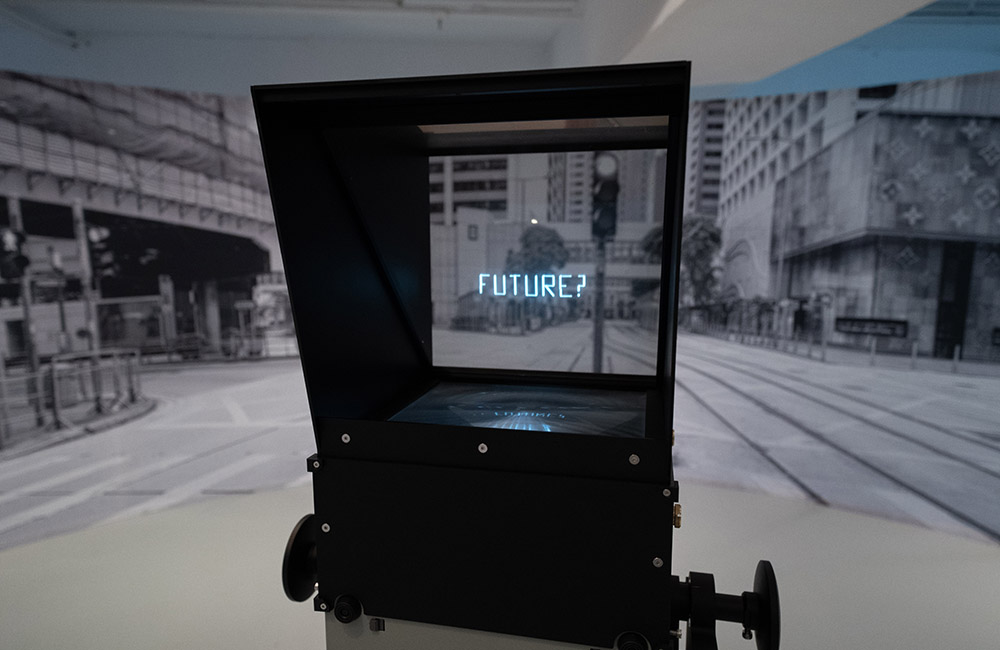
WYSIWYG / By Brady Ng / Sometimes, art can leave its viewers scratching their heads. Much of it is staged to be seen from a distance in sanitised rooms, short pieces of text pasted beside it lazily flicking at pre-verbal notions. You might not engage with these objects beyond mental acrobatics or passive sensations. What you see or feel is often exactly what you get. Though that plight persists, the emergence of participatory art in the late 1950s and early 1960s shook things up. One of the artists who sought to transform the process of viewing art into active participation in its creation, Jeffrey Shaw developed a practice that riffed off the technological developments of the day. Anyone who approaches his work is meant to handle the apparatus he designed and built – clunky monitors (now slimmed down), stationary bicycles (now more robust), dials, knobs, switches, sensors. Shaw has been based in Hong Kong for 11 years. In 2009, he joined City University of Hong Kong as its chair professor of media art, and was dean of the …

Gordon Cheung

Tears of Paradise / Edel Assanti / London / Jan 17 – Mar 18, 2020 / Margot Mottaz / Geopolitics. If a single word summarises the theme of Gordon Cheung’s latest series of works (all 2020) on display at Edel Assanti in London, that would be it. In the single-room exhibition Tears of Paradise, a large hanging installation and five equally sized paintings-cum-collages confront us with the major infrastructural initiatives in China that represent the foundation of Xi Jinping’s “Chinese dream” of global hegemony. The scale of these developments is unprecedented in human history and simply unfathomable for most people, especially those of us living in the west.  Three works that deal with hyperconnectivity – bringing people and goods closer together than ever – hang side by side on one wall. The first is String of Pearls, a map of the coastal countries along the US$1 trillion Belt and Road Initiative. Its key hubs and ports appear as luminescent jewels that shine with the promise of direct trade routes between China and more than 70 countries across Asia, Africa …

Kong Chun Hei

Raise the Dimness / TKG+ Projects / Taipei / Feb 15 – Apr 12, 2020 / Brian Hioe / Kong Chun Hei’s solo exhibition at TKG+, Raise the Dimness, stands out for its adaptive use of space and effective creation of tension between works. Thenine works which comprise the exhibition prove highly complementary, echoing similar concerns also seen in other works by Kong. Non-stop Stop (2019), a single-channel video work depicting two hands in continual motion, as if clapping but never fully meeting, frames the viewer’s entrance into the gallery space. Attention is next drawn toward Flooding (2019), which runs diagonally through the length of the exhibition and consists of 20 stainless steel water gauges placed on the gallery floor. Flooding and another piece, Signature Work II (2020), an acrylic LED lightbox showing a grey static field affixed to a barrier in the centre of the gallery, which has two rooms, further divide the exhibition space. Standoff (2019), a large installation that occupies an entire wall, consisting of several dozen darts attached to it, occupies the viewer’s attention in the first …

Ho Sin Tung 何倩彤

The Optimism in Swamps / 沼地裡的樂觀 / By Christie Lee / At the opening of Ho Sin Tung’s Swampland, one wades (pun intended) through paintings and installations, taking care not to bump into a furry wall or knock over a ghost sculpture. Sufjan Stevens’ Mystery of Love, the theme song to the 2017 film Call Me by Your Name, washes over the crowd, who chat and clink glasses. The title of the show evokes the uncertain state that Hong Kong is in after eight months of protest, with the dimly lit gallery and cobalt walls conveying moodiness – although Ho says they weren’t her decisions. The setting looks markedly different from previous exhibitions by the artist, known for intricate drawings of her obsessions, usually borderline characters aspiring to reach an idealised state, only to find that it inevitably ends in failure. The artist, who was born in Hong Kong in 1986 and is a fine arts graduate from The Chinese University of Hong Kong, says she’s always been interested in the same themes. “This work is about the desire …

Lam Wong

the world is as soft as a volcano: a moving composition / Centre A: Vancouver International Centre for Contemporary Asian Art / Jan 24 – Mar 14 / Elliat Albrecht / At Centre A, a few blocks away from Vancouver’s Dr Sun Yat-Sen Classical Chinese Garden, where Lam Wong is currently artist-in-residence, is Wong’s solo show the world is as soft as a volcano: a moving composition, the artist’s most personal to date. Dealing with intimate traumas and memories, the show features 18 works including several new paintings and a sculpture. It would do the reader little service to describe the arrangement of works in the room as they’re repositioned at weekly intervals – a shuffling undertaken at the suggestion of curator Henry Heng Lu in order to allow the exhibition to “live and breathe”. Having said that, in early February a waist-high pile of dark, rich cedar mulch held court in the centre of the room. Topped with a white plaster mask of the artist’s face, the sculpture Self-Portrait as Volcano (2020) was motivated by Wong’s sense that …

Lee Kai Chung 李繼忠

Of Myth and Memory / 關於迷思與記憶 / By Christina Ko / It’s research, but call it art – Hong Kong artist Lee Kai Chung’s practice questions the nature and reliability of archival documentation, and his latest focus is a chilling incident that should have been difficult to erase The setting for Lee Kai Chung’s latest exhibition, The Narrow Road to the Deep Sea, at ACO art space, is small, and holds just five works. But the show’s impact on the mind is big. The starting point and impetus for these works, as with all of Lee’s output, is a historical incident – in this case the Nanshitou Massacre, a blip in our collective history that is little known and documented. The episode, which harks back to the Japanese occupation of Hong Kong during World War II, begins with an attempt at population control, in which some half of the city’s 1.6 million population were expatriated or repatriated. Of that 800,000, an estimated 100,000 ended up detained at a concentration camp at Nanshitou in Guangzhou, where they were subjected to bacteriological experimentation …